
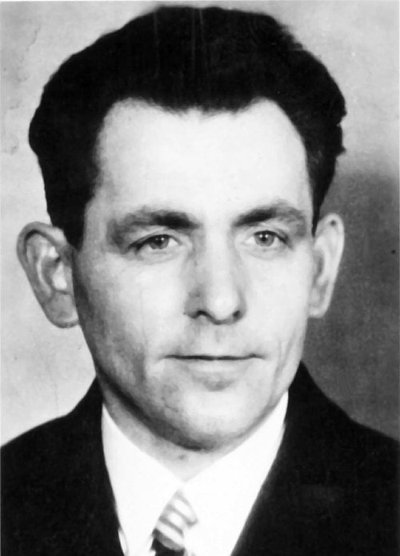
Georg Elser is a name that, for many, remains shrouded in obscurity despite his significant role in one of history’s most daring acts of resistance. Born Johann Georg Elser on January 4, 1903, in the small town of Hermaringen, Baden-Württemberg, Germany, Elser’s early life gave little indication of the path he would later take—a path that would lead him to attempt to alter the course of history by assassinating Adolf Hitler.
Early Life and Education
Elser’s upbringing was typical of the early 20th century in rural Germany. He was the son of Maria and Ludwig Elser, with his father working as a lumber merchant and farmer. From a young age, Georg displayed a natural talent for manual work and drawing. His formative years between 1910 and 1917 were spent at the elementary school in Königsbronn, where he honed these skills, setting the stage for his future career as a craftsman.
After completing his education, Elser began working in a foundry as a lathe operator, but health issues forced him to abandon this line of work. He then turned to carpentry, a trade that suited his meticulous nature and allowed him to work as an interior joiner. In 1925, he moved to the town of Constance, where he found employment in a clock factory—a position that would later prove crucial in the planning of his assassination attempt on Hitler.
Political Awakening and Opposition to Nazism
The political landscape of Germany in the early 20th century was tumultuous, and like many of his contemporaries, Elser found himself drawn into the ideological battles of the time. Despite his Protestant upbringing, which distanced him from some of the more radical elements of the left, Elser became involved with the Rotfrontkämpferbund, a paramilitary organization affiliated with the German Communist Party (KPD). His involvement was not deep, but it marked the beginning of his political awareness.
Elser’s real opposition to the Nazi regime began to take shape in the early 1930s. By 1933, he had started voting for the Communist Party, believing it to be the only political force capable of protecting workers’ rights in the face of growing Nazi oppression. However, Elser was not a committed communist; his disillusionment with the Nazi ideology stemmed from a broader sense of moral outrage. He was appalled by the curtailment of civil liberties, the pervasive propaganda, and the restrictions imposed on workers by the regime.
As the Nazis tightened their grip on Germany, Elser’s resistance became more pronounced. He refused to perform the Nazi salute and avoided listening to Hitler’s speeches on the radio, distancing himself from the pervasive influence of Nazi propaganda. His opposition was rooted in a deep-seated belief in individual freedom and a rejection of the totalitarian control that the Nazis sought to impose on every aspect of German life.
The Path to Resistance
By 1936, Elser was working in a Heidenheim assembly factory, where he first became aware of the Nazi regime’s rearmament plans. The realization that another war was on the horizon—one that would bring unimaginable suffering to millions—deepened his resolve to take action. The 1938 Munich Crisis, during which Europe teetered on the brink of war over the Sudetenland, further convinced Elser that Hitler’s death was the only way to prevent the catastrophe that loomed.
Elser’s decision to assassinate Hitler was not made lightly. He believed that by killing Hitler, he could decapitate the Nazi leadership and prevent a war that would devastate Germany and Europe. In November 1938, he traveled to Munich to observe the annual commemoration of the failed 1923 Beer Hall Putsch, an event that Hitler attended every year. It was here, in the Bürgerbräukeller beer hall, that Elser saw his opportunity.
Over the following months, Elser meticulously planned his attack. He took a job in a quarry, where he slowly accumulated the explosives he needed to build a bomb. Elser’s work as a carpenter and clockmaker gave him the skills to construct a time bomb with precision. He spent nights secretly carving out a niche in a pillar near the speaker’s podium in the Bürgerbräukeller, where Hitler would deliver his speech on November 8, 1939.
The Assassination Attempt
The night of November 8, 1939, was the culmination of all Elser’s efforts. He placed his bomb in the niche he had prepared, set the timer, and left the beer hall, believing that within hours, Hitler would be dead. However, fate intervened. Unbeknownst to Elser, Hitler had decided to leave the event earlier than planned, departing the hall just seven minutes before the bomb exploded.
The explosion killed eight people and injured over sixty others, but Hitler was unharmed. The attempt on his life had failed, and Elser’s hopes of stopping the war were dashed. Yet, the story does not end there.
Capture and Interrogation
After the failed assassination, Elser fled toward the Swiss border, hoping to escape the inevitable manhunt. However, he was apprehended by two customs officers in Konstanz as he tried to cross into Switzerland. Initially, the authorities did not suspect Elser of being involved in the bombing. But when they found a postcard of the Bürgerbräukeller in his possession, their suspicions were aroused.
Elser was transferred to Munich, where he was interrogated by the Gestapo. Despite enduring brutal torture, he initially refused to confess. However, the evidence against him mounted, including witness testimony from waitresses who had seen him in the beer hall on multiple occasions. Eventually, after severe beatings, Elser admitted to his role in the bombing.
The Nazis were incredulous that Elser had acted alone. They suspected a broader conspiracy and wanted to keep him alive to extract more information. Elser was imprisoned in the Sachsenhausen concentration camp before being transferred to Dachau, where he was kept under special detention. His treatment fueled rumors among other prisoners that Elser might be a Nazi collaborator, a misconception that added to his suffering.
The Final Days and Legacy
As World War II drew to a close and the collapse of the Third Reich became imminent, the Nazi regime sought to eliminate any remaining traces of dissent. In April 1945, with Allied forces closing in on Dachau, Hitler ordered the execution of Georg Elser. On April 9, 1945, just weeks before the war’s end, Elser was shot on Hitler’s orders. He was 42 years old.
Elser’s story is one of remarkable courage and determination. Despite the failure of his assassination attempt, his legacy endures as a symbol of resistance against tyranny. For many years, his actions were overshadowed by the broader narrative of World War II, and it was only decades later that Georg Elser began to receive the recognition he deserved.
Historical Context and Modern Relevance
The historical context in which Georg Elser operated is crucial to understanding his motivations and the impact of his actions. The early 20th century was a period of intense political and social upheaval in Germany. The collapse of the Weimar Republic, the rise of the Nazi Party, and the outbreak of World War II created an environment in which dissent was both dangerous and necessary.
Elser’s resistance was not born of ideological fanaticism but from a profound sense of moral duty. He was an ordinary man who recognized the extraordinary evil of the Nazi regime and took it upon himself to try and stop it. In this sense, Elser’s actions can be seen as part of a broader tradition of individual resistance to totalitarianism, a tradition that includes figures like Claus von Stauffenberg, who led the July 20, 1944, plot to assassinate Hitler.
Today, Georg Elser is remembered as a hero in Germany. Monuments have been erected in his honor, and his story is taught in schools as an example of the power of individual action in the face of overwhelming odds. His legacy is a reminder that even in the darkest times, there are those who will stand up for what is right, regardless of the personal cost.
Conclusion
Georg Elser’s life and actions offer a profound lesson in courage, resilience, and the importance of individual agency. His attempt to change the course of history, though unsuccessful, remains a testament to the enduring human spirit. Elser’s legacy serves as a powerful reminder that the fight against tyranny and oppression is a responsibility that falls to each of us, and that even the most ordinary individuals can make an extraordinary impact.


