
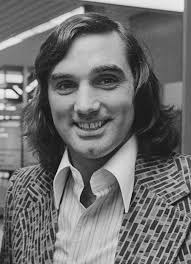
George Best, born on May 22, 1946, in Belfast, Northern Ireland, is widely regarded as one of the greatest footballers of all time. His extraordinary talent on the pitch was matched only by his flamboyant lifestyle off it, making him a cultural icon whose influence transcended sports. This detailed biography delves into Best’s life, career, and the complex legacy he left behind.
Early Life and Introduction to Football
George Best grew up in a working-class neighborhood in Belfast. From a young age, he exhibited a natural aptitude for football, spending countless hours honing his skills on the streets. Despite his slight build, his exceptional talent caught the attention of scouts. At the age of 15, Best was spotted by Bob Bishop, a scout for Manchester United, who famously sent a telegram to manager Matt Busby stating, “I think I’ve found you a genius.”
Rise to Stardom at Manchester United
Best joined Manchester United’s youth team and quickly progressed through the ranks. He made his first-team debut at 17 against West Bromwich Albion in September 1963. His skill, speed, and creativity on the ball soon made him a fan favorite. In the 1964-65 season, Best helped Manchester United win the First Division title, showcasing his ability to perform at the highest level.
His breakout moment came in 1966 when he scored twice against Benfica in the European Cup quarter-final, earning him the nickname “El Beatle” from the Portuguese press. This performance cemented his status as a rising star in world football.
Peak of His Career and European Glory
The pinnacle of Best’s career came in 1968 when Manchester United won the European Cup, defeating Benfica 4-1 in the final at Wembley Stadium. Best scored a crucial goal in the match, further enhancing his reputation as one of the best players in the world. Later that year, he was awarded the Ballon d’Or, recognizing him as Europe’s best footballer.
During his time at Manchester United, Best formed a formidable partnership with Bobby Charlton and Denis Law, known as the “United Trinity.” Together, they led the team to numerous victories, including two First Division titles (1965 and 1967).
Personal Life and Off-Field Antics
Best’s talent on the field was matched by his charisma off it. His good looks, charm, and penchant for living life to the fullest made him a media darling and a fashion icon. He was often referred to as the “fifth Beatle” due to his popularity during the 1960s, a decade defined by cultural revolution and youthful exuberance.
However, Best’s lifestyle began to take its toll. His love for alcohol, women, and the high life led to numerous issues with discipline and consistency. Despite his undeniable talent, his off-field antics often overshadowed his achievements on the pitch.
Decline and Departure from Manchester United
By the early 1970s, Best’s career began to decline. His frequent absences from training and matches due to his drinking habits strained his relationship with the club. In January 1974, after a series of missed training sessions and disputes with management, Best left Manchester United.
At just 28 years old, he had already reached the peak of his football career. His departure marked the beginning of a nomadic period in his life, where he played for various clubs in different countries, including stints in the United States, South Africa, and Australia.
Later Years and Health Struggles
Best continued to play football sporadically throughout the late 1970s and early 1980s but never recaptured the form that had made him a superstar. His off-field issues persisted, leading to several run-ins with the law and periods of rehabilitation.
In 1984, Best was sentenced to three months in prison for drunk driving and assaulting a police officer. Despite these setbacks, he remained a beloved figure in the football world, often appearing as a pundit and commentator.
By the early 2000s, Best’s health had deteriorated significantly due to his chronic alcoholism. In 2002, he underwent a liver transplant after his liver function dropped to 20%. Despite this, he continued to struggle with alcohol addiction.
Final Years and Legacy
In October 2005, Best was admitted to the hospital with a kidney infection and spent several weeks in intensive care. His condition worsened, and on November 25, 2005, George Best passed away at the age of 59. His death was a significant loss to the football community and was mourned by fans worldwide.
Best’s funeral in Belfast was attended by thousands of people, including many prominent figures from the football world. He was laid to rest in Roselawn Cemetery, and his gravestone bears the simple but poignant inscription: “Georgie Best, 1946-2005.”
Reflecting on George Best’s Impact
George Best’s legacy is a complex one. On one hand, he is remembered as one of the most gifted footballers ever, whose performances on the pitch brought joy to millions of fans. His dribbling, vision, and goal-scoring ability were second to none, and he played a crucial role in Manchester United’s success during the 1960s.
On the other hand, Best’s life serves as a cautionary tale about the dangers of excess. His battles with alcoholism and his inability to manage his personal life ultimately curtailed his football career and led to a tragic end. Yet, his charm, wit, and undeniable talent have ensured that he remains an enduring figure in popular culture.
George Best in Popular Culture
Best’s influence extended beyond football. His style and charisma made him a fashion icon, and he was a regular fixture in the media. He appeared in numerous television shows and commercials, further cementing his status as a cultural icon. His life has been the subject of several documentaries, books, and films, capturing both his genius and his struggles.
Conclusion
George Best’s story is one of brilliance and tragedy. His footballing skills brought him fame and adoration, but his personal demons led to a premature decline. Despite his struggles, Best’s impact on the game of football is undeniable. He inspired countless players and left a lasting legacy that continues to be celebrated.
Best’s life reminds us of the fine line between greatness and downfall. His legacy is a testament to the heights that talent and determination can reach, and the pitfalls that can accompany fame. George Best will always be remembered not just as a footballer, but as a symbol of the beautiful game’s potential and its perils.


