
Introduction
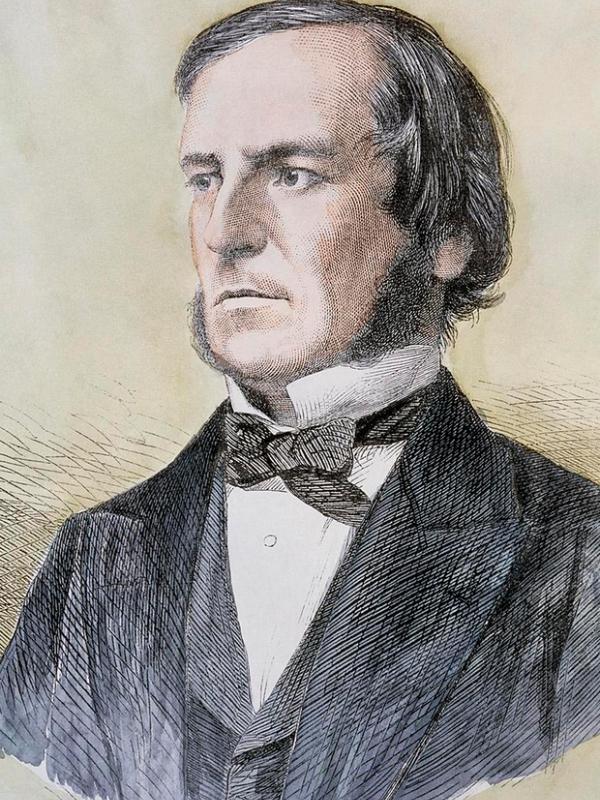
George Boole, a 19th-century English mathematician, philosopher, and logician, revolutionized the field of mathematics and laid the groundwork for modern computer science. Known for his development of Boolean algebra, Boole’s contributions have profoundly influenced various disciplines, including mathematics, computer science, and electrical engineering. This article delves into the life of George Boole, exploring his age, rise to fame, and key life highlights. We provide detailed insights and explanations, shedding light on the nuances and historical context of his remarkable career.
Early Life and Education
Birth and Family Background
George Boole was born on November 2, 1815, in Lincoln, England. He was the eldest of four children in a modest family. His father, John Boole, was a shoemaker with a keen interest in mathematics and scientific instruments, which had a significant impact on George’s early education. Despite their limited means, George’s parents recognized his intellectual potential and encouraged his academic pursuits.
Self-Education and Early Influences
Due to the family’s financial constraints, Boole’s formal education was limited. He attended local schools in Lincoln, but much of his learning was self-directed. His father introduced him to elementary mathematics, which sparked a lifelong passion for the subject. By the age of 12, Boole had surpassed his father’s knowledge and began studying advanced topics independently. He also taught himself several languages, including Latin, Greek, French, and German, to access a wider range of scientific literature.
Rise to Fame
Early Career and Teaching
At the age of 16, George Boole began working as an assistant school teacher to support his family. By 19, he had established his own school in Lincoln. Teaching provided Boole with the opportunity to further his studies in mathematics and share his knowledge with others. He published his first mathematical paper at the age of 24, which garnered attention in academic circles.
Breakthrough with Boolean Algebra
Boole’s most significant contribution to mathematics came in 1847 with the publication of his pamphlet “Mathematical Analysis of Logic.” In this work, Boole proposed that logical statements could be expressed using algebraic symbols and operations. This groundbreaking idea laid the foundation for Boolean algebra, a branch of mathematics that deals with true or false values and logical operations such as AND, OR, and NOT.
In 1854, Boole expanded on his ideas in his seminal work “An Investigation of the Laws of Thought.” This book formalized Boolean algebra and demonstrated its application to logic and probability. Boole’s innovative approach to logic provided a systematic method for reasoning and problem-solving, which would later become essential in the development of digital electronics and computer science.
Major Achievements
Boolean Algebra and Its Applications
The development of Boolean algebra is George Boole’s most enduring legacy. His work provided a mathematical framework for logic that has far-reaching implications. Boolean algebra became a fundamental component of digital circuit design, enabling the creation of modern computers, search engines, and various digital technologies. Boole’s concepts are integral to the design and operation of computer hardware and software, forming the basis of binary code and logic gates used in computing.
Contributions to Differential Equations
In addition to his work on logic, Boole made significant contributions to the field of differential equations. His 1859 book “Treatise on Differential Equations” advanced the study of these mathematical equations, which describe the relationship between functions and their derivatives. Boole’s work in this area provided valuable insights and techniques that continue to influence mathematical research and applications in physics and engineering.
Academic Recognition and Influence
George Boole’s contributions to mathematics and logic earned him considerable recognition during his lifetime. In 1849, he was appointed as the first professor of mathematics at Queen’s College, Cork (now University College Cork) in Ireland. This position allowed Boole to dedicate himself fully to his research and teaching. His influence extended to his students and colleagues, many of whom carried forward his ideas and expanded on his work.
Challenges and Controversies
Financial Hardships and Limited Formal Education
Despite his intellectual achievements, Boole faced numerous challenges throughout his life. His family’s financial difficulties limited his access to formal education, and he had to rely on self-study and teaching to support himself and his family. These hardships did not deter Boole from pursuing his passion for mathematics, but they did make his journey more arduous.
Health Issues and Premature Death
George Boole’s life was tragically cut short by health issues. In 1864, at the age of 49, Boole died of pneumonia after contracting a severe cold. His untimely death occurred at a time when his work was gaining significant recognition, and he had many more potential contributions to make to mathematics and science. Boole’s early death was a loss to the academic community, but his legacy lived on through his published works and the continued application of his ideas.
Personal Life
Family and Marriage
In 1855, George Boole married Mary Everest, the niece of the famous mathematician and surveyor George Everest. Mary was a well-educated and intellectually curious woman who shared Boole’s passion for learning. The couple had five daughters, and Mary played a crucial role in supporting Boole’s academic endeavors. After his death, Mary continued to promote and preserve his work, ensuring that his contributions were recognized and remembered.
Legacy Through His Descendants
The Boole family continued to contribute to academia and intellectual pursuits through subsequent generations. One of George and Mary’s daughters, Ethel Lilian Voynich, became a notable writer and composer. The family’s commitment to education and intellectual achievement reflects George Boole’s influence and the values he instilled in his descendants.
Historical Context
The Victorian Era and Scientific Advancements
George Boole’s life and work took place during the Victorian era, a period marked by rapid industrialization and scientific progress. The 19th century saw significant advancements in mathematics, physics, and engineering, driven by the increasing demand for technological innovations. Boole’s contributions to logic and mathematics were part of this broader wave of intellectual exploration and discovery.
The Development of Modern Logic
Boole’s work in logic was groundbreaking and set the stage for future developments in mathematical logic and computer science. Prior to Boole, logic was primarily studied as a branch of philosophy. Boole’s introduction of algebraic methods to logic transformed it into a formal mathematical discipline. His ideas influenced subsequent mathematicians and logicians, including Charles Sanders Peirce and Gottlob Frege, who further developed the field of symbolic logic.
Legacy and Impact
Foundations of Computer Science
George Boole’s legacy is most prominently seen in the field of computer science. Boolean algebra is the backbone of digital logic and computing, enabling the development of binary systems used in computer processors and memory. The principles of Boolean logic are applied in programming languages, algorithms, and data structures, forming the basis for modern computing.
Influence on Electrical Engineering
Boolean algebra also plays a critical role in electrical engineering, particularly in the design and analysis of digital circuits. Logic gates, which perform basic Boolean operations, are fundamental components of digital devices. Engineers use Boolean algebra to design complex circuits for computers, smartphones, and other electronic devices. Boole’s work has thus had a lasting impact on technology and engineering.
Contributions to Mathematics and Philosophy
Beyond computer science and engineering, Boole’s contributions to mathematics and philosophy continue to be highly regarded. His work on differential equations and probability theory has influenced mathematical research and applications. In philosophy, Boole’s approach to logic has shaped the study of reasoning and epistemology, contributing to the understanding of how logical systems can represent knowledge and thought processes.
Conclusion
George Boole’s life and career offer a compelling narrative of intellectual achievement, resilience, and lasting impact. From his early days in Lincoln to his pioneering work in logic and mathematics, Boole consistently demonstrated his ability to think creatively and rigorously. His achievements, challenges, and contributions provide valuable insights into the dynamic world of 19th-century science and the foundations of modern technology.
As we reflect on Boole’s journey, it becomes clear that his work extends beyond individual accomplishments. He played a crucial role in shaping the future of mathematics, logic, and computer science. Through his innovative ideas and unwavering commitment to his field, George Boole has left an enduring legacy that continues to inspire and guide future generations of scientists, mathematicians, and engineers.


