
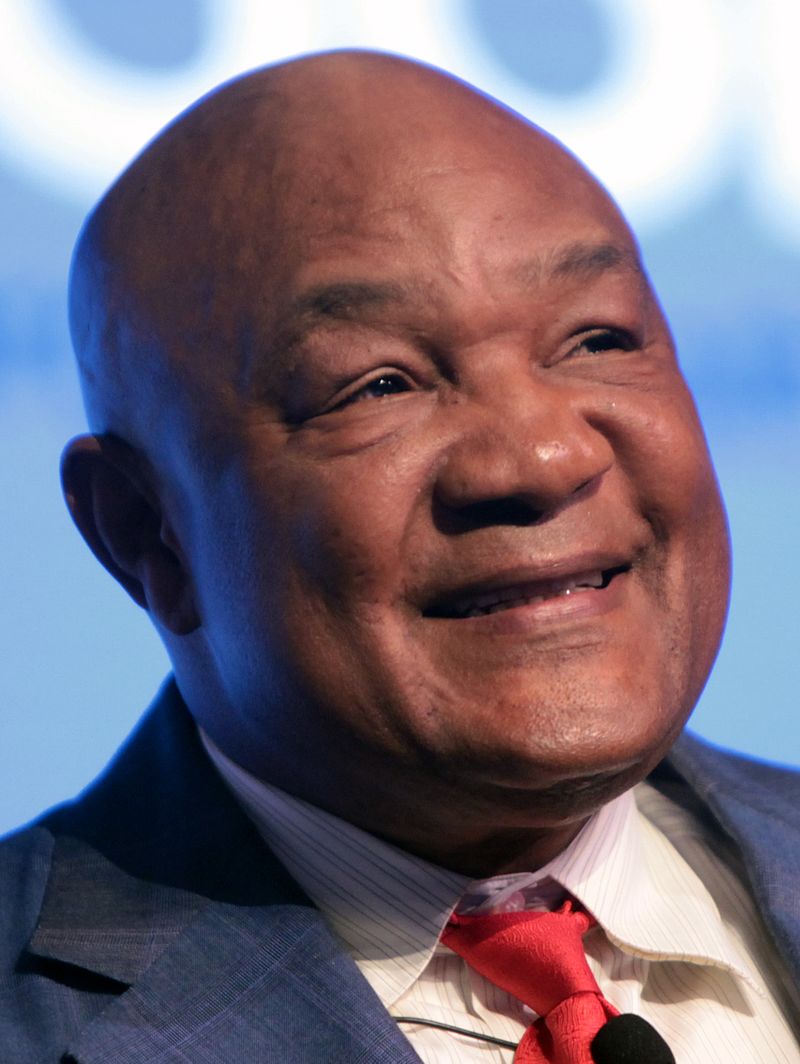
George Foreman, born on January 10, 1949, in Marshall, Texas, is a name that resonates not only in the world of boxing but also in popular culture. A two-time world heavyweight champion and an Olympic gold medalist, Foreman’s life story is one of incredible resilience, reinvention, and success across multiple domains. This article delves deep into the life of George Foreman, exploring his rise to fame, the challenges he faced, his remarkable comeback, and his ventures beyond the boxing ring.
Early Life and the Beginnings of a Boxing Legend
George Edward Foreman was born into humble beginnings in the Fifth Ward of Houston, Texas, an area notorious for its poverty and crime. Growing up, Foreman faced the challenges typical of his environment—lack of resources and exposure to street violence. However, it was these very circumstances that shaped his tenacity and fighting spirit.
As a teenager, Foreman was known more for his street brawls than his discipline, and his early years were marred by trouble with the law. But his life took a significant turn when he joined the Job Corps, a government program designed to provide vocational training to young people. It was here that Foreman discovered boxing, a sport that would change his life forever. Under the mentorship of Doc Broadus, Foreman’s raw talent was honed, and he quickly rose through the ranks of amateur boxing.
Olympic Glory and the Transition to Professional Boxing
Foreman’s breakthrough came in 1968 when he represented the United States at the Olympic Games in Mexico City. At just 19 years old, Foreman won the gold medal in the heavyweight boxing category, a feat that catapulted him into the limelight. His victory was not just a personal achievement but also a symbol of American strength during a tumultuous period marked by social unrest and the Vietnam War.
The image of Foreman triumphantly waving an American flag after his victory became iconic, and it wasn’t long before he transitioned to professional boxing. In 1969, Foreman made his professional debut, quickly establishing himself as a formidable force in the heavyweight division. Known for his devastating punching power, Foreman’s rise through the professional ranks was swift and brutal.
World Heavyweight Champion: The First Reign
By 1973, Foreman had compiled an impressive record, and he earned a shot at the world heavyweight title against the then-undefeated Joe Frazier. In a fight that shocked the world, Foreman knocked down Frazier six times in just two rounds, capturing the WBA, WBC, and The Ring heavyweight titles. The sheer dominance of Foreman’s performance was a testament to his power, and he became known as one of the most feared fighters in the history of boxing.
However, Foreman’s reign as champion would be short-lived. In 1974, he faced Muhammad Ali in what would become one of the most famous boxing matches of all time—The Rumble in the Jungle. Held in Kinshasa, Zaire (now the Democratic Republic of the Congo), the fight was a cultural phenomenon, drawing attention from around the globe.
Ali, known for his charisma and tactical brilliance, employed a strategy that would go down in history as the “rope-a-dope,” allowing Foreman to tire himself out before launching a counterattack in the later rounds. In the eighth round, Ali knocked out Foreman, handing him his first professional loss and reclaiming the heavyweight title. The loss was a devastating blow to Foreman, both professionally and personally.
The Unexpected Retirement and a Decade in the Wilderness
Following his defeat to Ali, Foreman’s career entered a turbulent phase. He continued to fight, but the invincible aura that had once surrounded him was shattered. In 1977, after a loss to Jimmy Young, Foreman experienced a profound spiritual awakening in his dressing room, which he described as a near-death experience. This moment led him to retire from boxing at the age of 28, shocking the sports world.
For the next decade, Foreman dedicated his life to religion, becoming an ordained minister and opening a youth center in Houston. His focus shifted entirely from boxing to helping others, particularly troubled youth, a group he identified with from his own experiences growing up. Foreman’s life during this period was marked by spiritual growth and a commitment to community service, but financial difficulties would soon draw him back into the world of boxing.
The Remarkable Comeback: A Champion Once More
In 1987, at the age of 38, Foreman announced an improbable return to boxing. The announcement was met with skepticism and concern, as many believed he was too old and out of shape to compete at the highest level. However, Foreman was determined not only to fight but to reclaim his status as a world champion.
Foreman’s comeback was initially seen as a novelty, but he quickly proved that he was serious. Over the next several years, he fought a series of bouts, gradually working his way back into contention for the heavyweight title. What made his comeback remarkable was not just his age but his transformation—Foreman was no longer the menacing, brooding fighter of his youth. Instead, he was now a smiling, affable figure who endeared himself to fans with his humor and humility.
In 1994, Foreman achieved the unthinkable. At the age of 45, he challenged Michael Moorer for the WBA and IBF heavyweight titles. Moorer, 26 years younger, was a heavy favorite, but Foreman defied the odds. In the tenth round, Foreman delivered a devastating right hand that knocked Moorer out cold, making him the oldest heavyweight champion in history.
Foreman’s victory was more than just a personal triumph; it was a testament to perseverance, resilience, and the power of belief. His comeback inspired millions and solidified his legacy as one of the greatest boxers of all time.
Life Beyond Boxing: The George Foreman Grill and Cultural Icon
While Foreman’s boxing career is legendary, his impact extends far beyond the ring. After his final retirement in 1997, Foreman transitioned into the world of business and became a cultural icon, largely due to his association with the George Foreman Lean Mean Fat-Reducing Grilling Machine, commonly known as the George Foreman Grill.
The grill, which was introduced in 1994, became a massive commercial success, selling over 100 million units worldwide. Foreman’s affable persona and relentless promotion of the product turned the grill into a household name. The success of the grill not only made Foreman a wealthy man but also demonstrated his savvy as a businessman.
Foreman’s entrepreneurial ventures didn’t stop with the grill. He authored several books, including cookbooks and an autobiography, and became a motivational speaker, sharing his life story and lessons on perseverance with audiences around the world. His ability to reinvent himself after his boxing career is a key part of his legacy, showing that life after sports can be just as impactful.
Personal Life and Legacy
George Foreman’s personal life is as rich and varied as his professional career. He has been married five times and is the father of 12 children. Interestingly, five of his sons are named George, a decision he made to ensure that the name would always be remembered. Foreman has often joked about the simplicity of calling all his sons George, but the decision reflects his pride in his name and legacy.
Foreman’s life has been marked by his deep religious faith, which has guided him through his toughest moments. As a minister, he has used his platform to preach and help those in need, particularly focusing on youth programs and charitable activities.
In the world of boxing, Foreman’s legacy is secure. He is widely regarded as one of the greatest heavyweights of all time, and his comeback in the 1990s remains one of the most remarkable achievements in sports history. Beyond boxing, his success in business and his role as a cultural figure have cemented his place as a global icon.
Conclusion
George Foreman’s life is a story of redemption, perseverance, and success against the odds. From a troubled youth in Houston to the heights of Olympic and professional boxing, Foreman’s journey has been anything but ordinary. His ability to reinvent himself time and again—first as a boxer, then as a minister, and finally as a businessman and cultural icon—demonstrates the power of resilience and the importance of never giving up.
Foreman’s impact on the world extends far beyond the ring. He has inspired countless individuals with his story, proving that it’s never too late to achieve greatness. Whether through his legendary fights, his successful business ventures, or his charitable work, George Foreman has left an indelible mark on the world, and his legacy will continue to inspire future generations.


