
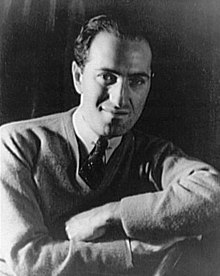
George Gershwin, born on September 26, 1898, in Brooklyn, New York, is one of the most iconic and influential figures in American music. As a composer and pianist, Gershwin created some of the most memorable melodies and compositions of the 20th century, blending classical music traditions with jazz and popular music. His work has left an indelible mark on the American musical landscape, and his compositions continue to be celebrated and performed worldwide. This article explores the life, fame, and key highlights of George Gershwin’s career, providing detailed insights into his contributions to music and the lasting impact of his work.
Early Life and Musical Beginnings
George Gershwin was born to Russian-Jewish immigrant parents, Morris and Rose Gershovitz, who had settled in New York City. The Gershovitz family, later anglicized to Gershwin, lived in a modest neighborhood in Brooklyn, where George grew up with his older brother Ira and younger siblings Arthur and Frances. The Gershwin household was filled with music, but it wasn’t until George was about 10 years old that he first showed an interest in the piano.
Gershwin’s musical talent quickly became apparent, and his parents arranged for him to take piano lessons. He studied under the tutelage of various instructors, including Charles Hambitzer, who recognized his prodigious talent and introduced him to the works of European classical composers such as Chopin, Debussy, and Ravel. Gershwin was a quick learner and had an innate ability to absorb different musical styles, which would later be reflected in his compositions.
By his teenage years, Gershwin had already begun to compose music. His first published song, “When You Want ‘Em, You Can’t Get ‘Em; When You’ve Got ‘Em, You Don’t Want ‘Em,” was released in 1916, marking the beginning of his professional career. He soon found work as a “song plugger” on Tin Pan Alley, playing and promoting songs for sheet music publishers. This experience exposed him to the world of popular music and gave him a deep understanding of what appealed to the public.
Breakthrough Success: “Rhapsody in Blue” and Popular Compositions
Gershwin’s first major success came with the composition of Rhapsody in Blue in 1924. This piece, which blended classical music with jazz elements, was commissioned by bandleader Paul Whiteman and was intended to showcase the possibilities of jazz as a serious art form. The premiere of Rhapsody in Blue at Aeolian Hall in New York City was a defining moment in Gershwin’s career. The piece was met with critical acclaim and established Gershwin as a composer capable of bridging the gap between classical and popular music.
Rhapsody in Blue is characterized by its sweeping melodies, vibrant rhythms, and innovative use of jazz idioms within a classical framework. The piece became an instant classic and remains one of Gershwin’s most famous works. Its success also solidified Gershwin’s reputation as a composer who could create sophisticated music that was both accessible and artistically significant.
Following the success of Rhapsody in Blue, Gershwin continued to compose prolifically. He wrote numerous songs for Broadway musicals, many of which became standards in the American songbook. Among his most famous songs are “I Got Rhythm,” “Someone to Watch Over Me,” “Embraceable You,” and “Summertime.” These songs, often written in collaboration with his brother Ira, who was a gifted lyricist, showcased Gershwin’s ability to craft memorable melodies that resonated with audiences.
The Parisian Influence: “An American in Paris”
In 1928, George Gershwin traveled to Paris, where he sought to expand his musical horizons and gain further inspiration from European composers. His time in Paris was highly productive and led to the creation of one of his most celebrated works, An American in Paris. This orchestral tone poem was inspired by the sights and sounds of the French capital, capturing the bustling energy and romantic atmosphere of the city.
An American in Paris premiered in 1928 and was met with widespread acclaim. The piece is notable for its vivid orchestration and the incorporation of jazz elements, such as bluesy melodies and syncopated rhythms, into a symphonic context. The work reflects Gershwin’s unique ability to blend different musical traditions, creating a sound that was distinctly American yet informed by European classical influences.
Gershwin’s time in Paris also brought him into contact with some of the most important composers of the time, including Maurice Ravel, Igor Stravinsky, and Sergei Prokofiev. Gershwin admired Ravel in particular and even sought to take lessons from him. However, Ravel famously declined, advising Gershwin not to try to become a “mediocre Ravel” when he was already a “brilliant Gershwin.” This encounter underscored the respect that Gershwin commanded in the international music community, despite his occasional insecurities about his place among the classical greats.
The Pinnacle of Success: “Porgy and Bess”
One of George Gershwin’s most ambitious and enduring works is the opera Porgy and Bess, which premiered in 1935. This opera, which Gershwin described as a “folk opera,” was based on the novel Porgy by DuBose Heyward and was set in the African American community of Catfish Row in Charleston, South Carolina. Porgy and Bess was groundbreaking in its fusion of classical music, jazz, blues, and spirituals, and it sought to authentically portray the lives and struggles of its characters.
The creation of Porgy and Bess was a labor of love for Gershwin, who spent several years researching and composing the opera. He traveled to South Carolina to immerse himself in the local culture and music, which deeply influenced the composition. The opera includes some of Gershwin’s most famous songs, such as “Summertime,” “It Ain’t Necessarily So,” and “I Got Plenty o’ Nuttin’.”
Upon its premiere, Porgy and Bess received mixed reviews. While some critics praised its innovative blend of musical styles, others were less enthusiastic, questioning whether it was truly an opera or more of a musical theater piece. Despite these initial reactions, Porgy and Bess has since become one of the most important works in the American operatic repertoire. It is now widely recognized as a masterpiece that broke new ground in American music and has been performed and recorded by countless artists over the decades.
Hollywood and the Final Years
In the early 1930s, Gershwin moved to Hollywood, where he continued to compose music for films. His time in Hollywood was marked by several successful film scores, including Shall We Dance (1937), which featured the iconic songs “They Can’t Take That Away from Me” and “Let’s Call the Whole Thing Off.” Gershwin’s work in Hollywood further solidified his reputation as one of America’s leading composers, capable of writing music that appealed to both popular and sophisticated tastes.
Despite his success, Gershwin was haunted by a sense of unfulfilled potential. He longed to be recognized as a serious composer in the classical tradition, and he continued to experiment with different musical forms in an effort to achieve this recognition. However, his life was tragically cut short before he could fully realize his ambitions.
In 1937, Gershwin began experiencing severe headaches and dizzy spells, which were later diagnosed as symptoms of a brain tumor. On July 11, 1937, George Gershwin passed away at the age of 38 after unsuccessful surgery to remove the tumor. His sudden death shocked the world and left a profound void in the American music scene. At the time of his death, Gershwin was at the height of his career, and his loss was felt deeply by fans, fellow musicians, and the broader artistic community.
The Legacy of George Gershwin
George Gershwin’s legacy is vast and enduring. His work represents a unique synthesis of classical music, jazz, and popular song, creating a sound that is quintessentially American. Gershwin’s compositions have become standards in the repertoire of both classical and jazz musicians, and his influence can be heard in the works of countless composers who followed him.
Gershwin’s ability to bridge the worlds of popular and classical music has made him a beloved figure in both realms. His songs, such as “Summertime” and “Rhapsody in Blue,” continue to be performed, recorded, and celebrated around the world. His work has also been adapted into various forms, including ballets, films, and symphonic works, further extending his influence.
In addition to his musical achievements, Gershwin’s life and career have inspired numerous biographies, documentaries, and academic studies. He is remembered not only for his extraordinary talent but also for his contributions to the development of a uniquely American musical identity. Gershwin’s work laid the groundwork for future generations of composers, who have continued to explore and expand upon the possibilities of blending different musical traditions.
Conclusion: The Enduring Appeal of George Gershwin
George Gershwin’s life was brief, but his impact on music was profound. His ability to blend the worlds of classical music, jazz, and popular song resulted in a body of work that is both artistically significant and widely accessible. Gershwin’s compositions have stood the test of time, continuing to resonate with audiences and musicians alike.
As we reflect on George Gershwin’s life and career, it is clear that his contributions to music are not just a product of his extraordinary talent, but also of his relentless pursuit of artistic excellence. Gershwin’s work continues to inspire, reminding us of the power of music to transcend boundaries and bring people together.
George Gershwin remains a towering figure in the history of American music, and his legacy will undoubtedly continue to influence and inspire future generations for years to come.


