
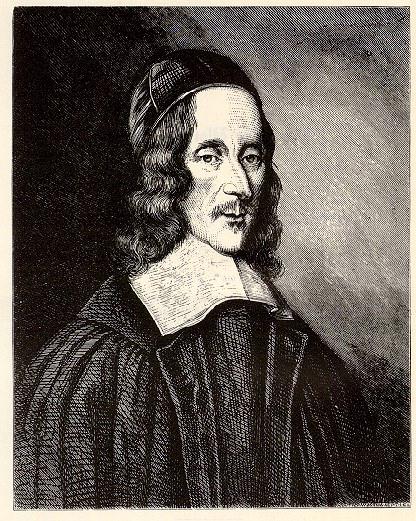
George Herbert, born on April 3, 1593, in Montgomery, Wales, is a name that resonates in the world of English poetry and religious thought. A poet, orator, and Anglican priest, Herbert’s work has left an indelible mark on English literature, particularly through his deeply spiritual and devotional poetry. Despite living only 40 years, his influence has endured for centuries, inspiring generations of poets and readers. This article delves into the life of George Herbert, exploring his age, rise to fame, and the significant highlights that have made him a central figure in the canon of English literature.
Early Life and Education: A Promising Start
George Herbert was born into a prominent and affluent family, which played a significant role in shaping his intellectual and spiritual development. His mother, Magdalen Herbert, was an influential figure, known for her patronage of the arts and her connections with leading intellectuals of the time, including John Donne. Herbert’s elder brother, Edward Herbert, was also a noted figure—he was a poet, philosopher, and diplomat, who would later be recognized as the father of English deism.
Herbert’s early education was rigorous and thorough, reflecting the expectations placed upon him as a member of a distinguished family. He attended Westminster School in London, where he excelled in classical studies, particularly Latin and Greek. His academic prowess earned him a scholarship to Trinity College, Cambridge, where he continued to distinguish himself as a scholar. Herbert earned his Bachelor’s degree in 1613 and his Master’s degree in 1616, both with high honors.
During his time at Cambridge, Herbert was appointed Public Orator of the university, a prestigious position that involved delivering formal addresses in Latin to visiting dignitaries. This role not only showcased Herbert’s rhetorical skills but also placed him in close contact with the political and intellectual elite of the time. His position as Public Orator was seen as a stepping stone to a prominent career at court or in the Church of England.
A Change of Course: From Court Aspirations to Religious Vocation
George Herbert’s early career was marked by a strong ambition to serve at the royal court. His eloquence and connections seemed to pave the way for a future in the corridors of power. However, the death of King James I in 1625 and the subsequent political shifts at court altered Herbert’s trajectory. Faced with the uncertainty of his courtly ambitions, Herbert began to turn his attention towards a more spiritual path.
In 1626, Herbert took holy orders in the Church of England, a decision that reflected both his personal piety and the influence of his family, particularly his mother. Herbert’s decision to enter the priesthood marked a significant turning point in his life, as he chose to dedicate himself to the spiritual and pastoral care of his parishioners.
Herbert was appointed rector of the small rural parish of Bemerton, near Salisbury, in 1630. This was a humble position compared to the lofty ambitions he once held, but it was one that he embraced with sincerity and devotion. In Bemerton, Herbert lived out the final years of his life, focusing on his duties as a priest and on his writing.
Literary Contributions: The Poetry of Devotion
George Herbert’s most enduring legacy lies in his poetry, particularly the collection known as The Temple. Written during his years as a parish priest, Herbert’s poems are marked by their deep religious devotion, intricate use of language, and a profound exploration of the relationship between the human soul and God.
The Temple was published posthumously in 1633, just after Herbert’s death, but it quickly gained widespread acclaim. The collection is divided into three parts: The Church Porch, The Church, and The Church Militant. Each section reflects different aspects of the Christian faith, from the moral and ethical teachings of the church to the intimate and personal experience of divine grace.
One of the most striking features of Herbert’s poetry is his use of metaphor and allegory to convey complex spiritual ideas. For example, in the poem “The Collar,” Herbert uses the image of a rebellious servant pulling against his master’s collar to explore themes of submission and obedience to God. In “Love (III),” one of his most famous poems, Herbert personifies divine love as a gracious host who welcomes the poet’s reluctant and guilty soul to a feast.
Herbert’s poetry is also notable for its formal innovation. He often employed intricate rhyme schemes, unusual stanza forms, and varied meters to reflect the emotional and spiritual content of his poems. This formal experimentation, combined with his deep theological insight, has made Herbert’s work a touchstone for both literary scholars and religious thinkers.
The Influence of George Herbert: A Legacy Beyond His Time
Despite his relatively short life, George Herbert’s influence on English poetry and religious thought has been profound and lasting. His work had a significant impact on the metaphysical poets who followed him, including Richard Crashaw, Henry Vaughan, and John Donne. Herbert’s blending of intellectual rigor with deep emotional and spiritual resonance set a standard for devotional poetry that has rarely been equaled.
Herbert’s influence extends beyond the realm of poetry. His prose work, A Priest to the Temple; or, The Country Parson, provides a detailed account of the pastoral duties and spiritual responsibilities of a parish priest. This work, published posthumously in 1652, became an important guide for Anglican clergy, outlining a model of pastoral care that emphasized humility, compassion, and dedication to the spiritual well-being of the parishioners.
Herbert’s work has also inspired later poets and writers, including Samuel Taylor Coleridge, Emily Dickinson, and Gerard Manley Hopkins. His emphasis on the personal and intimate aspects of religious experience, as well as his innovative use of language and form, resonated with the Romantic poets of the 19th century and beyond. T.S. Eliot, one of the most important poets of the 20th century, also acknowledged Herbert’s influence, particularly in his own religious and philosophical explorations.
Theological and Philosophical Insights: Herbert’s Spiritual Vision
Central to George Herbert’s poetry and prose is his profound theological vision. Herbert’s work is deeply rooted in the Christian faith, particularly the Anglican tradition, and it reflects his commitment to exploring the complexities of the human soul’s relationship with God. His poetry often grapples with themes of sin, redemption, divine grace, and the struggle for spiritual purity.
One of the key aspects of Herbert’s theological insight is his understanding of the tension between the worldly and the divine. In many of his poems, Herbert expresses a deep sense of personal unworthiness and a longing for divine acceptance. This tension is poignantly expressed in poems like “The Altar” and “Redemption,” where Herbert uses vivid imagery to depict the soul’s journey towards reconciliation with God.
Herbert’s poetry also reflects his belief in the sacramental nature of the world. He saw the physical world as a reflection of divine truth, and his poems often explore the idea that everyday objects and experiences can be infused with spiritual significance. This sacramental vision is evident in poems like “The Windows,” where Herbert compares the stained glass windows of a church to the way God’s grace shines through the human soul.
In addition to his poetic work, Herbert’s prose writings, particularly The Country Parson, offer practical and spiritual guidance for those in religious life. In this work, Herbert emphasizes the importance of humility, self-discipline, and a deep sense of duty in the life of a priest. His vision of the priesthood as a vocation of service and sacrifice has had a lasting impact on the Anglican tradition.
The Enduring Appeal of George Herbert’s Work
George Herbert’s work has continued to resonate with readers for nearly four centuries, a testament to the enduring power of his poetry and prose. His ability to combine intellectual depth with spiritual warmth has made his work accessible to a wide range of readers, from devout Christians to literary scholars and poetry enthusiasts.
One of the reasons for Herbert’s enduring appeal is the universality of his themes. While his work is deeply rooted in the Christian faith, the spiritual struggles and insights he explores are relevant to people of all backgrounds and beliefs. Herbert’s poems speak to the human condition, addressing questions of purpose, meaning, and the search for connection with the divine.
Herbert’s influence can also be seen in the way his work has been embraced by different religious traditions. He is commemorated as a saint in both the Anglican and Lutheran churches, with feast days dedicated to his memory. This recognition reflects the broad spiritual impact of his work, which transcends denominational boundaries.
Conclusion: George Herbert’s Lasting Legacy
George Herbert’s life and work represent a unique blend of poetic brilliance, spiritual depth, and pastoral dedication. Despite his relatively short life, Herbert’s contributions to English literature and religious thought have left an indelible mark that continues to inspire and challenge readers today.
Herbert’s poetry, with its intricate use of language, rich metaphor, and profound theological insight, remains a cornerstone of English devotional literature. His work has influenced countless poets and writers, and his vision of the spiritual life has resonated with readers across the centuries.
As we reflect on George Herbert’s legacy, it becomes clear that his work offers not only a glimpse into the spiritual and intellectual life of 17th-century England but also timeless insights into the human soul’s relationship with the divine. His ability to articulate the complexities of faith and the beauty of the spiritual journey ensures that his work will continue to be read, studied, and cherished for generations to come.


