
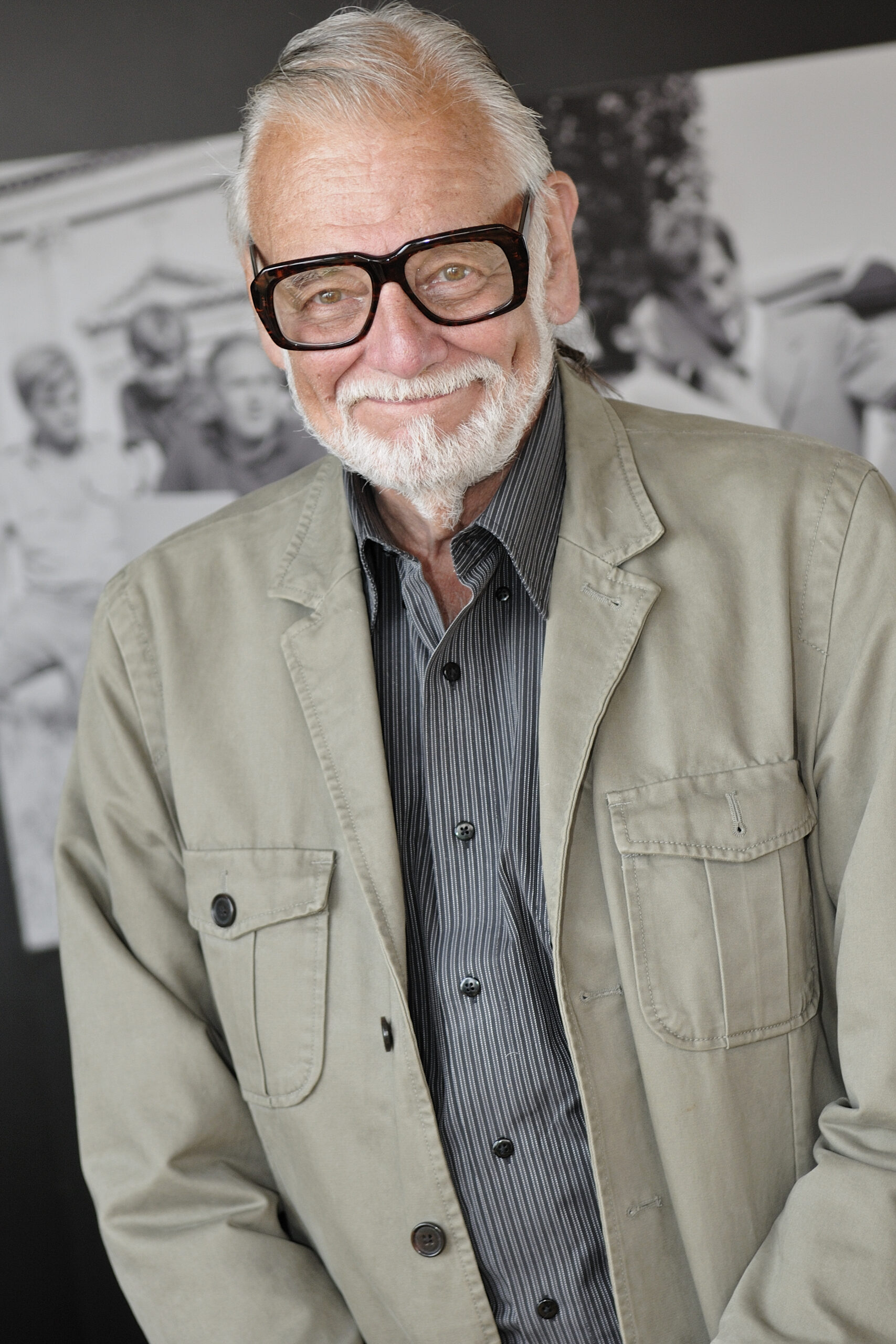
George Andrew Romero, an iconic figure in the world of horror cinema, was born on February 4, 1940, in the Bronx, New York. His father was a Cuban immigrant, and his mother was of Lithuanian descent. Romero’s diverse background and early life in a bustling, multicultural environment influenced his creative sensibilities and contributed to his unique storytelling style, which would later revolutionize the horror genre.
Early Life and Influences
Romero’s love for cinema began at an early age. As a child, he was fascinated by comic books and films, spending countless hours in movie theaters. This passion was solidified when, at the age of twelve, he watched the British film “The Tales of Hoffmann” by directors Michael Powell and Emeric Pressburger. The film’s eerie and fantastical elements left a lasting impression on young Romero, sparking his interest in creating stories that blended reality with the supernatural.
At the age of thirteen, Romero received an 8mm camera from his uncle, which marked the beginning of his journey as a filmmaker. He started making short films and developed a keen interest in the art of visual storytelling. His early education at the Suffield Academy in Connecticut and later studies in Fine Arts at the University of Pittsburgh provided him with the technical skills and creative foundation to pursue a career in filmmaking.
The Birth of a Legend: “Night of the Living Dead”
In 1968, Romero made his directorial debut with the film that would define his career and the zombie genre as we know it: “Night of the Living Dead.” The film was a groundbreaking work of horror that introduced the world to a new kind of monster—the flesh-eating zombie. Shot on a shoestring budget of approximately $114,000 to $150,000, the film was a labor of love for Romero and his team, who were mostly amateur actors and crew members.
Despite its modest production, “Night of the Living Dead” became a massive success, grossing over $30 million worldwide. The film’s stark black-and-white cinematography, unsettling atmosphere, and social commentary on issues such as racism and consumerism resonated with audiences and critics alike. Romero’s decision to cast African American actor Duane Jones in the lead role was particularly bold for the time and added a layer of depth to the film’s narrative.
Trapped by Success: The Legacy of “Night of the Living Dead”
While “Night of the Living Dead” catapulted Romero to fame, it also became something of a creative trap. The success of the film led to a series of sequels that, while commercially successful, often struggled to recapture the innovative spirit of the original. These sequels, including “Dawn of the Dead” (1978) and “Day of the Dead” (1985), expanded on the world Romero created, exploring themes of societal collapse and the dehumanizing effects of modern life.
“Dawn of the Dead,” presented in Italy by renowned horror filmmaker Dario Argento, became particularly famous for its setting in a shopping mall, a pointed critique of consumer culture. The film’s use of music by the Italian progressive rock band Goblin further enhanced its eerie, apocalyptic atmosphere. Despite the success of these films, Romero often found himself pigeonholed as the “zombie guy,” a label that overshadowed his other creative endeavors.
Exploring New Territories: Beyond Zombies
Romero’s filmography extends far beyond the zombie genre. In 1977, he directed “Martin,” a melancholic and darkly humorous take on the vampire mythos. The film, made on a minimal budget, showcased Romero’s ability to blend horror with social commentary, a hallmark of his work. The film starred Tom Savini, who would later become famous for his groundbreaking special effects work, and Christine Forrest, who would become Romero’s wife.
Romero also collaborated with legendary horror writer Stephen King on the 1982 anthology film “Creepshow,” which paid homage to the horror comics of the 1950s. This partnership marked the beginning of a long-standing creative relationship between two of the most influential figures in modern horror.
In 1988, Romero ventured into the realm of psychological horror with “Monkey Shines,” a film that explored the ethical dilemmas and unintended consequences of genetic experimentation. While not as commercially successful as his zombie films, “Monkey Shines” demonstrated Romero’s versatility as a filmmaker and his willingness to tackle complex and provocative themes.
Struggles and Resurgence
The 1990s were a challenging period for Romero, as he struggled to find mainstream success outside the zombie genre. His 1990 film “Two Evil Eyes,” a collaboration with Dario Argento based on the works of Edgar Allan Poe, and “The Dark Half” (1993), an adaptation of Stephen King’s novel, were met with mixed reviews. Despite these setbacks, Romero remained a beloved figure among horror enthusiasts, revered for his pioneering contributions to the genre.
In the early 2000s, Romero experienced a resurgence of interest in his work. Although he was initially hired to direct the film adaptation of the popular video game “Resident Evil,” creative differences led to his departure from the project. Nevertheless, Romero returned to his roots with “Land of the Dead” (2005), a film that revisited the themes of social decay and class struggle that had defined his earlier work.
Later Years and Legacy
Romero continued to make films until his final years, including “Diary of the Dead” (2007) and “Survival of the Dead” (2009), which explored the impact of new media on society and the enduring appeal of the zombie apocalypse. These films, while not as influential as his earlier work, reinforced Romero’s status as a master of horror and a filmmaker with a unique vision.
George Romero passed away on July 16, 2017, at the age of 77, after a brief battle with lung cancer. His death marked the end of an era for horror cinema, but his influence continues to be felt in the genre he helped create. Romero’s work has inspired countless filmmakers, writers, and artists, and his films remain a touchstone for fans of horror and cinema alike.
Conclusion: The Undying Legacy of George Romero
George Romero was more than just a filmmaker; he was a cultural icon whose work transcended the horror genre to comment on the human condition. His films, particularly “Night of the Living Dead,” are celebrated not only for their scares but for their insightful critiques of society. Romero’s legacy is one of innovation, creativity, and a relentless pursuit of truth through the lens of horror.
Even after his death, Romero’s influence continues to be felt in the countless films, television shows, and video games that have drawn inspiration from his work. The world of horror cinema owes a great debt to George Romero, the man who gave life to the undead and, in doing so, forever changed the way we see the world.


