
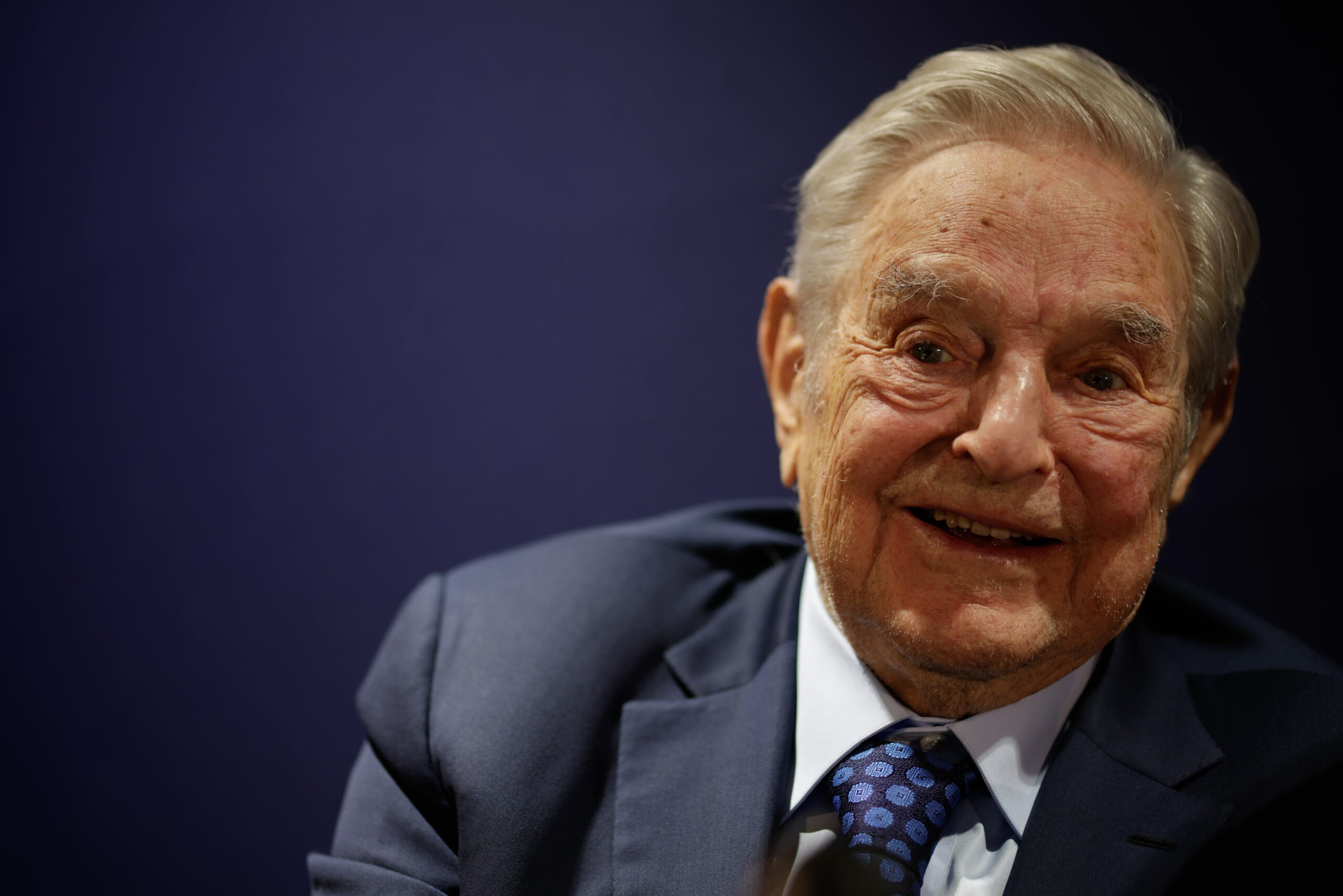
George Soros, born György Schwartz on August 12, 1930, in Budapest, Hungary, is a Hungarian-American billionaire investor, philanthropist, and political activist. He is perhaps best known for his financial acumen, his extensive philanthropic endeavors, and his controversial role in global financial markets. Over the decades, Soros has become a polarizing figure, admired by some for his commitment to open societies and criticized by others for his perceived influence over global politics. This article delves into the life, career, and legacy of George Soros, providing detailed insights and exploring the nuances of his impact on the world.
Early Life: From Hungary to the World
George Soros was born into a Jewish family in Budapest during a time of increasing anti-Semitism in Europe. His father, Tivadar Schwartz, was a lawyer and a former officer in the Austro-Hungarian army, while his mother, Elizabeth, was a homemaker. In 1936, as anti-Semitic policies began to take hold in Hungary, the family changed their surname to Soros, which means “will soar” in Esperanto, a language his father was an advocate for.
Soros’ childhood was marked by the turbulent events of World War II. In 1944, when Nazi Germany occupied Hungary, the 14-year-old George Soros and his family were forced to hide their Jewish identity to survive. His father arranged for false papers and hiding places, and George himself was placed with a Hungarian official who had taken part in the confiscation of Jewish properties. This experience of surviving in a world where trust was scarce had a profound impact on Soros, shaping his worldview and his later commitment to promoting open societies.
After the war, Soros left Hungary in 1947 to escape the new Soviet-backed regime. He moved to England, where he enrolled at the London School of Economics (LSE). There, he studied under the philosopher Karl Popper, whose ideas on the “open society” and the dangers of totalitarianism deeply influenced Soros. These concepts became the foundation for much of Soros’s later philanthropic work.
Early Career: From London to Wall Street
Soros graduated from the LSE in 1952 with a degree in philosophy, and soon after, he entered the world of finance. His first job was at Singer & Friedlander, a merchant bank in London, where he worked as a clerk before moving into arbitrage trading. Soros was ambitious and had his sights set on Wall Street, and in 1956, he moved to New York City, where he took a job as an analyst of European securities at F.M. Mayer.
During his early years in New York, Soros developed and refined his theory of “reflexivity,” which he later described as a cornerstone of his investment philosophy. The theory posits that markets are not always efficient and that the actions of market participants are often influenced by their perceptions, which in turn affect market realities. This insight allowed Soros to anticipate and profit from market bubbles and crashes, setting him apart from many of his contemporaries.
In 1969, Soros founded the Double Eagle hedge fund, which later became the Quantum Fund. The fund was highly successful, achieving returns of 4,200% over a decade, compared to 47% for the S&P 500. This success established Soros as one of the most astute investors of his generation and laid the groundwork for his vast fortune.
The Quantum Fund and the Making of a Financial Titan
The Quantum Fund became legendary in the world of finance, particularly after the events of September 16, 1992, a day that became known as “Black Wednesday.” Soros and his fund famously “broke the Bank of England” by short selling $10 billion worth of British pounds, betting that the currency was overvalued relative to the German mark. The trade was based on Soros’s belief that the UK would have to devalue the pound due to economic pressures.
Soros’s bet paid off spectacularly. The UK government was forced to withdraw the pound from the European Exchange Rate Mechanism (ERM) and devalue the currency, resulting in a profit of over $1 billion for Soros. This single trade not only cemented Soros’s reputation as one of the most powerful and influential investors in the world but also earned him a place in financial history. However, it also made him a target of criticism, with many accusing him of destabilizing economies for profit.
Soros’s success with the Quantum Fund continued through the 1990s, with the fund delivering consistent returns even as global markets fluctuated. He applied his theory of reflexivity to anticipate and navigate market trends, often taking contrarian positions that paid off handsomely. However, his aggressive strategies and willingness to take on entire governments earned him a reputation as a ruthless speculator.
Philanthropy and Political Activism: Champion of the Open Society
While George Soros made his fortune in finance, he has perhaps become even more famous for his philanthropy and political activism. Deeply influenced by Karl Popper’s philosophy, Soros has been a lifelong advocate for open societies—those that are open to change, democratic governance, and the protection of individual rights.
In 1979, Soros began his philanthropic work by providing scholarships to black South Africans during apartheid. This marked the beginning of his long commitment to promoting democracy, human rights, and freedom of expression around the world. In 1984, he established the Open Society Foundations (OSF), which became the umbrella organization for his philanthropic activities.
The OSF, under Soros’s direction, has supported a wide range of initiatives, from education and public health to independent journalism and political activism. Soros played a significant role in the transition of Eastern Europe from communism to democracy after the fall of the Soviet Union. He provided financial and organizational support to movements in countries like Poland, Hungary, and the former Yugoslavia, helping to establish democratic institutions and civil society organizations.
In the United States, Soros has been a major supporter of progressive causes. He has donated millions to organizations that advocate for criminal justice reform, drug policy reform, and immigration rights. Soros’s political donations have also been substantial, particularly during the 2004 and 2016 U.S. presidential elections, where he contributed large sums to Democratic candidates and causes. His opposition to the Iraq War and his criticism of President George W. Bush’s administration further solidified his position as a leading figure in liberal politics.
Controversies and Criticisms: A Polarizing Figure
Despite his philanthropic efforts, George Soros has been a highly controversial figure, often vilified by political opponents and conspiracy theorists. His role in the 1992 Black Wednesday event and other high-profile financial activities has led to accusations that he manipulates markets for personal gain, destabilizing economies in the process.
Soros has also been accused of wielding undue influence over global politics. His financial support for liberal and progressive causes has made him a target of right-wing criticism, with some accusing him of using his wealth to undermine national sovereignty. In particular, his funding of pro-democracy movements and organizations that challenge authoritarian regimes has led to accusations of meddling in the internal affairs of sovereign states.
These criticisms reached a peak during the 2016 U.S. presidential election, when Soros was accused of funding efforts to oppose the election of Donald Trump. Conspiracy theories about Soros’s influence, many of which are rooted in anti-Semitic tropes, have circulated widely, portraying him as a shadowy figure controlling global events from behind the scenes.
In response to these accusations, Soros has consistently maintained that his goal is to promote open societies and protect human rights. He argues that his financial support for political causes is driven by his belief in the importance of democracy, transparency, and accountability.
Legal Troubles: Insider Trading and Beyond
Soros’s career has not been without legal challenges. In 2002, he was convicted of insider trading in France for his involvement in a 1988 takeover bid for the French bank Société Générale. Soros was fined $2.3 million for the offense, a relatively small amount given his vast wealth, but the conviction tarnished his reputation and provided fodder for his critics.
Soros has always maintained his innocence, arguing that the charges were politically motivated. He contended that he did not have access to insider information and that the purchase of shares in Société Générale was part of his regular investment activities. However, the conviction was upheld on appeal in 2006, and it remains a blemish on Soros’s otherwise successful career.
Later Life: Continued Influence and Legacy
In his later years, George Soros has continued to be an active participant in both financial markets and global politics. In 2013, at the age of 83, he married his third wife, Tamiko Bolton, a health care consultant. Despite his advancing age, Soros remains involved in the management of the Open Society Foundations and continues to speak out on issues ranging from European integration to the global refugee crisis.
Soros’s influence on global finance, politics, and philanthropy is profound. Through the Open Society Foundations, he has distributed billions of dollars to support democratic institutions, human rights, and social justice causes around the world. His investment strategies have left a lasting mark on the world of finance, and his philanthropic work has shaped the course of history in numerous countries.
However, Soros’s legacy is not without controversy. His critics argue that his wealth and influence give him an outsized role in global affairs, and his financial activities have occasionally destabilized economies. Nevertheless, there is no denying that Soros is one of the most significant and influential figures of the late 20th and early 21st centuries.
Conclusion: The Complex Legacy of George Soros
George Soros is a figure of immense complexity—a financial genius, a committed philanthropist, and a lightning rod for controversy. His life story is one of survival, success, and relentless pursuit of his vision for a better world. While his methods and motivations have often been questioned, Soros’s contributions to the fields of finance, philanthropy, and political activism are undeniable.
As Soros continues to influence global events, his legacy will likely remain a subject of debate. To some, he is a hero who has used his wealth to fight for justice and democracy; to others, he is a villain who has disrupted economies and societies for his own gain. Regardless of one’s perspective, George Soros has left an indelible mark on the world—a mark that will be studied and discussed for generations to come.


