
Introduction
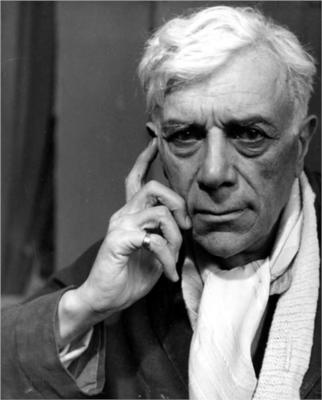
Georges Braque, born on May 13, 1882, in Argenteuil, France, is a name synonymous with the revolutionary art movement known as Cubism. Alongside Pablo Picasso, Braque was instrumental in developing this innovative approach to painting, which would forever alter the course of modern art. A multifaceted artist, Braque was not only a painter but also a sculptor and printmaker, whose work explored the boundaries of perception and representation. This article provides an in-depth look into Braque’s life, his rise to fame, and the significant milestones that defined his artistic journey.
Early Life and Education
Georges Braque was born into a family with a strong artistic background. His father, Charles Braque, was a house painter and decorator, and this early exposure to the world of art and craftsmanship would deeply influence Georges. In 1890, the Braque family moved to Le Havre, where Georges attended school but soon discovered that traditional academics did not ignite his passions. Instead, he was drawn to the arts, leading him to enroll in the École Supérieure d’Art in Le Havre, where he studied under Charles Lhullier. It was here that Braque began to develop his foundational skills in drawing and painting.
Despite his formal training, Braque’s artistic journey was far from conventional. In 1899, he left school to work as an apprentice to his father and later to a local decorator. This hands-on experience in decorative painting honed his attention to detail and taught him the importance of craftsmanship, which would later be evident in his artistic works.
The Move to Paris and Artistic Development
In 1900, Braque moved to Paris, the epicenter of the art world at the time. Paris offered Braque the opportunity to immerse himself in a vibrant artistic community and gain exposure to the avant-garde movements that were flourishing. He continued his education at the Académie Humbert, where he met fellow artists such as Francis Picabia and Marie Laurencin. These relationships proved to be significant as they exposed Braque to various artistic ideas and practices.
Braque’s early work was heavily influenced by the Impressionists, whose use of light and color fascinated him. However, it was the Fauvism movement, led by Henri Matisse, that truly captivated Braque’s imagination. Fauvism, with its emphasis on bold colors and emotional expression, encouraged Braque to experiment with color and composition. During this period, he produced works like “Paysage à l’Estaque,” which reflected the vibrant, spontaneous energy of the Fauves.
The Pivotal Encounter with Picasso
A turning point in Braque’s career came in 1907 when he visited a retrospective of Paul Cézanne’s work at the Salon d’Automne. Cézanne’s approach to form and structure, particularly his method of depicting objects from multiple perspectives, had a profound impact on Braque. Around the same time, Braque met Pablo Picasso, who was working on his groundbreaking painting “Les Demoiselles d’Avignon.” The encounter between these two artists marked the beginning of a close and highly productive collaboration.
Together, Braque and Picasso embarked on an exploration of form that would lead to the development of Cubism. Unlike traditional painting, which focused on creating the illusion of depth on a flat surface, Cubism fragmented objects into geometric shapes and presented them from multiple angles simultaneously. This revolutionary approach challenged the conventions of representation and opened new possibilities for visual expression.
The Birth of Cubism
The years 1908 to 1914 were a period of intense creativity for Braque and Picasso, as they developed what would come to be known as Analytical Cubism. This phase of Cubism was characterized by the deconstruction of objects into a series of planes, often rendered in muted tones of brown and green. Braque’s works from this period, such as “Violon et Palette,” exemplify the analytical approach, where he dissected objects like violins and guitars, presenting them from various perspectives on a flat surface.
One of the key innovations during this period was the introduction of collage into painting. In 1912, Braque began incorporating pieces of newspaper, wood grain, and other materials into his paintings, a technique known as Papier Collé. This method not only added texture and depth to his works but also blurred the line between painting and sculpture. Works like “Fruit Dish and Glass” and “Bottle and Fishes” demonstrate Braque’s mastery of this technique and his ability to create complex, layered compositions.
World War I and Its Impact
The outbreak of World War I in 1914 brought an abrupt end to Braque’s collaboration with Picasso. Braque was called to serve in the French army and was severely wounded in battle in 1915. His injuries required a long recovery, during which time he was unable to paint. The war had a profound effect on Braque, both personally and artistically. When he resumed painting in 1917, his style had evolved. The works from this period, often referred to as Synthetic Cubism, were more decorative and less austere than his earlier Cubist works. The colors were brighter, and the compositions were more harmonious, reflecting a shift in his approach to form and structure.
The Post-War Years: Evolving Artistic Vision
After the war, Braque continued to explore new directions in his art. In the 1920s, he moved towards a more naturalistic style, incorporating elements of still life and landscape into his work. However, he never abandoned the principles of Cubism, continuing to experiment with the fragmentation of form and the interplay of light and shadow.
In the late 1920s and 1930s, Braque began a series of large-scale paintings and sculptures that would become some of his most famous works. These included his “Ateliers” series, which depicted the interior of an artist’s studio, and his “Birds” series, inspired by the birds he observed at his home in Normandy. These works were characterized by their simplicity and clarity of form, yet they retained the sense of depth and complexity that had always been a hallmark of Braque’s work.
Later Life and Legacy
In the final decades of his life, Braque continued to work prolifically, creating a body of work that spanned painting, sculpture, and decorative arts. In 1948, he completed the decoration of the ceiling of the Etruscan room at the Louvre, a project that demonstrated his ability to translate his Cubist ideas into large-scale public art.
Despite the challenges of age and illness, Braque remained active in the art world until his death on August 31, 1963, in Paris. He was buried in the marine cemetery of Varengeville-sur-Mer, in Normandy, where he had spent much of his later years.
The Influence of Georges Braque
Georges Braque’s influence on the art world cannot be overstated. As one of the co-founders of Cubism, he helped to reshape the way artists and viewers think about space, form, and representation. His innovations in collage and his exploration of the relationship between color, form, and texture paved the way for future developments in abstract art and modernism.
Braque’s work has been exhibited in major museums and galleries around the world, and his legacy continues to inspire new generations of artists. His contributions to the development of Cubism, along with his later work in painting and sculpture, have secured his place as one of the most important artists of the 20th century.
Conclusion
Georges Braque was a visionary artist whose work pushed the boundaries of traditional art forms and challenged the conventions of representation. From his early days as a Fauvist painter to his role in the development of Cubism and beyond, Braque consistently sought to innovate and explore new possibilities in art. His collaboration with Picasso and his later independent work have left an indelible mark on the history of modern art. Today, Braque is celebrated not only for his contributions to Cubism but also for his broader impact on the world of art, making him a true pioneer and a key figure in the story of 20th-century art.


