
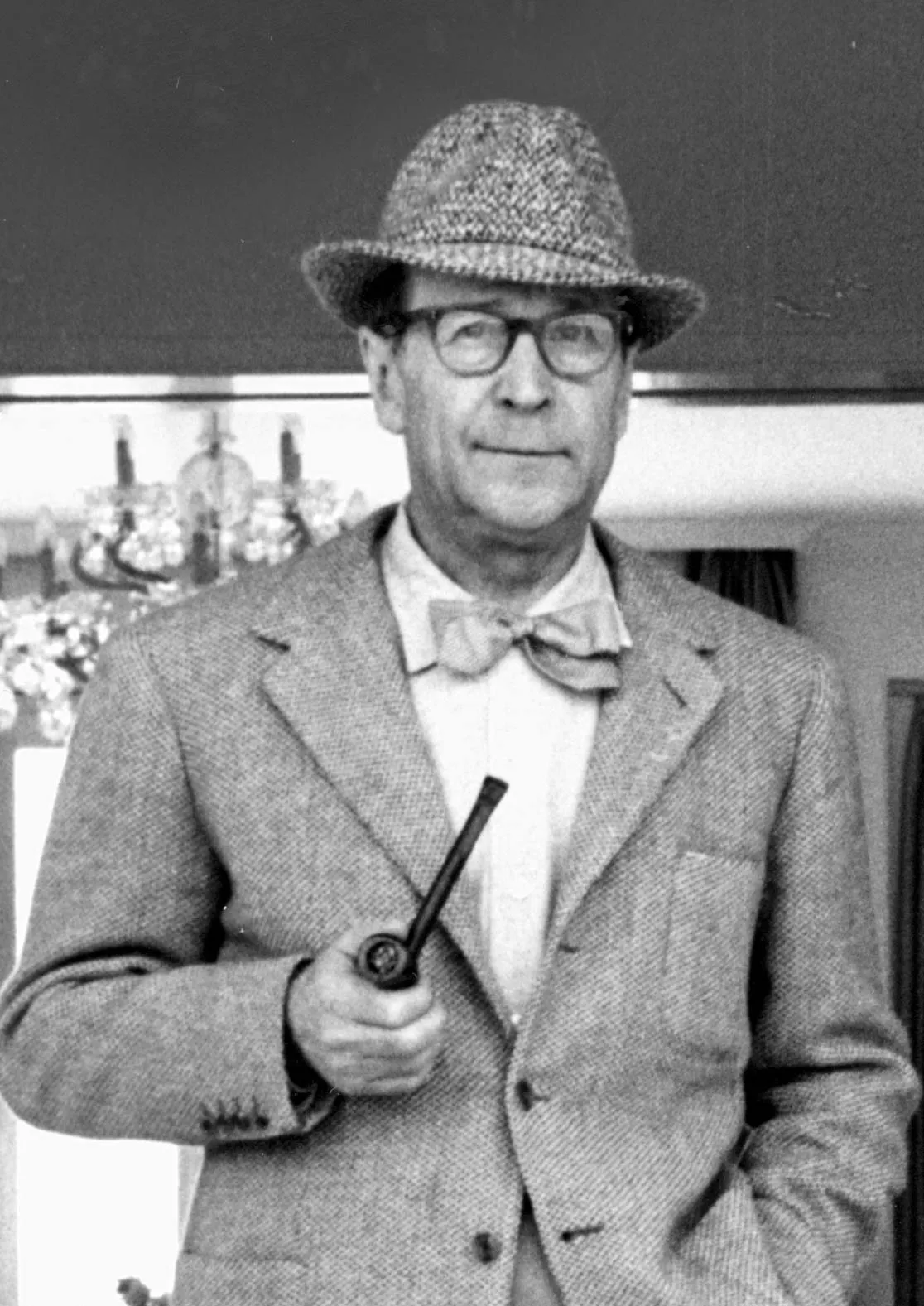
Georges Simenon, a name that resonates deeply in the annals of 20th-century literature, was born on February 13, 1903, in the city of Liège, Belgium. His full name, Georges Joseph Christian Simenon, reflects his Catholic upbringing, which would later influence both his personal life and literary works. However, Simenon’s early years were fraught with challenges that shaped his complex relationship with his family, especially with his mother, Henriette Brüll.
Early Life and Education
Simenon’s childhood was marked by numerous health issues, which added strain to his already tense relationship with his family. His father, Désiré Simenon, worked as an accountant, while his mother managed the household. The young Georges, despite his health problems, exhibited an early aptitude for learning. He attended schools run by Jesuits, where he excelled academically. However, the rigid and authoritarian environment of the Jesuit institutions clashed with Simenon’s growing sense of individualism and rebellion. By his teenage years, he distanced himself from the Catholic Church, a decision that reflected his broader rejection of societal norms.
Despite his departure from religious life, Simenon’s love for classical studies endured. He immersed himself in the works of literary giants such as Joseph Conrad, Charles Dickens, Alexandre Dumas, Stendhal, Robert Louis Stevenson, and Honoré de Balzac. These authors not only influenced his writing style but also shaped his worldview, particularly his understanding of human nature and society.
Early Career and Move to France
Simenon’s foray into the literary world began in his late teens. From 1919 to 1922, he worked as a journalist for La Gazette de Liège, where he wrote under the pseudonym Georges Sim. During this period, he also collaborated with other magazines, gradually building his reputation as a writer. The early 1920s were a pivotal time for Simenon, as he honed his craft and began to explore various literary genres.
In 1922, following the death of his father, Simenon made a life-changing decision to leave Belgium and move to Paris. The French capital, with its vibrant cultural scene, provided the perfect backdrop for Simenon’s burgeoning career. In Paris, he continued to write prolifically, contributing weekly stories to various magazines. Between 1923 and 1926, Simenon’s stories garnered significant attention from readers, establishing him as a popular writer of the time.
Simenon’s literary output during this period was nothing short of prodigious. From the late 1920s to the early 1930s, he wrote an astonishing 170 novels, most of which fell into the commercial fiction category. These works were published under various pseudonyms, including Georges Martin-Georges, Jean du Perry, Christian Brulls, and Gom Gut. Despite their commercial nature, these novels laid the foundation for Simenon’s later success and helped him refine his narrative techniques.
The Birth of Commissaire Maigret
The year 1929 marked a turning point in Simenon’s career with the creation of one of his most iconic characters, Commissaire Jules Maigret. The character first appeared in a series of short stories published in the magazine Détective. Maigret, a stoic and intuitive police detective, quickly became a beloved figure in French literature. His cases, often set against the backdrop of Parisian life, were notable for their psychological depth and exploration of the human condition.
Simenon’s Maigret novels attracted the attention of filmmakers, leading to adaptations by prominent directors such as Jean Tarride and Jean Renoir. These films, including Le Chien Jaune (The Yellow Dog) and Le Mystère du Croix-Rousse (The Mystery of the Crossroads), helped introduce Maigret to a wider audience and solidified Simenon’s reputation as a master storyteller.
World War II and Life in the United States
The outbreak of World War II in 1939 had a profound impact on Simenon’s life. In 1940, he and his family relocated to Fontenay-le-Comte in the Vendée region of France. As the war progressed, Simenon became deeply involved in assisting Belgian refugees, an effort that reflected his humanitarian instincts.
During the war, Simenon also began a correspondence with the renowned French writer André Gide. This intellectual exchange further enriched Simenon’s literary perspective and provided him with a sense of camaraderie during the tumultuous war years.
However, the war also brought with it personal challenges. Due to false medical reports, Simenon believed he was suffering from a terminal illness, leading him to write his autobiography, Pedigree, which he dedicated to his son, Marc. The book offers a candid and introspective look at Simenon’s early life and career, shedding light on the experiences that shaped his literary voice.
In the aftermath of the war, Simenon faced accusations of collaborating with the Nazis, allegations that ultimately proved unfounded. Nevertheless, the experience left him disillusioned with life in Europe, prompting him to move to the United States in 1945. During his time in America, Simenon lived in various states, including Texas and Connecticut. It was in the U.S. that he met and married his second wife, Denyse Ouimet, with whom he had three children: John, Marie-Jo, and Pierre.
Return to Europe and Later Years
By the 1950s, Simenon had grown weary of life in the United States and decided to return to Europe. He first settled on the French Riviera before moving to Epalinges, Switzerland, where he would spend the remainder of his life. The 1960s saw Simenon continue to write prolifically, producing some of his most introspective and mature works.
In 1960, Simenon served as the president of the jury at the Cannes Film Festival, a testament to his influence in both literary and cinematic circles. During this time, he also formed a close friendship with the legendary Italian filmmaker Federico Fellini, a relationship that underscored Simenon’s status as a cultural icon.
The 1970s were marked by both personal and professional milestones for Simenon. In 1972, he published Maigret and Monsieur Charles, his final novel featuring Commissaire Maigret. The book, which revolves around the disappearance of a notary named Gerard Levesque, is a fitting conclusion to the Maigret series, showcasing Simenon’s enduring talent for crafting compelling mysteries.
Following the publication of his last novel, Simenon turned his attention to recording his thoughts and memories on magnetic tapes, a project that culminated in the creation of his autobiographical work, Mémoires Intimes. This deeply personal book, dedicated to his daughter Marie-Jo, who tragically committed suicide in 1978, offers a poignant reflection on Simenon’s life and the people who shaped it.
Legacy and Death
Georges Simenon passed away on September 4, 1989, in Lausanne, Switzerland, after a long battle with brain cancer. Over the course of his career, he wrote more than 400 works, including 103 novels featuring Commissaire Maigret. Simenon’s literary legacy is immense, with his books translated into dozens of languages and adapted into numerous films and television series.
Simenon’s work is characterized by its exploration of the darker aspects of human nature, a theme that resonated with readers and critics alike. His ability to portray the complexities of ordinary people caught up in extraordinary circumstances earned him a place among the greats of 20th-century literature.
Eugenio Baroncelli, a fellow writer, once remarked that Simenon “wrote 431 novels, including 103 Maigret investigations, many under his name and others under twelve different pseudonyms. His method was simple: a ‘Do Not Disturb’ sign on the door, a box of sharpened pencils on the desk. Once the pencils were used up, the novel was finished. Eighty pages a day, seventy words a minute. He hurried, perhaps to mock the idiocy of perfection.”
Simenon’s life and work continue to captivate readers and scholars alike, offering a window into the human soul and the societal forces that shape it. His ability to write with both speed and depth remains unparalleled, making him one of the most prolific and respected authors of the 20th century.


