
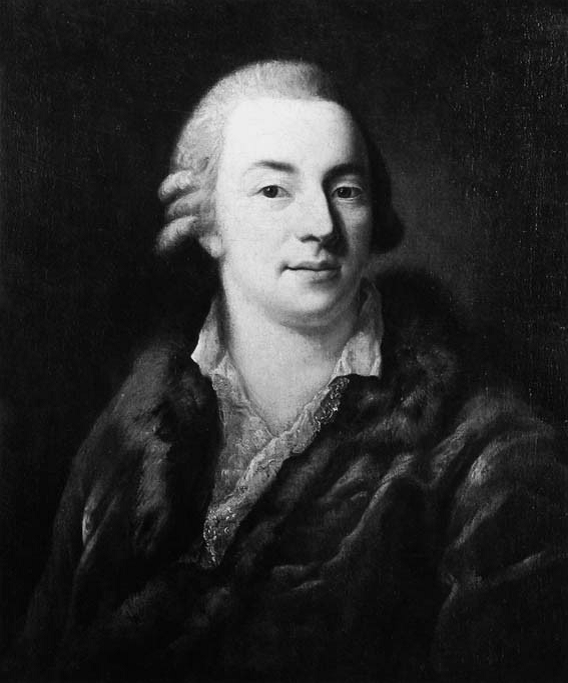
Giacomo Casanova, born on April 2, 1725, in Venice, Italy, is a name that has become synonymous with romantic escapades and adventure. Often depicted as the quintessential womanizer, Casanova’s life was far more complex and multifaceted than his reputation suggests. He was a man of intellect, a writer, a diplomat, and an adventurer whose influence extended beyond his amorous conquests. This article will explore the life, fame, and significant events that shaped Giacomo Casanova into one of history’s most intriguing figures.
Early Life and Education
Giacomo Girolamo Casanova was born into a family of actors, Gaetano Casanova and Zanetta Farussi, known as “La Buranella.” Despite his father’s absence, Casanova was raised in Venice under the care of his maternal grandmother due to the frequent absences of his parents, who were often on tour for their acting careers. This upbringing in Venice, a city known for its cultural vibrancy and libertine atmosphere, played a significant role in shaping Casanova’s worldview.
Casanova was a precocious child, displaying an early talent for learning and a keen interest in the arts and sciences. He attended the University of Padua, where he earned a degree in law in 1742 at the young age of 17. However, despite his academic achievements, Casanova found the legal profession stifling and unsuited to his adventurous spirit.
Early Career Attempts: Priesthood and Military Service
After completing his education, Casanova initially attempted to pursue a career in the Church. He became an ecclesiastical lawyer and even took minor holy orders, but his natural inclinations soon led him astray from the strictures of religious life. His charismatic personality and love for the pleasures of life made it difficult for him to adhere to the discipline required by the priesthood.
Realizing that the religious life was not for him, Casanova next turned to a military career. He joined the Venetian army but quickly grew disillusioned with the rigid hierarchy and lack of freedom. His brief military stint ended when he resigned, preferring the unpredictability of civilian life.
It was during this period that Casanova met the Venetian nobleman Matteo Bragadin, who would become his lifelong patron. Bragadin, impressed by Casanova’s wit and charm, took him under his wing and provided him with financial support. This relationship allowed Casanova to indulge in the luxuries and pleasures of Venice, but it also marked the beginning of a life of intrigue and scandal.
The Infamous Flee from Venice and Adventures Across Europe
Casanova’s flamboyant lifestyle in Venice eventually led to trouble. His reputation for debauchery and his involvement in various scandals, including an alleged affair with two nuns, attracted the attention of the Venetian Inquisition. In 1755, he was arrested and imprisoned in the infamous Piombi, the lead-roofed prison in the Doge’s Palace. However, in 1756, Casanova made a daring and successful escape from the Piombi, an event that would become one of the most celebrated moments of his life and contribute significantly to his legendary status.
Following his escape, Casanova embarked on a series of travels across Europe, leading a life of adventure, deception, and romance. He found refuge in Paris, where he ingratiated himself with the French aristocracy and became involved in various financial schemes, including the establishment of the first French state lottery, which brought him considerable wealth.
Casanova’s travels took him to numerous European capitals, including Vienna, Madrid, London, Berlin, and Moscow. His fluency in multiple languages, coupled with his charm and intellect, allowed him to navigate the courts of Europe with ease. He was welcomed by royalty, diplomats, and intellectuals alike, and he often found himself at the center of political and social intrigues.
Despite his successes, Casanova’s life was fraught with danger and instability. He was frequently forced to flee from one city to another due to debts, duels, and scandals. His encounters with powerful women and men often ended in betrayal, and he became a master of deception, using his wits to survive in a world that was often hostile to him.
Literary Contributions: The Memoirs and Philosophical Works
Casanova’s later years were marked by his efforts to document his life and experiences. In the 1780s, while living in relative obscurity in the Bohemian town of Dux (now Duchcov in the Czech Republic), he began writing his memoirs, Histoire de ma vie (“The Story of My Life”). These memoirs, written in French, provide a detailed account of his adventures, romantic exploits, and the social and political life of 18th-century Europe.
The memoirs of Giacomo Casanova are not merely a chronicle of his love affairs; they offer a rich and nuanced portrait of European society during the Enlightenment. Casanova’s writings reveal his keen observations of human nature, his philosophical reflections on life and morality, and his encounters with some of the most influential figures of his time, including Voltaire, Rousseau, and Frederick the Great.
In addition to his memoirs, Casanova also wrote several philosophical and historical works, as well as plays and novels. His literary output, though often overshadowed by his reputation as a lover, reflects his deep intellectual curiosity and his engagement with the ideas of the Enlightenment. Casanova was a man of letters who sought to contribute to the intellectual discourse of his time, even as he pursued a life of hedonism and adventure.
Casanova’s Legacy: Beyond the Womanizer Stereotype
Giacomo Casanova’s name has become synonymous with seduction and romantic escapades, but reducing his legacy to that of a mere womanizer does a disservice to the complexity of his character and the breadth of his achievements. Casanova was a polymath, a man who excelled in various fields, including literature, diplomacy, and espionage. He was a product of the Enlightenment, embodying both its ideals and its contradictions.
Casanova’s relationships with women were indeed a significant aspect of his life, but they were also a reflection of the broader social and cultural dynamics of his time. In 18th-century Europe, relationships between men and women were often shaped by power, status, and economic considerations. Casanova, with his charm and intelligence, was able to navigate these dynamics to his advantage, but he was also deeply aware of the complexities and ambiguities of love and desire.
In his memoirs, Casanova often reflects on the nature of love and the fleeting nature of pleasure. He acknowledges the pain and suffering that can accompany romantic relationships, and he expresses a sense of melancholy and regret for the harm he may have caused. These reflections suggest that Casanova was not merely a hedonist but a man who grappled with the ethical and emotional dimensions of his actions.
Final Years and Death
Casanova’s final years were spent in relative obscurity, serving as a librarian for Count Waldstein in the remote Castle of Dux. Despite his reduced circumstances, Casanova continued to write and correspond with intellectuals across Europe. His letters from this period reveal a man who, though no longer at the center of European society, remained engaged with the world of ideas and culture.
Casanova died on June 4, 1798, at the age of 73. His last words, according to legend, were, “Great God and all witnesses of my death, I have lived as a philosopher and die as a Christian.” These words encapsulate the duality of Casanova’s character—a man who embraced the pleasures of life but also reflected deeply on its meaning and purpose.
Casanova’s Enduring Influence
The legacy of Giacomo Casanova has endured for more than two centuries, inspiring countless works of literature, film, and art. His name has become a cultural shorthand for a certain type of libertine lifestyle, but Casanova’s influence extends far beyond this narrow stereotype.
Casanova’s memoirs have been studied by historians, literary scholars, and psychologists, who see in his life a reflection of the broader currents of 18th-century European society. His writings provide valuable insights into the social, political, and intellectual life of the time, and they continue to be a rich source of material for those interested in the history of the Enlightenment.
Moreover, Casanova’s life has become a symbol of the complexities of human nature. He was a man of contradictions—brilliant yet flawed, a lover of pleasure but also a seeker of knowledge. His story is a reminder that the human experience is multifaceted, and that individuals cannot be easily categorized or understood through simplistic labels.
Conclusion
Giacomo Casanova’s life is a fascinating tale of adventure, intellect, and passion. He was more than just a seducer; he was a man who engaged with the world in all its complexity, seeking pleasure, knowledge, and meaning. His memoirs offer a window into the world of 18th-century Europe, providing a rich and nuanced portrait of a time of great social and intellectual change.
As we continue to explore and reinterpret Casanova’s life, it is important to recognize the many dimensions of his character. He was a product of his time, but he also transcended it, leaving a legacy that continues to captivate and inspire. Whether as a historical figure, a literary character, or a cultural icon, Giacomo Casanova remains a figure of enduring interest and significance.


