
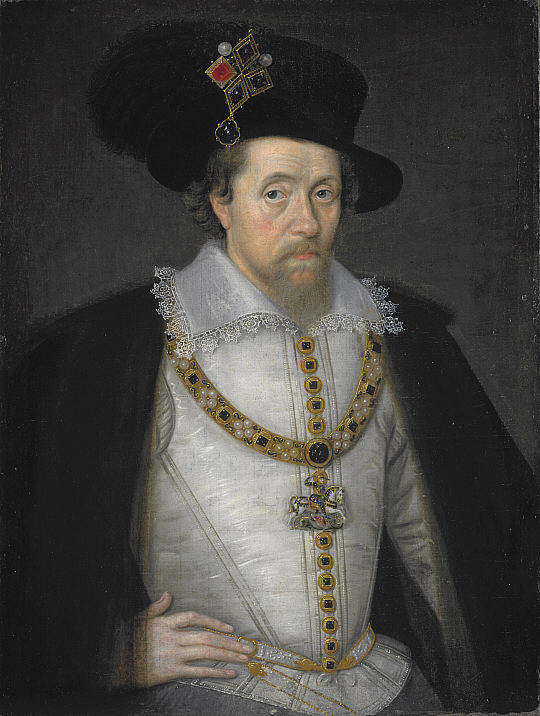
Giacomo Stuart, known to history as James VI of Scotland and James I of England, was a monarch whose reign marked a pivotal period in British history. Born on June 19, 1566, in Edinburgh, Scotland, he ascended the English throne in 1603 following the death of Queen Elizabeth I, thus becoming the first monarch to rule over both England and Scotland. This union of crowns would have a lasting impact on the future of the United Kingdom. In this article, we will delve into the life, reign, and legacy of Giacomo Stuart, exploring the key events and challenges that defined his rule.
Early Life and Ascension to the Throne
Giacomo Stuart was born into the tumultuous world of 16th-century Scotland, the son of Mary, Queen of Scots, and her second husband, Henry Stuart, Lord Darnley. His early years were marked by political intrigue and violence, as his mother was deposed and imprisoned when he was just an infant. Giacomo was crowned King of Scotland as James VI at the tender age of 13 months, and his early reign was overseen by a series of regents who governed in his name.
Despite these challenging beginnings, Giacomo proved to be a shrewd and capable ruler. He was well-educated, fluent in multiple languages, and deeply interested in theology and the arts. His intellectual pursuits would later influence his approach to governance, particularly his belief in the divine right of kings—a doctrine that would define his rule over both Scotland and England.
The Union of the Crowns: James VI and I
Giacomo Stuart’s rise to the English throne was a result of his strong dynastic claim through his great-grandmother, Margaret Tudor, the sister of Henry VIII of England. When Queen Elizabeth I died childless in 1603, Giacomo was invited to become her successor, thus uniting the crowns of England and Scotland. This event, known as the Union of the Crowns, marked the beginning of a new era in British history.
As James I of England, Giacomo faced the enormous challenge of ruling two distinct kingdoms with different laws, customs, and religious practices. While he hoped to create a more unified Britain, his attempts to centralize authority and impose his vision of royal absolutism were met with resistance, particularly from the English Parliament.
Religious Tensions and the Gunpowder Plot
One of the most significant challenges of Giacomo’s reign was the deep religious divide in England. The country was still reeling from the Reformation, and tensions between Catholics and Protestants ran high. Giacomo, a Protestant himself, attempted to navigate these tensions by promoting religious tolerance. However, his efforts were often seen as favoring one group over the other, leading to widespread dissatisfaction.
The most dramatic expression of this religious unrest was the Gunpowder Plot of 1605. A group of Catholic conspirators, led by Guy Fawkes, attempted to blow up the Houses of Parliament during the state opening, hoping to assassinate the king and restore a Catholic monarch to the throne. The plot was foiled, and its failure led to a severe crackdown on Catholics in England, further entrenching the religious divide.
Political Struggles with Parliament
Giacomo’s relationship with the English Parliament was fraught with tension. He believed in the divine right of kings, which held that monarchs were appointed by God and therefore not subject to earthly authority, including that of Parliament. This belief put him at odds with the growing sentiment in England that the king should govern in partnership with Parliament.
Throughout his reign, Giacomo clashed with Parliament over issues such as taxation, foreign policy, and the role of the monarchy. These conflicts culminated in the dissolution of Parliament in 1611, after which Giacomo ruled without parliamentary consent for several years. This period of personal rule exacerbated the king’s unpopularity and set the stage for future conflicts between the monarchy and Parliament, which would eventually lead to the English Civil War during the reign of his son, Charles I.
Colonial Expansion and the British Empire
Despite the domestic challenges of his reign, Giacomo Stuart presided over a period of significant colonial expansion. It was under his rule that the British East India Company was granted a royal charter in 1600, allowing it to establish trade routes with Asia and Africa. This marked the beginning of British dominance in global trade, particularly in the lucrative spice trade.
In 1606, Giacomo also granted a charter to the Virginia Company, which led to the establishment of the first permanent English colony in North America—Jamestown, Virginia—in 1607. This was a significant milestone in the history of the British Empire, as it laid the foundation for the eventual expansion of British influence across the Americas.
The Legacy of Giacomo Stuart
Giacomo Stuart’s reign was a complex and often contradictory period in British history. On the one hand, he was a monarch who believed in the absolute power of the king, which led to significant conflicts with Parliament and contributed to the long-term decline of royal authority in England. On the other hand, his reign saw important developments in the areas of religion, politics, and colonial expansion that would shape the future of the United Kingdom.
One of Giacomo’s most lasting legacies is the King James Bible, an English translation of the Christian Bible commissioned by the king in 1604. Published in 1611, the King James Bible became the most widely read and influential version of the Bible in the English-speaking world, shaping the language and religious beliefs of millions of people for centuries.
Giacomo’s efforts to unite England and Scotland also had a lasting impact, even though the full political union of the two countries would not be achieved until the Act of Union in 1707. His vision of a unified Britain was ahead of its time, and while it was not fully realized during his reign, it laid the groundwork for the modern United Kingdom.
Giacomo’s Final Years and Death
The final years of Giacomo Stuart’s reign were marked by increasing tension and decline. His attempts to secure marriages for his children that would strengthen alliances with European powers were met with limited success. Moreover, his health began to deteriorate, and he became increasingly reliant on favorites, such as George Villiers, Duke of Buckingham, who wielded considerable influence in his court.
On March 27, 1625, Giacomo Stuart died at the age of 58 in Theobalds House, Hertfordshire. He was succeeded by his son, Charles I, whose reign would be even more tumultuous, eventually leading to the English Civil War and the temporary abolition of the monarchy.
Conclusion
Giacomo Stuart was a monarch whose reign was marked by significant achievements and considerable challenges. As the first ruler of both England and Scotland, he played a crucial role in the early history of the United Kingdom. His belief in the divine right of kings and his conflicts with Parliament set the stage for future struggles over the balance of power in British governance. At the same time, his contributions to religious and cultural life, particularly through the commissioning of the King James Bible, have had a lasting impact on the English-speaking world.
Giacomo Stuart’s legacy is one of both accomplishment and controversy. He was a ruler who sought to bring unity and stability to his kingdoms, but his methods often led to division and conflict. Despite these challenges, his reign marked the beginning of a new era in British history, one that would see the expansion of British influence around the globe and the eventual creation of a united kingdom that endures to this day.
As we reflect on Giacomo Stuart’s life and reign, it is clear that his impact on history is profound. His vision of a unified Britain, his contributions to the cultural and religious life of his time, and his role in the early stages of British colonial expansion all serve as reminders of the complexities and contradictions of his rule. Giacomo Stuart remains a figure of enduring interest and significance, a monarch whose legacy continues to shape the history and identity of the United Kingdom.


