
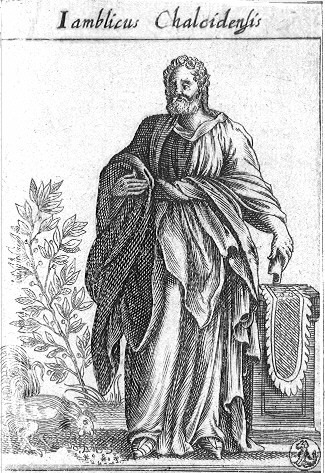
Introduction:
Giamblico, known as Iamblichus in the Western world, is a towering figure in the history of philosophy, particularly within the Neoplatonic tradition. Born around 250 AD in Chalcis, he is best remembered for his attempts to reconcile and reinterpret Platonism in the context of his time. His life, teachings, and writings have left an indelible mark on the intellectual landscape of Late Antiquity, influencing not just his contemporaries but also later medieval scholars. This article delves into the life of Giamblico, exploring his age, fame, and significant contributions to philosophy, with an emphasis on how his thoughts have shaped the course of Western intellectual history.
Early Life and Background
Giamblico was born around 250 AD in Chalcis, a region located in modern-day Syria. His early years remain largely obscure, but what is clear is his profound engagement with the philosophical traditions of the time. He became a student of Porphyry, a prominent philosopher and disciple of Plotinus, the founder of Neoplatonism. Under Porphyry’s tutelage, Giamblico was introduced to the fundamental tenets of Neoplatonism, particularly the metaphysical distinction between the One, the Intellect, and the Soul.
However, Giamblico’s intellectual journey was not one of mere acceptance. Dissatisfied with Porphyry’s interpretations, he sought to carve out his own philosophical path. This divergence led to his departure from Porphyry’s circle and the establishment of his own school in Apamea, where he would further develop and disseminate his unique vision of Neoplatonism.
Philosophical Contributions and Teachings
Giamblico’s philosophical contributions are significant, especially his expansion of the metaphysical framework established by Plotinus. While Plotinus proposed a relatively simple structure of reality based on three hypostases—the One, the Intellect, and the Soul—Giamblico introduced greater complexity into this model. He posited the existence of a series of intermediate entities known as henads, which bridged the gap between the One and the Intellect. These henads played a crucial role in Giamblico’s metaphysics, serving as the divine principles that govern the cosmos.
One of Giamblico’s most notable innovations was his emphasis on theurgy, a set of rituals and practices aimed at achieving union with the divine. Unlike his predecessor Plotinus, who believed that philosophical contemplation alone was sufficient to attain spiritual enlightenment, Giamblico argued that the human soul could not ascend to higher realms without the aid of theurgy. For Giamblico, theurgy was essential for establishing a direct connection with the divine, bypassing the limitations of human reason and dialectic.
In addition to his metaphysical and theurgical innovations, Giamblico also made significant contributions to the interpretation of Platonic dialogues. He was the first to introduce a systematic approach to reading Plato, distinguishing between practical and theoretical works. His curriculum for students began with works that focused on moral and ethical instruction, such as the “Alcibiades Major” and the “Gorgias,” before moving on to more abstract and theoretical dialogues like the “Phaedo” and the “Sophist.”
Major Works and Legacy
Giamblico was a prolific writer, although much of his work has been lost over time. Among his surviving works, “On the Pythagorean Way of Life” is perhaps the most famous. This text, part of his larger ten-volume series on Pythagoreanism, provides a detailed account of the life and teachings of Pythagoras, emphasizing his commitment to vegetarianism and the ethical treatment of animals. Giamblico’s portrayal of Pythagoras as a philosopher who embodied the highest ideals of wisdom and virtue had a lasting impact on the way Pythagoreanism was perceived in Late Antiquity and the Middle Ages.
Another important work by Giamblico is “On the Mysteries of the Egyptians,” in which he defends the practice of theurgy against the criticisms of Porphyry. In this text, Giamblico adopts the persona of an Egyptian priest named Abammone, arguing that theurgy is a superior form of spiritual practice that transcends the limitations of rational philosophy. This work was influential in shaping the development of later Neoplatonism and the integration of religious and philosophical practices in the Late Antique world.
Giamblico’s influence extended far beyond his own lifetime. His teachings were carried forward by his students, who became prominent figures in the later Neoplatonic tradition. One of his most important successors was Proclus, who further developed Giamblico’s ideas and played a key role in transmitting Neoplatonic thought to the medieval world. Through Proclus and other intermediaries, Giamblico’s philosophy became a central component of the intellectual heritage of the Middle Ages, influencing Christian, Jewish, and Islamic thought.
The Theurgical Tradition
A central aspect of Giamblico’s philosophy is his doctrine of theurgy, which represents a significant departure from the purely rationalist approach of earlier Platonists. For Giamblico, theurgy was not just a means of communicating with the gods; it was a transformative process that could elevate the soul to the divine realm. He believed that the soul, being trapped in the material world, needed to be purified and reconnected with its divine source through ritual practices.
Theurgy, in Giamblico’s view, was superior to philosophical contemplation because it engaged the soul at a deeper, more mystical level. While reason and dialectic could lead to an understanding of the divine, they could not facilitate the actual experience of union with the divine. Theurgy, by contrast, involved the performance of sacred rituals that invoked the presence of the gods and facilitated the soul’s ascent to the divine realm.
This emphasis on theurgy reflects Giamblico’s broader metaphysical vision, in which the material and spiritual worlds are deeply interconnected. For Giamblico, the material world was not merely a shadowy reflection of the divine but a realm that could be sanctified and transformed through ritual action. In this way, theurgy served as a bridge between the human and divine realms, allowing the soul to participate in the divine order.
Historical Context and Influence
Giamblico’s philosophy must be understood within the broader context of Late Antiquity, a period marked by profound cultural and religious transformations. During this time, the Roman Empire was undergoing significant changes, with the rise of Christianity and the decline of traditional pagan practices. Giamblico’s emphasis on theurgy can be seen as a response to these changing circumstances, as he sought to preserve and revitalize the religious traditions of the pagan world.
In addition to his philosophical and religious contributions, Giamblico also played a crucial role in the development of the Neoplatonic school of thought. His reinterpretation of Plato and his integration of Pythagorean and Egyptian elements into Neoplatonism helped to create a more complex and syncretic philosophical system. This system, in turn, provided a foundation for later thinkers, including Proclus and Damascius, who further elaborated on Giamblico’s ideas.
Giamblico’s influence extended beyond the boundaries of the Roman Empire, as his works were translated into Arabic and Latin during the Middle Ages. His ideas had a significant impact on the development of Islamic philosophy, particularly in the works of thinkers like Al-Farabi and Avicenna, who incorporated Neoplatonic concepts into their own philosophical systems. In the Christian world, Giamblico’s emphasis on theurgy and his hierarchical conception of the cosmos influenced medieval mystics and theologians, including figures like Pseudo-Dionysius the Areopagite.
Conclusion
Giamblico remains a pivotal figure in the history of philosophy, whose contributions to Neoplatonism and the development of theurgical practices have had a lasting impact on Western thought. His innovative reinterpretation of Plato, his emphasis on the importance of theurgy, and his efforts to integrate diverse philosophical and religious traditions into a coherent system have ensured his place as one of the most influential philosophers of Late Antiquity. Giamblico’s legacy continues to be felt today, as scholars and philosophers explore the rich complexities of his thought and its enduring relevance to the study of metaphysics, religion, and mysticism.
By examining Giamblico’s life, works, and influence, we gain a deeper understanding of the intellectual currents that shaped the late Roman world and the ways in which these currents have continued to influence philosophical thought throughout history. Giamblico’s age, fame, and life highlights offer a window into a fascinating period of cultural and philosophical transformation, one that continues to resonate in our own time.


