
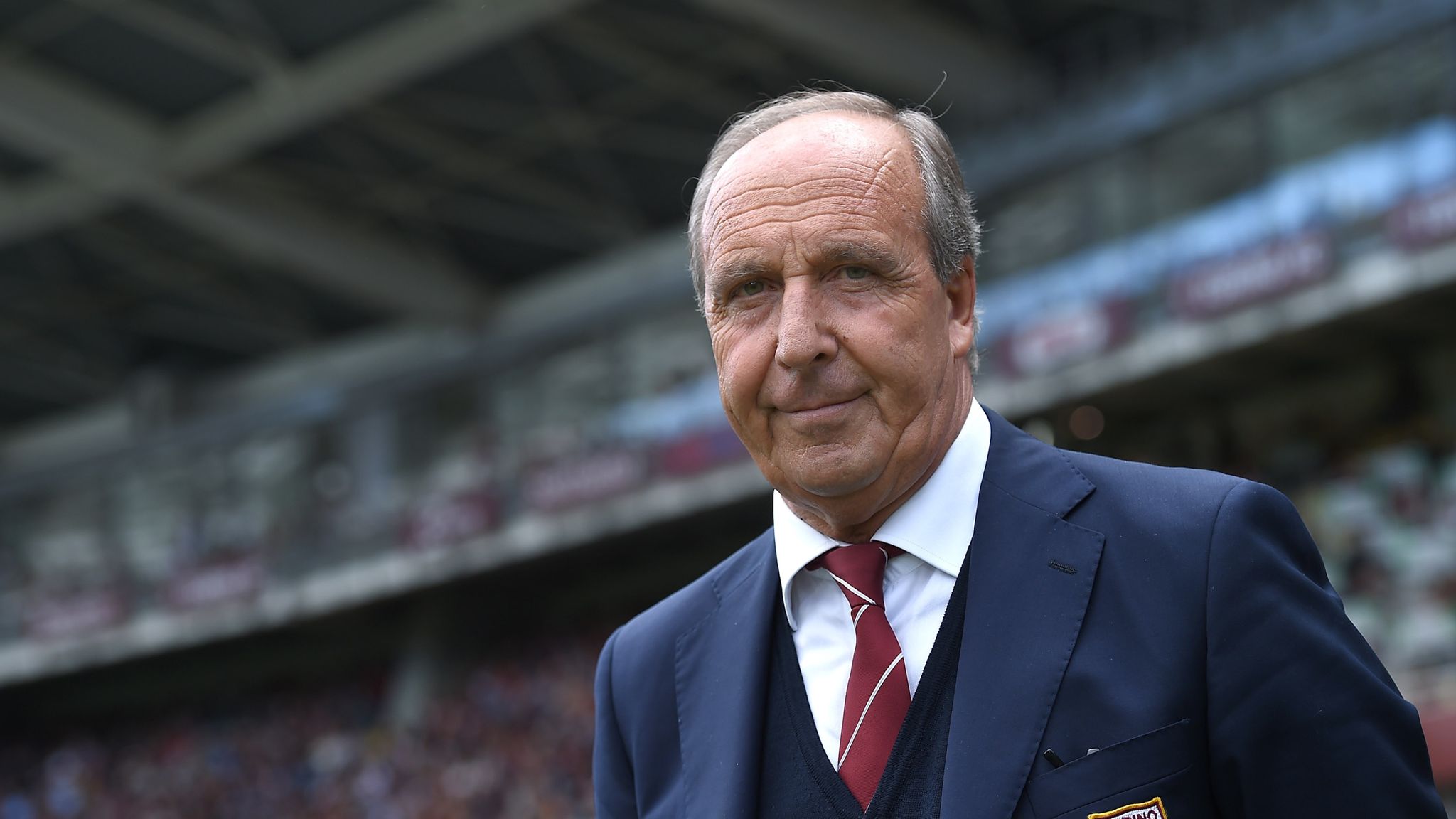
Giampiero Ventura, born on January 14, 1948, in Genoa, Italy, is a name that resonates with football aficionados, particularly those who follow Italian football. Over the decades, Ventura has carved a niche for himself as a football manager, albeit with a career marked by both significant achievements and notable disappointments. This article delves into the life of Giampiero Ventura, exploring his age, rise to fame, and key highlights that have defined his journey in the world of football.
Early Life and Playing Career
Ventura’s football journey began in his hometown of Genoa, where he first kicked a ball and nurtured his passion for the sport. He started his youth career at Sampdoria, a prominent football club in Italy. During his time with the youth team, Ventura shared the field with future football stars like Marcello Lippi and Domenico Arnuzzo. Despite his early promise, Ventura’s playing career never reached the heights that might have been expected. He primarily played as a midfielder and spent most of his playing days in Serie D, the fourth tier of Italian football, with a brief stint in Serie C, where he made nine appearances for Enna during the 1970-1971 season.
Recognizing that his future might not lie in playing, Ventura hung up his boots relatively early and transitioned into coaching, a decision that would define the rest of his life.
Transition to Coaching and Early Managerial Roles
Ventura’s coaching career began modestly, as he took up roles in the youth setup and as an assistant coach at Sampdoria. His early managerial stints were with lower-tier clubs like Albenga and Rapallo Ruentes in the Interregionale, a level of Italian football that is several rungs below the top leagues. It was during this time that Ventura honed his coaching philosophy, focusing on discipline, tactical awareness, and player development.
One of his early successes came at Entella Bacezza in Chiavari, where he guided the team to promotion from the Interregionale. This achievement marked Ventura as a coach capable of transforming teams, even with limited resources. His work at Entella Bacezza also caught the attention of higher-tier clubs.
Rise to Prominence in Serie B and Serie A
Giampiero Ventura’s breakthrough came in the mid-1990s when he was appointed the head coach of Venezia in Serie B, the second tier of Italian football. Although his first experience in Serie B was short-lived—he was sacked after just nine matches—Ventura quickly rebounded by taking charge of Lecce, a club in Serie C1. With Lecce, Ventura achieved back-to-back promotions, leading the team first to Serie B and then to Serie A, the pinnacle of Italian football. This achievement solidified his reputation as a coach who could deliver results.
Ventura’s ability to promote teams to higher divisions became a hallmark of his career. After leaving Lecce, he took over at Cagliari and repeated his success, guiding the team to promotion to Serie A. By the late 1990s, Ventura had established himself as a respected coach in Italy’s top football leagues.
Managerial Journeyman: The 2000s and Beyond
The 2000s were a period of frequent changes for Ventura as he managed several clubs across Italy. He had stints with notable teams such as Sampdoria, Udinese, and Napoli, often taking over clubs in precarious situations and stabilizing them. However, his most memorable achievement during this time came with Pisa in Serie B. Ventura joined Pisa in 2007, shortly after the club had been promoted to Serie B. He quickly transformed the team into a contender, narrowly missing out on promotion to Serie A after reaching the playoffs.
Despite his success at Pisa, Ventura was dismissed in 2009 after a run of poor results. Nevertheless, his work there left a lasting impression, and he soon found himself back in the spotlight when he was appointed head coach of Bari. At Bari, Ventura’s charismatic personality and unique approach to coaching earned him the nickname “Mister Libidine” (Mr. Pleasure) among the fans. Under his guidance, Bari achieved a record 50 points in Serie A during the 2009-2010 season, finishing in 10th place—an impressive feat for a club of Bari’s stature.
The Torino Era and European Success
In 2011, Ventura took on one of the most significant challenges of his career when he was appointed head coach of Torino, a historic club in Italian football. Torino had been struggling in Serie B, but Ventura quickly set about revitalizing the team. He promoted young talents like Matteo Darmian, Angelo Ogbonna, and Kamil Glik, who would go on to become key players for both Torino and the Italian national team.
Ventura’s efforts paid off as Torino earned promotion to Serie A at the end of the 2011-2012 season. Over the next few years, Ventura continued to build a competitive team, and his work culminated in the 2013-2014 season when Torino finished 7th in Serie A, earning a spot in the UEFA Europa League. This was a significant achievement for the club, which had not competed in European competitions for many years.
In the 2014-2015 Europa League, Torino made headlines by defeating Athletic Bilbao in Spain—a feat no Italian team had accomplished before. Although Torino’s European journey ended in the Round of 16, Ventura’s success with the club solidified his reputation as one of Italy’s top coaches.
National Team and the 2018 World Cup Debacle
Giampiero Ventura’s career took a dramatic turn in 2016 when he was appointed head coach of the Italian national team, succeeding Antonio Conte. It was a prestigious role, but one fraught with challenges. Ventura’s tenure as Italy’s coach is best remembered for its catastrophic ending. Under his guidance, Italy failed to qualify for the 2018 FIFA World Cup, marking the first time in 60 years that the Azzurri missed out on the tournament. The final blow came on November 13, 2017, when Italy was held to a goalless draw by Sweden in the second leg of their playoff tie, leading to their elimination.
The failure to qualify for the World Cup was a national tragedy in Italy, and Ventura faced immense criticism. He was sacked the day after the defeat, and his tenure as Italy’s coach was widely regarded as a failure. This episode remains a dark chapter in Ventura’s otherwise respectable career.
Personal Life and Legacy
Away from the pitch, Giampiero Ventura has led a relatively private life. In June 2016, he married Luciana Lacriola, whom he had met during his time at Bari. Their relationship is said to have been a source of strength for Ventura, particularly during the turbulent times in his career.
Despite the setback with the national team, Ventura’s legacy in Italian football is secure. He is remembered as a coach who could inspire teams to punch above their weight, often achieving more than what was expected given the resources at his disposal. His work with clubs like Lecce, Cagliari, Bari, and Torino has left an indelible mark on Italian football, and his ability to develop young talent has earned him respect across the footballing community.
Conclusion
Giampiero Ventura’s career is a tale of highs and lows, of triumphs and tribulations. From his early days as a player in the lower leagues to his successes as a coach in Serie A and the heartbreak of the national team, Ventura’s story is one of resilience and perseverance. While his time with the Italian national team will likely remain a blemish on his record, it should not overshadow the significant contributions he has made to Italian football over the years.
Today, Ventura continues to be involved in football, sharing his wealth of experience and knowledge with the next generation of coaches and players. His journey serves as a reminder that even in the world of sports, success is often accompanied by failure, and it is how one responds to adversity that truly defines a legacy.


