
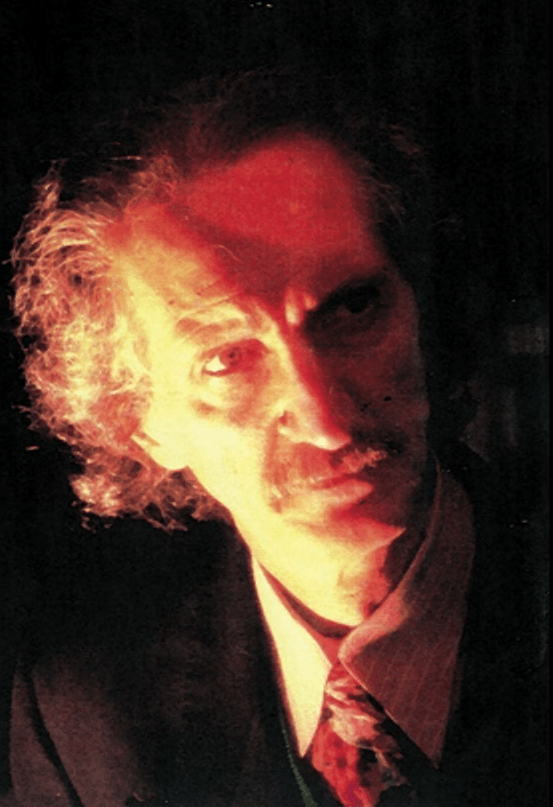
Gian Carlo Riccardi was a multifaceted Italian artist whose work spanned across various mediums, including painting, caricature, theater, sculpture, music, and writing. Born on October 21, 1933, in Frosinone, Italy, Riccardi’s artistic career was defined by his versatility and his ability to blend different forms of artistic expression. Described by art critic Enrico Crispolti as a “multimedia artist,” Riccardi was a creative force who left a significant impact on the Italian art scene and beyond.
Early Life and Education
Gian Carlo Riccardi’s journey into the world of art began in his youth. His early interest in drawing led him to replicate magazine covers, such as those from La Domenica del Corriere and Passa il Giro. This passion for art continued to develop throughout his childhood, setting the stage for his later career.
Riccardi’s formal education in the arts began at the Accademia di Belle Arti in Rome, where he graduated with honors in scenography in 1961. His education continued at the Centro Sperimentale di Cinematografia in Rome, where he earned a diploma in theater and film directing. These academic pursuits provided Riccardi with a solid foundation in both visual and performing arts, allowing him to explore a wide range of creative disciplines.
During his time at the academy, Riccardi became involved with the Roman theatrical avant-garde, collaborating with prominent figures such as Carmelo Bene, Memè Perlini, Pino Pascali, Filippo Torriero, and Mario Ricci. This period of collaboration and experimentation was crucial in shaping Riccardi’s artistic philosophy and his approach to integrating different art forms.
Theatrical Contributions
Theater played a central role in Gian Carlo Riccardi’s artistic career. After completing his studies, Riccardi returned to his hometown of Frosinone, where he founded the Gruppo Teatro Laboratorio Arti Visive in 1961. This group was dedicated to exploring the intersections between visual arts and theater, emphasizing the importance of gesture and the contradictions of contemporary life.
In 1962, Riccardi established the Teatro Club in the historic center of Frosinone, a small theater that became a hub for experimental performances. These productions, which focused on the human condition and the complexities of modern society, were performed not only in Italy but also internationally, showcasing Riccardi’s innovative approach to theater.
Riccardi’s contributions to the theatrical world extended beyond Frosinone. In 1967, he co-founded the Teatro La Fede in Rome with Giancarlo Nanni, Manuela Kustermann, Giuliano Vasilicò, Pippo di Marca, and Valentino Orfeo. The Teatro La Fede was the birthplace of the Gruppo Space Re(v)action, a collective that pushed the boundaries of theatrical expression by incorporating elements of visual art, performance, and social commentary.
In 1997, Riccardi established the Teatro dell’Immagine, where he continued the experimental work he had begun in the 1960s. This theater became a space for Riccardi to further explore the relationship between image and performance, continuing his lifelong commitment to artistic innovation.
Painting and Drawing
Gian Carlo Riccardi’s work as a painter and illustrator was marked by its evolution over time. From a young age, Riccardi showed a talent for drawing, which led to his early work as a caricaturist for satirical magazines such as Il Travaso delle Idee, La Tribuna Illustrata, and Il Bertoldo. These early experiences honed Riccardi’s ability to capture the essence of his subjects with a few deft strokes, a skill that would later influence his work in other mediums.
Riccardi’s paintings from the 1970s are characterized by grotesque and unsettling figures, reflecting his interest in the darker aspects of human nature. These works often depicted distorted, almost nightmarish figures, challenging viewers to confront the discomforts and anxieties of contemporary life.
In the 1980s, Riccardi’s work took a turn towards abstraction. He began incorporating elements of ready-made and collage into his paintings, using found materials and everyday objects to create complex, layered compositions. This period of experimentation with materials and techniques marked a significant shift in Riccardi’s artistic approach, as he moved away from figurative representation towards a more conceptual exploration of form and texture.
In the 2000s, Riccardi’s work experienced another transformation, as he began revisiting themes from his childhood. These later works often featured a return to simpler, more innocent imagery, reflecting a sense of nostalgia and a desire to reconnect with the past.
Riccardi’s paintings have been exhibited in numerous solo and group exhibitions in Italy and abroad, including prestigious events such as the ArtExpo in Geneva (1984), the British Art Fair in London (1985), and the International Visual Arts Review in Krakow (1995). His ability to adapt and evolve as an artist is evident in the diverse range of styles and themes present in his body of work.
Sculpture and Installations
Gian Carlo Riccardi’s work as a sculptor is perhaps less well-known than his paintings and theater work, but it is no less significant. Riccardi’s sculptures often utilized poor materials such as wood, paper, and iron, reflecting his interest in the intrinsic qualities of these simple, everyday substances.
One of Riccardi’s most notable contributions to sculpture is his series of “Stanze” (Rooms), created during the 1980s. These installations, constructed from basic materials like wood and iron, featured colored walls with abstract patterns, fragments of wood, and common objects arranged in thought-provoking ways. These works invited viewers to step into a physical space that challenged their perceptions of art and environment, blending the boundaries between sculpture, architecture, and installation art.
Riccardi’s sculptures were showcased in several important exhibitions, including at the European Parliament (1991), the Manege Central Exhibition Hall in Moscow (1991), and the XLV Venice Biennale (1993). His installations were not only artistic expressions but also commentaries on space, memory, and the human experience.
Writing and Literary Contributions
In addition to his work in visual arts and theater, Gian Carlo Riccardi was also a prolific writer. He wrote numerous theatrical scripts, prose, and poetry, often exploring themes that were also present in his visual and performance work, such as memory, childhood, and the passage of time.
Riccardi’s writings often mirrored the emotional and psychological depth found in his paintings and sculptures. His literary works provide insight into the mind of an artist who was constantly searching for ways to express the complexities of human existence through multiple forms of media.
Legacy and Influence
Gian Carlo Riccardi passed away in his hometown of Frosinone on February 7, 2015, at the age of 81. His death marked the end of a prolific and varied career that had spanned over five decades. Riccardi’s influence can be seen in the many artists and performers who have been inspired by his work, as well as in the continued relevance of his artistic explorations in contemporary art and theater.
Riccardi’s legacy is that of a true Renaissance man, an artist who refused to be confined by a single medium or style. His ability to seamlessly integrate painting, theater, sculpture, and writing into a cohesive artistic practice is a testament to his creativity and his commitment to pushing the boundaries of what art can be.
In reflecting on Gian Carlo Riccardi’s life and work, it becomes clear that his contributions to the arts were not just about creating beautiful objects or performances. Rather, Riccardi was deeply engaged in a lifelong inquiry into the nature of human existence, memory, and the ways in which art can communicate complex and often contradictory truths. His work remains a valuable resource for those seeking to understand the interplay between different forms of artistic expression and the broader cultural context in which they exist.
Conclusion
Gian Carlo Riccardi’s life and career were characterized by a relentless pursuit of artistic expression across multiple mediums. From his early days as a caricaturist to his later years as a painter, sculptor, and theater director, Riccardi consistently pushed the boundaries of what art could achieve. His work continues to be celebrated for its innovation, its emotional depth, and its ability to engage with the fundamental questions of human existence.
As an artist, Riccardi was never content to rest on his laurels. He constantly sought out new challenges, new forms of expression, and new ways to connect with his audience. This restless creativity is what made Riccardi one of the most important Italian artists of the 20th century, and it is what ensures that his work will continue to be studied, appreciated, and admired for years to come.


