
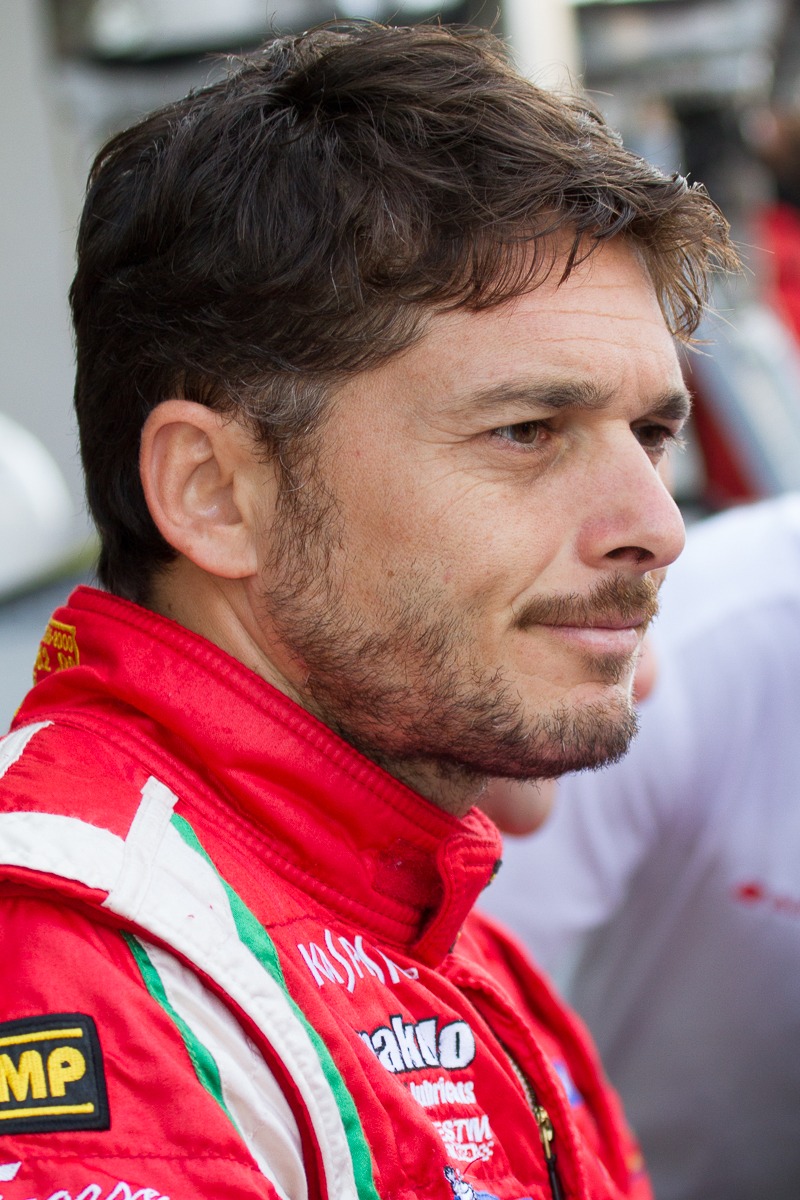
Giancarlo Fisichella is a name that resonates deeply within the world of motorsport, particularly in the realm of Formula 1. Born on January 14, 1973, in Rome, Italy, Fisichella’s career is a testament to his exceptional skill, resilience, and passion for racing. Over the years, Fisichella has garnered fame not only for his achievements on the track but also for his enduring influence in the world of racing. His journey from karting champion to a celebrated Formula 1 driver is a story of talent meeting opportunity, underpinned by a relentless drive for success.
Early Life and Karting Success
Giancarlo Fisichella’s journey to Formula 1 began in the competitive world of karting. From a young age, it was clear that Fisichella had a natural affinity for speed and racing. He quickly made a name for himself in both national and international karting circuits, securing numerous victories and establishing himself as a formidable talent. His success in karting laid the foundation for his future in motorsport, where he would continue to build on his early accomplishments.
In 1991, Fisichella took a significant step forward by joining the Formula Alfa Boxer series. His performances caught the attention of several teams, leading to his participation in the Italian Formula 3 Championship with RC Motorsport. Over the next three seasons, Fisichella consistently demonstrated his prowess on the track, culminating in his first major victory in 1994 when he won the Italian Formula 3 Championship. That same year, he also won the prestigious Monaco Formula 3 Grand Prix and one of the two heats at the Macau Grand Prix, further cementing his reputation as one of the most promising young drivers of his generation.
Ascension to Formula 1
Fisichella’s success in lower racing categories did not go unnoticed. In 1995, he made the transition to the International Touring Car Championship, where he continued to impress with his speed and consistency. However, it was in 1996 that Fisichella achieved his dream of competing in Formula 1. He made his debut with the Minardi team, a small but respected outfit in the F1 paddock. Although his stint with Minardi was brief, as he was replaced by Giovanni Lavaggi later in the season, it was clear that Fisichella had the potential to compete at the highest level.
The following year, Fisichella joined the Jordan team, where he began to showcase his true potential. In 1997, he secured a remarkable second-place finish at the Belgian Grand Prix and led the German Grand Prix before retiring due to mechanical issues. These performances helped him finish the season in eighth place overall, a solid result for a driver in just his second year of Formula 1.
Benetton, Renault, and Continued Success
In 1998, Fisichella moved to the Benetton team, a squad that had won multiple championships in the mid-1990s. Although the team was no longer at the peak of its powers, Fisichella managed to deliver several strong performances, finishing ninth in the championship with 16 points. Despite his promising start with Benetton, the 1999 season proved to be a challenging one. The team struggled with performance issues, and Fisichella ended the year in ninth place once again, this time with only 13 points.
In 2001, Fisichella was paired with Jenson Button at Benetton after longtime teammate Alexander Wurz was dropped from the team. However, at the end of the season, team principal Flavio Briatore announced that Fisichella would not continue with Benetton in 2002. Fisichella then returned to Jordan for the 2002 season, partnering with Japanese driver Takuma Sato.
Despite the team’s struggles, Fisichella’s experience and skill were evident, and he continued to be regarded as one of the top drivers in the sport. His perseverance paid off in 2003 when he achieved his first Formula 1 victory at the Brazilian Grand Prix in São Paulo. The win was particularly memorable, as it came in chaotic conditions with heavy rain and multiple incidents, showcasing Fisichella’s ability to excel under pressure.
The Renault Years and Championship Contention
In 2005, Fisichella made a significant move by joining Renault, a team with championship aspirations. The move proved to be a pivotal moment in his career. Driving for Renault, Fisichella immediately made an impact, winning the season-opening Australian Grand Prix. This victory was a statement of intent, as Renault went on to dominate the season, with Fisichella’s teammate Fernando Alonso winning the drivers’ championship and Renault securing the constructors’ title.
Fisichella played a crucial role in Renault’s success during this period. His experience, consistency, and ability to work well with the team contributed to Renault’s dominance in 2005 and 2006. In 2006, Fisichella won the Malaysian Grand Prix, starting from pole position and finishing ahead of Alonso. Although he did not win the championship himself, Fisichella’s contributions were instrumental in securing back-to-back constructors’ titles for Renault.
Challenges and Later Career
After the high of the Renault years, Fisichella’s career entered a more challenging phase. In 2008, following his departure from Renault, Fisichella joined the newly formed Force India team, owned by Indian businessman Vijay Mallya. The team was still in its infancy and struggled to compete with the established outfits. Despite the difficulties, Fisichella remained committed and continued to deliver solid performances. His best result for Force India came in 2009 at the Belgian Grand Prix, where he secured a stunning pole position and finished second in the race, just behind Ferrari’s Kimi Räikkönen.
Fisichella’s performance in Belgium caught the attention of Ferrari, and on September 3, 2009, he was signed by the Scuderia to replace the injured Felipe Massa for the remaining five races of the season. Driving for Ferrari was a dream come true for Fisichella, who had long harbored ambitions of racing for the iconic team. Although his time with Ferrari was short, it was a fitting recognition of his talents and contributions to the sport.
In 2010 and 2011, Fisichella remained with Ferrari as a reserve driver while also competing in endurance racing. He participated in the Le Mans Series, driving a Ferrari F430 alongside former F1 driver Jean Alesi and Finnish driver Toni Vilander. Fisichella’s transition to sports car racing was successful, as he and his teammates won the International Le Mans Cup (ILMC) championship in 2011.
Personal Life and Legacy
Off the track, Giancarlo Fisichella is known for his warm and friendly personality. A passionate supporter of A.S. Roma, Fisichella has close friendships with several football stars, including Francesco Totti and Vincenzo Montella. His love for football is well-known, and he has often participated in charity football matches with other Formula 1 drivers and football legends such as Michel Platini and Pelé.
Fisichella’s personal life has been marked by a deep connection to his family and friends. He is particularly close to his wife Luna, and their two children, Carlotta and Christopher. The Fisichella family has been a constant source of support throughout his career, attending races and cheering him on from the sidelines.
One of the most poignant aspects of Fisichella’s life is his enduring bond with his late friend Andrea Margutti, a fellow karting driver who tragically died in an accident at the age of 14. Fisichella has often spoken about how he thinks of Margutti as his guardian angel, watching over him during races. This deep sense of loyalty and remembrance speaks to Fisichella’s character and the values that have guided him throughout his life.
A Lasting Impact on Motorsport
Giancarlo Fisichella’s career in motorsport is one that is marked by perseverance, adaptability, and a constant pursuit of excellence. From his early days in karting to his success in Formula 1 and endurance racing, Fisichella has always demonstrated a commitment to his craft that has earned him respect and admiration from peers and fans alike.
While Fisichella may not have won a Formula 1 World Championship, his contributions to the sport are significant. He was a key player in Renault’s dominance in the mid-2000s and played a crucial role in the development of several teams over his career. His victories in Formula 1, particularly his memorable win at the 2003 Brazilian Grand Prix, remain highlights in the sport’s history.
Beyond his achievements on the track, Fisichella’s legacy is also defined by his character. He is known for his humility, sportsmanship, and dedication to helping others, whether through his charity work or his role as a mentor to younger drivers. Fisichella’s career is a reminder that success in motorsport is not just about winning titles but also about leaving a lasting impact on the sport and the people involved in it.
Conclusion
Giancarlo Fisichella’s life and career are a testament to what can be achieved through talent, hard work, and a passion for racing. From his beginnings in karting to his rise in Formula 1 and beyond, Fisichella has consistently demonstrated the qualities that make a great driver: speed, intelligence, and the ability to adapt to any challenge. His journey is one of perseverance and determination, and his legacy will continue to inspire future generations of racers.
As we look back on Giancarlo Fisichella’s career, it is clear that his contributions to motorsport go beyond the victories and podiums. He has helped shape the sport, both as a competitor and as a mentor, and his story is one that will be remembered for years to come.


