
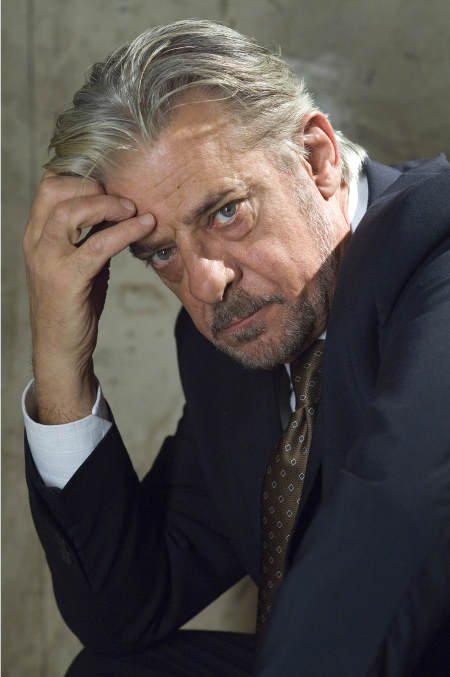
Giancarlo Giannini is an iconic figure in the world of Italian cinema and international film. Born on August 1, 1942, in La Spezia, Italy, Giannini has carved out a remarkable career that spans decades, showcasing his versatility as an actor, director, and voice actor. His journey from a young theater enthusiast to one of Italy’s most revered actors is a testament to his dedication, talent, and ability to adapt to the ever-changing landscape of the entertainment industry.
Early Life and Education
Giancarlo Giannini’s early life was marked by a blend of technical education and artistic exploration. He earned a diploma as an electronics technician in Naples, a field far removed from the arts. However, his passion for acting led him to Rome, where he enrolled in the Accademia Nazionale d’Arte Drammatica Silvio D’Amico, one of Italy’s most prestigious acting schools. This decision marked the beginning of his illustrious career in the performing arts.
Giannini made his theatrical debut at the age of 18 in Giuseppe Patroni Griffi’s “In memoria di una signora amica.” His performance garnered attention, but it was his role in Franco Zeffirelli’s “Romeo and Juliet,” performed at London’s Old Vic Theatre in 1960, that brought him international recognition. This early success was a harbinger of the significant impact he would have on both Italian and global cinema.
Breakthrough in Film and Television
Giannini’s film debut came in 1965 with the movie “Libido e Fango sulla metropoli,” followed by a notable appearance on television in “David Copperfield,” directed by Anton Giulio Majano. His portrayal of the titular character in this adaptation of Charles Dickens’ classic novel made him a household name in Italy.
The late 1960s and early 1970s were pivotal in Giannini’s career, as he began a fruitful collaboration with director Lina Wertmüller. Their partnership resulted in several iconic films that cemented Giannini’s status as one of Italy’s premier actors. In 1966, he starred alongside Rita Pavone in “Rita la zanzara,” and in 1972, he delivered a standout performance in “Mimì metallurgico ferito nell’onore” (The Seduction of Mimi). This film marked the beginning of a series of collaborations with Wertmüller that would define Giannini’s career.
The Lina Wertmüller Era: International Recognition
The 1970s were a golden era for Giannini, largely due to his work with Lina Wertmüller. Their films were characterized by sharp social commentary, dark humor, and complex characters, often reflecting the turbulent political and social climate of Italy during that time. Some of their most notable collaborations include “Film d’amore e d’anarchia” (1973), for which Giannini won the Best Actor award at the Cannes Film Festival, and “Travolti da un insolito destino nell’azzurro mare d’agosto” (1974), which became a cult classic.
However, it was “Pasqualino Settebellezze” (1975) that earned Giannini international acclaim. His portrayal of the morally ambiguous Pasqualino, a man who navigates the horrors of World War II with cunning and ruthlessness, earned him an Academy Award nomination for Best Actor. This nomination was a significant milestone, as it marked one of the few times an Italian actor had been recognized by the Academy for a non-English-speaking role.
Giannini’s work with Wertmüller often involved his pairing with actress Mariangela Melato, and together, they became emblematic of Italian cinema’s exploration of class struggle, gender dynamics, and political upheaval. Giannini’s ability to portray the “macho Italian male” stereotype while infusing his characters with depth and vulnerability made him a global icon.
Versatility in Acting: From Drama to Hollywood
Giancarlo Giannini’s career is distinguished by his versatility. He has portrayed a wide range of characters across different genres and languages, demonstrating his ability to adapt to various roles and settings. In the 1980s, Giannini expanded his horizons by working with international directors. He starred in Rainer Werner Fassbinder’s “Lili Marleen” (1981) and Francis Ford Coppola’s segment “Life Without Zoë” in “New York Stories” (1989). These roles showcased his ability to transition seamlessly between Italian and international cinema, further solidifying his reputation as a versatile actor.
The 1990s saw Giannini exploring diverse genres, from action films like “Palermo Milano solo andata” (1995) and “Terra bruciata” (1999) to lighter comedies such as “Cervellini fritti impanati” (1996). His portrayal of Judge Giovanni Falcone in the 1993 film “Giovanni Falcone” was a standout performance, reflecting his commitment to roles that had a strong social or political impact.
Hollywood and Beyond: A Global Icon
After the turn of the millennium, Giannini continued to make his mark on both Italian and international cinema. He appeared in several high-profile Hollywood productions, including Ridley Scott’s “Hannibal” (2001), where he played Inspector Pazzi, and Tony Scott’s “Man on Fire” (2004), where he portrayed a powerful Mexican crime boss. These roles demonstrated Giannini’s ability to bring a commanding presence to Hollywood films, earning him recognition among American audiences.
Giannini also became part of the James Bond franchise, appearing in “Casino Royale” (2006) and “Quantum of Solace” (2008) as René Mathis, a character that added gravitas to the Bond series. His involvement in these blockbuster films highlighted his status as a global actor capable of delivering compelling performances in any context.
Master of Voice Acting: The Italian Voice of Al Pacino
In addition to his on-screen work, Giancarlo Giannini is renowned for his voice acting. He is the official Italian voice of Al Pacino, a role he has cherished throughout his career. Giannini’s voice work extends beyond Pacino, however, as he has also dubbed Jack Nicholson’s performances in “The Shining” (1980) and “Batman” (1989), where Nicholson played the iconic role of the Joker.
Giannini’s voice acting is celebrated for its depth and intensity, qualities that perfectly complement the characters he portrays. His ability to capture the essence of these legendary actors in the Italian language has made him a beloved figure among Italian audiences and a key contributor to the country’s dubbing industry.
Legacy and Cultural Impact
Giancarlo Giannini’s contributions to cinema, both in Italy and internationally, are profound. His work has not only entertained millions but also provided deep insights into the human condition, often reflecting the complexities of Italian society. Through his collaborations with directors like Lina Wertmüller, Giannini helped to define a genre of Italian cinema that was both politically charged and artistically innovative.
Giannini’s characters are often memorable for their intensity and emotional depth. Whether playing a ruthless survivalist in “Pasqualino Settebellezze” or a corrupt inspector in “Hannibal,” he brings a unique blend of charisma and gravitas to his roles. His ability to navigate between drama, comedy, and action has made him one of the most versatile actors of his generation.
Beyond his work in film and television, Giannini’s influence extends to future generations of actors. His performances are studied in acting schools, and his approach to character development is admired by actors and directors alike. Giannini’s career serves as an example of how an actor can remain relevant and impactful across different eras and cultural contexts.
Personal Life and Ongoing Projects
Despite his extensive career, Giannini has remained relatively private about his personal life. He is known to be dedicated to his craft, often immersing himself fully in his roles. His passion for acting continues to drive him, even as he enters his eighties.
In recent years, Giannini has focused more on television, appearing in Italian series such as “Il Generale Dalla Chiesa” and “Il Maresciallo Rocca.” These roles have allowed him to reach new audiences while continuing to showcase his acting prowess.
As Giannini looks towards the future, his legacy as one of Italy’s greatest actors is secure. His contributions to cinema have left an indelible mark on the industry, and his work continues to inspire and entertain audiences around the world. Whether through his powerful performances, his iconic voice work, or his enduring collaborations with legendary directors, Giancarlo Giannini remains a towering figure in the world of entertainment.


