
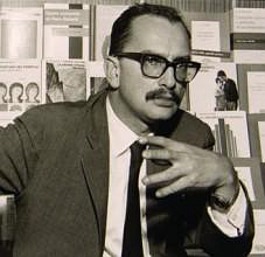
Giangiacomo Feltrinelli, an influential figure in the world of publishing and radical politics, is a name that resonates with both literary excellence and revolutionary fervor. Born on June 19, 1926, in Milan, Italy, Feltrinelli hailed from one of the wealthiest families in the country. His life was marked by a blend of privilege, intellectual curiosity, and a passionate commitment to political activism. This article delves into the life, achievements, and the complex legacy of Giangiacomo Feltrinelli, a man whose contributions to literature and political thought continue to be relevant today.
Early Life and Background
Giangiacomo Feltrinelli was born into a life of affluence. His father, Carlo Feltrinelli, was the Marchese di Gargnano and held significant business interests, including the presidency of several prominent companies such as Edison and Credito Italiano. The Feltrinelli family’s wealth extended to various industries, from construction to timber trading, establishing them as one of Italy’s most powerful dynasties.
However, Giangiacomo’s life took a dramatic turn when his father passed away in 1935, leaving him to navigate the complexities of his family’s legacy at a young age. His mother, Gianna Elisa Gianzana, later remarried Luigi Barzini, a well-known journalist, further intertwining Giangiacomo’s life with the intellectual elite of Italy.
The Seeds of Activism: War and Anti-Fascism
World War II played a pivotal role in shaping Feltrinelli’s ideological outlook. During the war, the Feltrinelli family relocated from their villa in Gargnano, which later became the residence of Benito Mussolini, to the Argentario peninsula. It was during these tumultuous times that Giangiacomo’s political consciousness began to take root.
In 1944, Feltrinelli joined the Gruppo di Combattimento Legnano, actively participating in the anti-fascist resistance. This decision was largely influenced by his interactions with prominent figures in the resistance, such as Antonello Trombadori. A year later, Feltrinelli became a member of the Italian Communist Party (PCI), contributing substantial financial resources to support the party’s activities.
His deepening engagement with leftist ideology was accompanied by an intellectual pursuit of knowledge, particularly in the history of ideas and the labor movement. This interest led to the establishment of the Biblioteca Feltrinelli in Milan, a research institute dedicated to social history that would later evolve into the Feltrinelli Foundation, one of Europe’s most important institutions for the study of social and political history.
Founding of Feltrinelli Editore: A New Era in Publishing
In 1954, Giangiacomo Feltrinelli founded Feltrinelli Editore, a publishing house that would soon become a beacon of literary innovation and cultural significance. The publisher quickly gained prominence by releasing works that challenged societal norms and political boundaries.
One of the most notable achievements of Feltrinelli Editore was the publication of Il Gattopardo (The Leopard) by Giuseppe Tomasi di Lampedusa, a novel that has since become a classic of Italian literature. However, it was the publication of Doctor Zhivago by Boris Pasternak in 1957 that truly solidified Feltrinelli’s reputation on the global stage. Despite significant political pressure, particularly from the Soviet Union, Feltrinelli championed the publication of Pasternak’s masterpiece, which went on to win the Nobel Prize for Literature in 1958.
The success of Doctor Zhivago was not without its controversies. Feltrinelli’s decision to publish the book led to his expulsion from the Italian Communist Party, which had launched a campaign against the novel due to its critical portrayal of Soviet society. This episode marked a turning point in Feltrinelli’s life, highlighting his willingness to defy authority in the pursuit of intellectual freedom.
Personal Life and Political Radicalization
Feltrinelli’s personal life was as complex as his professional one. In 1958, he met and later married Inge Schoenthal, a German photographer who would play a significant role in his life. Their marriage, however, was marked by Feltrinelli’s increasing involvement in radical politics.
The 1960s were a period of intense political activity for Feltrinelli. He traveled extensively, forging connections with revolutionary leaders and movements around the world. In 1964, during a visit to Cuba, he met Fidel Castro, the leader of the Cuban Revolution, whose ideals of anti-imperialism and liberation strongly resonated with Feltrinelli. This encounter further fueled his desire to support revolutionary causes, particularly in Latin America.
Feltrinelli’s commitment to revolutionary politics became more pronounced when he traveled to Bolivia, where he connected with Regis Debray, a French intellectual and close associate of Che Guevara. These experiences deepened his involvement in global revolutionary movements, and upon returning to Italy, he became increasingly active in supporting leftist groups.
The Turn to Underground Resistance
The late 1960s and early 1970s saw Feltrinelli fully embrace the life of a revolutionary. The political climate in Italy during this period was highly volatile, with rising tensions between the left and right. The 1969 Piazza Fontana bombing, a tragic event that marked the beginning of the so-called “Years of Lead” in Italy, was a turning point for Feltrinelli. He became convinced that the bombing, which was initially blamed on anarchists, was part of a broader strategy of tension orchestrated by the state to discredit the left.
Fearing a fascist coup, Feltrinelli went underground, severing ties with his public life and taking on the alias “Osvaldo.” He justified his decision in a letter to his colleagues at Feltrinelli Editore and in the leftist magazine Compagni, where he argued that the state, not the anarchists, was responsible for the bombing. This period of clandestinity marked a significant shift in Feltrinelli’s life as he increasingly viewed armed struggle as a necessary means to combat what he saw as an impending fascist takeover.
In 1970, Feltrinelli founded the Gruppi d’Azione Partigiana (GAP), a militant leftist organization inspired by the partisans who had fought against fascism during World War II. The GAP aimed to reignite the revolutionary spirit in Italy, but their activities were met with severe repression by the state.
The Tragic End
Giangiacomo Feltrinelli’s life came to a tragic and mysterious end on March 14, 1972. His body was found at the base of a high-voltage pylon in Segrate, near Milan, having been killed by an explosion. The circumstances surrounding his death remain controversial and are the subject of much speculation.
Some theories suggest that Feltrinelli was attempting to sabotage the pylon as part of a broader strategy to disrupt the state’s power infrastructure. Others believe that his death was the result of a botched assassination carried out by the CIA in collaboration with Italian secret services. Among the proponents of this latter theory were prominent figures like Eugenio Scalfari and Camilla Cederna, who argued that Feltrinelli’s radical activities had made him a target for elimination.
The official investigation concluded that Feltrinelli’s death was accidental, the result of a malfunctioning bomb. However, this explanation has been met with skepticism, particularly among leftist groups who view Feltrinelli as a martyr who died in the fight against fascism. The Brigate Rosse (Red Brigades), a militant leftist group that emerged during the Years of Lead, conducted their own investigation, which suggested that the bomb used in the explosion was similar to one used in a failed attack on the U.S. embassy in Athens, further fueling suspicions of foul play.
Legacy and Impact
Giangiacomo Feltrinelli’s legacy is multifaceted, encompassing his contributions to literature, his political activism, and the enduring mystery surrounding his death. As a publisher, Feltrinelli’s impact on global literature is undeniable. His bold decisions to publish works that challenged the status quo helped shape the literary landscape of the 20th century.
Politically, Feltrinelli remains a controversial figure. To some, he is a hero who dedicated his life and fortune to the cause of social justice and anti-fascism. To others, he is a cautionary tale of how radicalism can lead to tragic outcomes. Despite these differing perspectives, Feltrinelli’s influence on Italian culture and politics is profound.
The Feltrinelli Foundation continues to operate as a leading research institution, preserving his intellectual legacy and promoting the study of social, political, and economic issues. The foundation stands as a testament to Feltrinelli’s enduring commitment to the pursuit of knowledge and the betterment of society.
Conclusion
Giangiacomo Feltrinelli’s life was a complex tapestry of privilege, intellectual ambition, and radical political engagement. His contributions to literature and his fervent activism have left an indelible mark on history. Feltrinelli’s story is a reminder of the power of ideas and the lengths to which individuals will go to defend their beliefs, even at the cost of their lives.


