
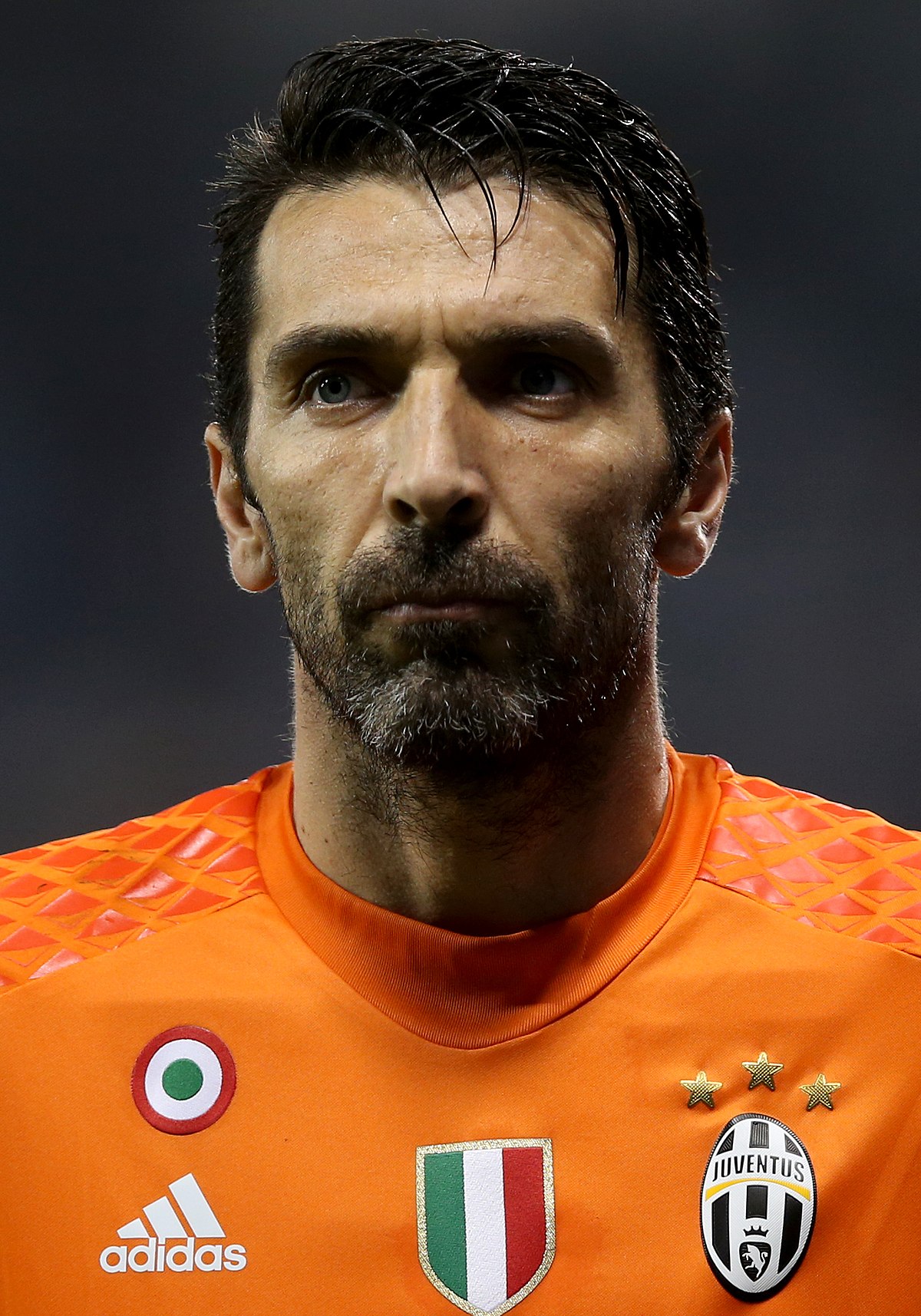
Gianluigi Buffon, often referred to simply as “Gigi,” is a name synonymous with goalkeeping excellence in the world of football. Born on January 28, 1978, in Carrara, Italy, Buffon’s career spans over two decades, during which he established himself as one of the greatest goalkeepers of all time. His journey from a young prodigy to a global football icon is marked by numerous accolades, records, and a level of consistency that is rarely seen in professional sports. This article explores the life, career, and enduring legacy of Gianluigi Buffon.
Early Life and Football Beginnings
Gianluigi Buffon was born into a family of athletes; his mother, Maria Stella Masocco, was a discus thrower, and his father, Adriano Buffon, was a weightlifter. With such an athletic background, it was almost inevitable that Buffon would pursue a career in sports. Initially, Buffon played as a midfielder, but at the age of 12, he made the switch to goalkeeper—a decision that would change the trajectory of his life and the world of football.
Buffon’s talent was evident from an early age. He joined Parma’s youth academy, where his exceptional reflexes, height, and composure quickly set him apart from his peers. By the age of 17, Buffon made his Serie A debut for Parma on November 19, 1995, against AC Milan, keeping a clean sheet in a 0-0 draw. This performance signaled the arrival of a new star in Italian football.
Rise to Fame with Parma
Buffon’s time at Parma was instrumental in shaping his career. During his six-year stint with the club, Buffon helped Parma achieve unprecedented success. He played a pivotal role in the team’s victories in the UEFA Cup, Coppa Italia, and Supercoppa Italiana, all in 1999. These achievements solidified Buffon’s reputation as one of the most promising young goalkeepers in the world.
Buffon’s performances for Parma did not go unnoticed, and he quickly became a target for top clubs across Europe. However, it was Juventus, one of Italy’s most prestigious clubs, that secured his signature in 2001 for a then-world record transfer fee for a goalkeeper, €52 million. This move would mark the beginning of a legendary association between Buffon and Juventus.
Dominance at Juventus and National Team Success
Gianluigi Buffon’s arrival at Juventus marked the beginning of an era of dominance for both the player and the club. Over the next 17 years, Buffon became the heart and soul of Juventus, leading the team to numerous domestic and international successes. His leadership, shot-stopping abilities, and consistency were unmatched, earning him the reputation of being the best goalkeeper in the world.
Buffon’s tenure at Juventus was filled with triumphs. He won numerous Serie A titles, Coppa Italia, and Supercoppa Italiana trophies, and played a key role in Juventus’ run to three UEFA Champions League finals. Although Juventus fell short in these finals, Buffon’s performances were nothing short of heroic, particularly in the 2015 final against Barcelona, where he made several crucial saves.
In addition to his club success, Buffon was an integral part of the Italian national team. He made his international debut in 1997 and was part of Italy’s squad for the 1998 World Cup. However, his crowning achievement came in 2006 when he helped Italy win the FIFA World Cup in Germany. Buffon’s performances throughout the tournament were exemplary, and he conceded only two goals (one of which was an own goal) in the entire tournament. His saves in the final against France, including a crucial stop in the penalty shootout, were pivotal in securing Italy’s fourth World Cup title.
Personal Life and Challenges
Buffon’s personal life has been as dynamic as his professional career. In 2011, he married Czech model Alena Šeredová, with whom he had two sons, Louis Thomas and David Lee. However, the couple separated in 2014. Buffon later began a relationship with Italian television presenter Ilaria D’Amico, and the couple had a son, Leopoldo Mattia, in 2016.
Despite his fame and success, Buffon faced challenges both on and off the pitch. In 2012, he was named vice-president of the Italian Footballers’ Association, becoming the first active player to hold such a position. However, Buffon has also been candid about his struggles with anxiety and depression, particularly during his early years at Juventus. His openness about mental health has been praised, as it helped to break the stigma surrounding the topic in the world of professional sports.
The Paris Saint-Germain Stint and Return to Juventus
In 2018, after 17 years of unparalleled success with Juventus, Buffon made the surprising decision to leave the club and join Paris Saint-Germain (PSG) on a one-year contract. His time at PSG was marked by mixed fortunes. Although he added another Ligue 1 title to his collection, Buffon faced criticism for his performances in the UEFA Champions League, particularly after PSG’s elimination by Manchester United.
After just one season in Paris, Buffon returned to Juventus in 2019, much to the delight of the club’s fans. Although he was no longer the first-choice goalkeeper, Buffon’s return to Juventus was seen as a symbolic gesture, and he continued to contribute to the team both on and off the pitch. His return also allowed him to break several records, including becoming the player with the most appearances in Serie A history.
Records, Achievements, and Legacy
Gianluigi Buffon’s career is decorated with an array of records and achievements that underscore his greatness. He holds the record for the most appearances in Serie A, with over 650 matches played. Buffon also has the distinction of winning the Serie A Goalkeeper of the Year award multiple times, a testament to his consistency and longevity at the top level.
One of Buffon’s most remarkable records is his run of 974 minutes without conceding a goal in Serie A during the 2015-2016 season, breaking the previous record held by Sebastiano Rossi. This achievement is a reflection of Buffon’s extraordinary shot-stopping abilities and his ability to organize his defense, even in the twilight of his career.
In addition to his individual records, Buffon’s legacy is defined by his contribution to team success. He has won 10 Serie A titles with Juventus, 5 Coppa Italia titles, and numerous Supercoppa Italiana titles. His international achievements include a UEFA Cup, a FIFA World Cup, and runner-up finishes in the UEFA European Championship and UEFA Champions League.
Retirement and Post-Playing Career
In May 2021, after a long and illustrious career, Buffon announced that he would be leaving Juventus for the second time, signaling the end of an era. However, Buffon’s story was not yet over. In a surprising move, he returned to Parma, the club where his career began, signing a two-year contract. At 43 years old, Buffon continued to defy age and expectations, taking on the role of captain and helping to guide the club in Serie B.
Buffon’s final retirement from professional football came on August 2, 2023, at the age of 45. His retirement marked the end of one of the most extraordinary careers in the history of football. However, Buffon did not step away from the game entirely. Just weeks after his retirement, he was appointed as the Head of Delegation for the Italian national team, a role that allows him to continue contributing to Italian football.
Exploring the Nuances and Historical Context of Buffon’s Career
Gianluigi Buffon’s career must be understood within the broader context of football’s evolution over the past two decades. Buffon’s longevity and sustained excellence are particularly impressive when considering the physical and tactical changes in the game during this period. From the increase in pace and physicality to the heightened tactical demands on goalkeepers, Buffon consistently adapted and thrived in an ever-evolving sport.
Buffon’s career also coincided with a golden era of Italian football. His role in Italy’s World Cup triumph in 2006 was emblematic of a generation of Italian players who were defined by their defensive solidity, tactical intelligence, and mental toughness. Buffon was the last of this golden generation to retire, symbolizing the end of an era for Italian football.
Conclusion: The Enduring Legacy of Gianluigi Buffon
Gianluigi Buffon’s legacy extends far beyond his records and achievements. He is widely regarded as a role model for aspiring goalkeepers and athletes across all sports. Buffon’s professionalism, humility, and dedication to his craft have earned him the respect of teammates, opponents, and fans alike.
Buffon’s impact on football is immeasurable. As one of the greatest goalkeepers of all time, his name will forever be associated with excellence in the sport. His ability to perform at the highest level for over two decades is a testament to his skill, work ethic, and love for the game. Buffon’s career is a shining example of what can be achieved through talent, determination, and an unwavering commitment to greatness.


