
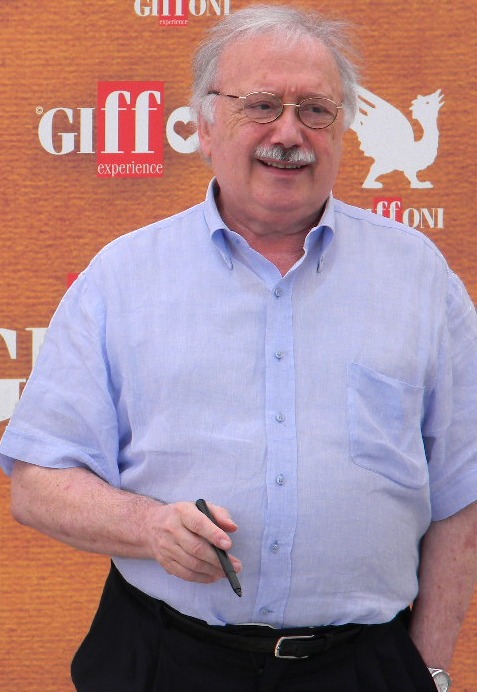
Gianni Minà, an Italian journalist, writer, and television host, is a name synonymous with some of the most pivotal moments in modern journalism. Born on May 17, 1938, in Turin, Italy, Minà’s career spanned over six decades, during which he became one of the most respected and influential figures in Italian media. His work not only chronicled the major events of the 20th and early 21st centuries but also brought him into contact with some of the most iconic personalities of the time. In this article, we delve into the life of Gianni Minà, exploring his age, rise to fame, and the key highlights that shaped his illustrious career.
Early Life and Beginnings in Journalism
Gianni Minà was born into a working-class family in Turin, a city known for its rich industrial heritage and vibrant cultural scene. From an early age, Minà showed a keen interest in storytelling and the world around him, which naturally led him to pursue a career in journalism. He began his career at the young age of 21, joining the editorial team of “Tuttosport,” a leading sports newspaper in Italy, in 1959.
His early years in journalism were marked by a focus on sports, particularly football and boxing, which were passions of his. In 1960, Minà made his debut in television journalism by contributing to the coverage of the Rome Olympics. This experience would prove to be formative, as it introduced him to the world of broadcast journalism and set the stage for his future success.
Rise to Prominence: The 1960s and 1970s
The 1960s and 1970s were decades of rapid change and growth for Gianni Minà. After his initial work in sports journalism, Minà began to broaden his scope, covering a wide range of topics from international politics to cultural events. His versatility as a journalist became evident as he contributed to various television programs, including “TV7,” “AZ, un fatto come e perché,” “Dribbling,” “Odeon. Tutto quanto fa spettacolo,” and “Gulliver.”
One of Minà’s significant early achievements was his work on documentaries and in-depth reports, which showcased his ability to delve into complex issues and present them in a way that was both informative and engaging. His reputation for thorough and insightful reporting grew, and by 1976, he had joined the team of “Tg2,” the news division of Rai 2, under the direction of Andrea Barbato.
Minà’s work during this period earned him widespread recognition, culminating in 1981 when he was awarded the “Premio Saint Vincent” as the best television journalist of the year. This prestigious award, presented to him by then-President of Italy Sandro Pertini, solidified Minà’s status as one of Italy’s leading journalists.
International Acclaim: The 1980s and 1990s
The 1980s marked a turning point in Gianni Minà’s career as he transitioned from being a well-known national figure to gaining international acclaim. This decade saw Minà undertake some of the most significant interviews and documentaries of his career, bringing him face-to-face with global icons.
In 1987, Minà conducted a now-legendary 16-hour interview with Fidel Castro, the Cuban leader. This interview was not just a journalistic achievement but a cultural event, as it provided unprecedented insight into Castro’s thoughts on various subjects, including his relationship with Che Guevara. The resulting documentary and the book “Fidel racconta il Che” (Fidel tells about Che) became key reference points for understanding the Cuban revolution and its leaders.
Minà’s relationship with Latin America deepened during this period, and he became one of the most authoritative voices on the region’s politics and culture. His interviews with figures such as Che Guevara’s comrades, Rigoberta Menchú (Nobel Peace Prize winner), and Subcomandante Marcos (leader of the Zapatista movement) further solidified his reputation as an expert on Latin American affairs.
Minà’s work extended beyond politics; he also created compelling portraits of artists and musicians, including Chico Buarque, Ray Charles, and Massimo Troisi. His ability to connect with such a diverse range of personalities demonstrated his versatility and deep understanding of human nature.
Personal Connections: Diego Maradona and Fidel Castro
Among the many friendships Gianni Minà cultivated throughout his career, two stand out: his relationships with Diego Maradona and Fidel Castro. These connections were not merely professional; they were personal, built on mutual respect and a shared understanding of the struggles faced by the subjects of Minà’s documentaries.
Minà’s friendship with Maradona began during the footballer’s time in Naples, where he became a local and international legend. Minà chronicled Maradona’s career and personal life through a series of interviews and documentaries that captured the highs and lows of the Argentine star’s life. The bond between the two was evident in the depth of the interviews, where Maradona often spoke candidly, trusting Minà to tell his story with honesty and compassion.
Similarly, Minà’s relationship with Fidel Castro went beyond the typical journalist-interviewee dynamic. The trust and rapport they built allowed Minà to gain unique insights into Castro’s life and ideology, insights that few other journalists could claim to have. Minà’s work on Castro is considered some of the most comprehensive and intimate portrayals of the Cuban leader ever produced.
Later Career and Continued Influence
As the 1990s and 2000s progressed, Gianni Minà continued to expand his influence in journalism and documentary filmmaking. He remained deeply involved in covering Latin American issues, producing documentaries that shed light on the region’s social and political struggles. His work during this time included collaborations with notable figures like Alberto Granado, Che Guevara’s travel companion, on the film “In viaggio con Che Guevara,” which recounted their legendary motorcycle journey across South America.
In addition to his work on Latin America, Minà continued to cover sports, creating documentaries on legendary figures such as Pietro Mennea, Nereo Rocco, and Edwin Moses. His passion for storytelling and his ability to capture the essence of his subjects made his documentaries enduring pieces of journalism that continue to be appreciated by audiences worldwide.
Minà’s dedication to his craft was recognized with numerous awards, including the Premio Vittorini for journalism, the Flaiano Prize, and the Berlinale Kamera award for his contributions to documentary filmmaking. His legacy as a journalist who could blend deep political insight with human interest stories is well-established.
Gianni Minà’s Legacy and Impact
Gianni Minà passed away on March 27, 2023, at the age of 84, leaving behind a rich legacy that continues to influence journalists and documentarians around the world. His approach to journalism, characterized by empathy, thoroughness, and a relentless pursuit of the truth, set a standard that many aspire to but few achieve.
Minà’s work serves as a reminder of the power of journalism to bridge cultures, bring untold stories to light, and challenge the status quo. His documentaries and interviews remain vital resources for understanding the complex history of the late 20th and early 21st centuries, particularly in the context of Latin America.
One of the hallmarks of Minà’s career was his ability to gain the trust of his subjects, allowing him to explore their lives and thoughts in ways that were both intimate and revealing. Whether he was interviewing a world leader like Fidel Castro or a sports icon like Diego Maradona, Minà brought a human touch to his work that resonated with audiences.
His contributions to the field of journalism were not just about the stories he told but also about the way he told them. Minà’s style was characterized by a deep respect for his subjects, a commitment to presenting the truth, and an understanding of the broader social and political contexts in which these stories unfolded.
Conclusion
Gianni Minà’s life and career stand as a testament to the enduring power of journalism to effect change and bring about understanding. From his early days covering sports in Turin to his later work documenting the lives of some of the most influential figures of the 20th century, Minà demonstrated a relentless curiosity and a passion for storytelling that left an indelible mark on the world.
His legacy is not just one of great journalism but of a life lived in pursuit of truth, justice, and a better understanding of the world. As we reflect on Gianni Minà’s contributions, we are reminded of the importance of journalists who dare to ask difficult questions, challenge powerful figures, and, most importantly, tell the stories that need to be told.
Minà’s work will continue to inspire future generations of journalists, reminding them that the true power of journalism lies in its ability to connect us with the humanity of others, no matter how distant or different they may seem.


