
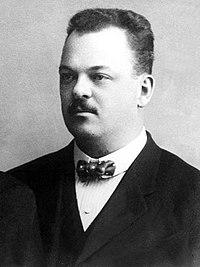
Gideon Sundback, born on April 24, 1880, in Jönköping, Sweden, is widely recognized as the genius engineer who revolutionized the world with the invention of the zipper. This seemingly simple yet incredibly impactful innovation has become an integral part of daily life, embedded in everything from clothing to bags, shoes, and beyond. Sundback’s journey from a small town in Sweden to becoming a key figure in American industrial history is a fascinating tale of creativity, determination, and engineering brilliance. This article delves into his life, his groundbreaking invention, and the lasting impact he left on the world.
Early Life and Education
Gideon Sundback was born into a prosperous farming family in Sweden, where he spent his early years. His full name was Otto Fredrik Gideon Sundback, but he is commonly known by his middle name, Gideon. He received his early education in Sweden, showing an aptitude for technical subjects from a young age. Recognizing his potential, his parents sent him to Germany to pursue higher education, a move that would set the stage for his future contributions to engineering.
In Germany, Sundback attended the prestigious polytechnic school in Bingen am Rhein, where he studied electrical engineering. This educational background provided him with a solid foundation in technical skills and an understanding of mechanical design, which would later prove essential in his career as an inventor.
Move to the United States and Early Career
After completing his studies in Germany, Gideon Sundback immigrated to the United States in 1905, seeking greater opportunities in the rapidly industrializing nation. The United States, during this time, was a hub of innovation and industry, attracting talented individuals from around the world who were eager to contribute to its growing economy.
Sundback’s first significant role in America was with the Universal Fastener Company in Hoboken, New Jersey, in 1906. He was hired as an electrical engineer, but his keen eye for design and innovation quickly became apparent. Sundback’s talents did not go unnoticed, and he soon found himself promoted to the position of head designer. His responsibilities now included improving an existing product that had the potential to change the garment industry—the zipper.
The Quest to Perfect the Zipper
Before Sundback’s involvement, the concept of the zipper was already in existence, but it was far from the reliable and efficient fastener we know today. The earliest iteration of the zipper was invented by Whitcomb Judson in 1893, known as the “clasp locker.” This early version was a series of hooks and eyes that were pulled together with a slider, but it had significant design flaws. The hooks frequently became misaligned, causing the fastener to open unexpectedly. As a result, the product was not widely adopted.
When Sundback took over the project, he saw the potential for a transformative improvement. The challenge was clear: create a fastening device that was secure, reliable, and easy to use. Sundback’s first few attempts were not entirely successful, but his persistence paid off. The breakthrough came in 1913 when he developed a new version of the zipper, which he called the “Hookless Fastener No. 1.”
This new design featured a series of interlocking metal teeth, each attached to a cloth tape. The teeth were designed to mesh together perfectly when the slider was pulled, creating a secure and smooth closure. Sundback continued to refine the design, and by 1914, he had developed an even more improved version, the “Hookless No. 2,” which included a rounded, tapered tooth design that reduced the likelihood of misalignment and made the zipper easier to manufacture and use.
Patent and Commercial Success
Gideon Sundback filed a patent for his improved zipper design in 1917, marking a significant milestone in the history of fastening technology. The patent, granted under the name “Separable Fastener,” laid the groundwork for the widespread adoption of zippers across various industries. However, the journey from invention to commercial success was not immediate.
The initial uptake of Sundback’s zipper was slow, as manufacturers were hesitant to adopt the new technology. The turning point came during World War I when the U.S. military began using zippers in uniforms and gear, particularly in boots and flight suits. The zipper’s ability to provide a secure and quick fastening solution made it ideal for military applications, and its success in this domain helped to establish its credibility.
By the end of 1917, approximately 25,000 zippers had been sold, a number that would only grow as the zipper’s advantages became more widely recognized. Sundback’s invention began to appear in everyday consumer products, revolutionizing the clothing and accessory industries. The zipper’s practicality and efficiency made it a preferred choice over traditional buttons and hooks, leading to its adoption in a wide range of garments, from trousers and dresses to handbags and luggage.
The Lightning Fastener Company
As the zipper gained popularity, Gideon Sundback’s role in the industry grew. He became the president of the Lightning Fastener Company, a firm based in Ontario, Canada, that specialized in manufacturing zippers. Under his leadership, the company expanded its operations and began mass-producing zippers for a global market.
One of Sundback’s key contributions during this period was the development of machinery specifically designed to produce zippers efficiently. This innovation further reduced the cost of production, making zippers more accessible to manufacturers and consumers alike. The combination of a superior product and efficient manufacturing processes solidified the zipper’s place in the global market, and it quickly became a staple in fashion and beyond.
Personal Life and Legacy
Gideon Sundback’s personal life was marked by both triumphs and tragedies. He married Elvira Aronson, the daughter of his employer at the Universal Fastener Company, and the couple settled in the United States. Tragically, Elvira passed away in 1911, an event that deeply affected Sundback. In the wake of her death, he threw himself into his work, dedicating his time and energy to perfecting the zipper—a project that he and Elvira had both been passionate about.
Sundback’s invention not only brought him fame but also left a lasting legacy. The zipper, though often taken for granted, is a fundamental component of modern life. Its invention transformed industries, improved the functionality of countless products, and remains one of the most significant innovations in the history of fashion and design.
Gideon Sundback passed away on June 21, 1954, at the age of 74, due to a heart attack. His contributions to engineering and design have not been forgotten. Sundback was posthumously honored with a place in the National Inventors Hall of Fame in 2006, recognizing his role in creating an invention that has become indispensable in everyday life.
The Zipper’s Cultural Impact and Historical Context
The zipper’s invention came at a time of great change in the world, both technologically and socially. The early 20th century was marked by rapid industrialization and the rise of consumer culture. As people began to buy more mass-produced goods, there was a growing demand for convenience and efficiency in everyday items. The zipper, with its ease of use and reliability, fit perfectly into this emerging market.
In the decades following Sundback’s invention, the zipper became a symbol of modernity and progress. Its adoption in fashion was particularly significant, as designers began to incorporate zippers into clothing in ways that were not only functional but also aesthetically pleasing. The zipper allowed for new styles and designs that were previously impossible with buttons and laces, contributing to the evolution of fashion in the 20th century.
The zipper also found its way into popular culture. Its distinctive sound and the act of zipping became ingrained in the public consciousness, often symbolizing a quick fix or a modern solution to everyday problems. The zipper’s versatility also meant that it was used in a wide range of products beyond clothing, including tents, sleeping bags, and even spacecraft, showcasing its importance across various industries.
The Technological Innovations Behind the Zipper
While the zipper may seem like a simple device, its invention required significant technological innovation. Gideon Sundback’s engineering background was crucial in overcoming the challenges that plagued earlier designs. The precision required to create interlocking teeth that could withstand repeated use without failure was a remarkable achievement for its time.
Sundback’s development of specialized machinery to produce zippers was another key innovation. This machinery not only increased production efficiency but also ensured the consistency and quality of the zippers being produced. The ability to mass-produce zippers at a lower cost was essential in making them a viable option for manufacturers and consumers.
The zipper’s design has continued to evolve since Sundback’s time, with new materials and manufacturing techniques allowing for even greater versatility and durability. However, the fundamental principles that Sundback established in his original designs remain at the core of modern zippers, a testament to the enduring nature of his invention.
Conclusion: Gideon Sundback’s Enduring Legacy
Gideon Sundback’s life and work exemplify the impact that one individual can have on the world through innovation and perseverance. His invention of the zipper is a prime example of how a simple yet ingenious idea can revolutionize industries and change the way people live their daily lives. The zipper’s ubiquitous presence in modern society is a lasting tribute to Sundback’s genius and his dedication to solving a problem that others had overlooked.
Today, the zipper is so common that it’s easy to forget that it was once a groundbreaking invention. Yet every time we zip up a jacket, close a suitcase, or fasten a pair of boots, we are using a product that exists thanks to Gideon Sundback’s ingenuity. His contributions to engineering and design continue to influence the world, making him one of the unsung heroes of modern innovation.
As we look back on the life of Gideon Sundback, we can appreciate not only the technical achievements that he brought to the world but also the determination and creativity that drove him to succeed. His legacy serves as an inspiration to inventors and engineers everywhere, reminding us that even the simplest ideas can have the most profound effects.


