
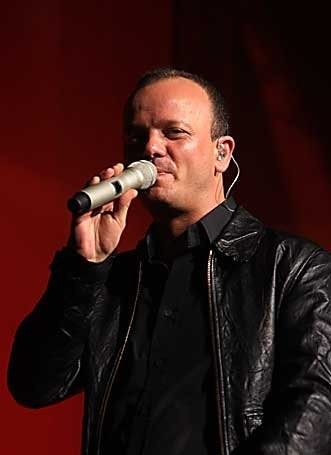
Gigi D’Alessio is one of Italy’s most beloved and successful pop singers, known for his deep connection to Neapolitan culture and his ability to resonate with audiences across the globe. Born on February 24, 1967, in Naples, D’Alessio has carved out a significant place for himself in the music industry, blending traditional Italian melodies with contemporary pop sensibilities. This article delves into the life and career of Gigi D’Alessio, exploring his rise to fame, his musical achievements, and the personal and professional milestones that have defined his journey.
Early Life and Musical Beginnings
Gigi D’Alessio’s story begins in the vibrant streets of Naples, a city renowned for its rich musical heritage. As the youngest of three children, D’Alessio grew up in a working-class family, where music was an integral part of daily life. His innate musical talent was evident from an early age, and he quickly became known in local circles for his exceptional ability as a pianist and arranger. Despite his popular image as a folk artist, D’Alessio’s musical education was anything but informal; he earned a diploma from the prestigious Conservatorio di San Pietro a Majella in Naples.
D’Alessio’s first major break came when he caught the attention of Mario Merola, the legendary king of the Neapolitan musical drama known as “sceneggiata.” Merola recognized D’Alessio’s talent and offered him a position as his pianist and collaborator. This opportunity allowed D’Alessio to refine his craft and gain invaluable experience in the music industry. Together, they created the duet “Cient’anne,” which became a hit and marked D’Alessio’s introduction to a wider audience.
Rise to Fame: The 1990s
The 1990s were a pivotal decade for Gigi D’Alessio as he transitioned from a local sensation to a national star. His debut album, Lasciatemi cantare, was released in 1992 and set the stage for his future success. The following year, he released Scivolando verso l’alto, which sold an impressive 30,000 copies despite the challenges posed by widespread music piracy. D’Alessio’s ability to connect with his audience, coupled with his genuine humility, endeared him to fans across Italy.
D’Alessio’s breakthrough came in 1994 when he signed with the iconic record label Ricordi. Recognizing his potential as a “neo-melodic” artist—a genre characterized by its melodic and emotionally charged songs—D’Alessio went on a creative retreat to work on new material. The result was the release of Dove mi porta il cuore and Passo dopo passo, albums that featured some of his most beloved songs, including “Fotomodelle un po’ povere” and “Annarè.”
The success of these albums catapulted D’Alessio into the spotlight, and by 1997, he was ready for his next big challenge: performing at the Stadio San Paolo, one of Naples’ most iconic venues. The concert was a resounding success, with tickets sold door-to-door in a grassroots marketing effort that culminated in a sold-out show. This achievement solidified D’Alessio’s status as a major player in the Italian music scene and set the stage for his nationwide recognition.
National Success: The Early 2000s
The dawn of the new millennium marked a new chapter in Gigi D’Alessio’s career, as he sought to expand his reach beyond Naples and establish himself as a national star. His big break came in 2000 when he participated in the prestigious Sanremo Music Festival with the song “Non dirgli mai.” Although he did not win the competition, the song became a massive hit, and his subsequent album, Quando la mia vita cambierà, sold over 400,000 copies—a remarkable achievement for an artist still relatively new to the national stage.
Sanremo became a recurring platform for D’Alessio to showcase his talent. In 2001, he returned with the song “Tu che ne sai,” which further cemented his place in the Italian music industry. That same year, his tenth studio album, Il cammino dell’età, reached the top of the charts, putting him on par with Italy’s most celebrated artists, such as Eros Ramazzotti, Vasco Rossi, and Laura Pausini.
With his popularity soaring, D’Alessio embarked on a series of sold-out concerts across Italy and abroad. His unique ability to blend traditional Neapolitan music with modern pop elements resonated with audiences everywhere, from Europe to North America. His international tours expanded his fan base, turning him into a global ambassador of Italian music.
Personal Life and Controversies
While Gigi D’Alessio’s professional life was thriving, his personal life became the subject of media scrutiny, particularly due to his relationship with fellow singer Anna Tatangelo. In December 2006, D’Alessio’s then-wife, Carmela Barbato, revealed in an interview that D’Alessio had been involved with Tatangelo, who was 19 years old at the time. D’Alessio confirmed the relationship, admitting that it had started a year earlier during his world tour, where Tatangelo had been a frequent guest.
The couple’s relationship was highly publicized, not only because of the age difference but also because of D’Alessio’s ongoing divorce proceedings. Despite the controversy, D’Alessio and Tatangelo remained together, and in March 2010, they welcomed their son Andrea. Their relationship, however, was tumultuous, with several breakups and reconciliations over the years. In 2020, they officially announced their separation.
In 2021, D’Alessio began a new chapter in his personal life when he started dating Denise Esposito, a woman 26 years his junior. Their relationship quickly progressed, and in January 2022, they welcomed their son Francesco. In March 2024, D’Alessio announced that he and Esposito were expecting their second child together, marking his sixth child overall.
The 2010s and Beyond: Continuing Success
Gigi D’Alessio’s career continued to flourish throughout the 2010s and into the 2020s. In 2017, he made a return to the Sanremo stage with the song “La prima stella,” a poignant ballad that showcased his signature emotional style. Although the song did not win, it reinforced D’Alessio’s position as a mainstay in the Italian music scene.
His discography continued to grow, with albums like Ora (2013), Malaterra (2015), and 24 febbraio 1967 (2017) receiving critical acclaim and commercial success. D’Alessio’s music evolved over the years, incorporating more contemporary sounds while staying true to his Neapolitan roots. This ability to adapt while maintaining his identity has been key to his longevity in the ever-changing music industry.
D’Alessio also ventured into television, participating in various Italian TV shows and music competitions, further expanding his influence and visibility. His son, Luca, known professionally as LDA, followed in his father’s footsteps and pursued a career in music, continuing the D’Alessio legacy in the Italian entertainment industry.
Cultural Impact and Legacy
Gigi D’Alessio’s impact on Italian music cannot be overstated. As a representative of the neo-melodic genre, he has played a crucial role in bringing the sounds of Naples to a broader audience. His music, characterized by heartfelt lyrics and catchy melodies, resonates with listeners of all ages, making him a beloved figure in Italian pop culture.
D’Alessio’s ability to connect with his audience on an emotional level has been a defining feature of his career. His songs often explore themes of love, heartache, and the struggles of everyday life—universal experiences that resonate with a wide range of listeners. This relatability, combined with his genuine and down-to-earth persona, has earned him a loyal fan base that spans generations.
Beyond his musical achievements, D’Alessio’s personal journey—from his humble beginnings in Naples to his rise as a national and international star—serves as an inspiration to aspiring musicians. His story is a testament to the power of perseverance, talent, and staying true to one’s roots, even in the face of challenges and controversies.
Conclusion
Gigi D’Alessio’s life and career offer a compelling narrative of success, resilience, and the enduring power of music. From his early days performing at weddings in Naples to filling stadiums and topping the charts, D’Alessio has become a symbol of the neo-melodic genre and a beloved figure in Italian pop culture. His ability to blend traditional and modern musical elements, along with his deeply personal songwriting, has made him a lasting presence in the music industry.
As he continues to create music and connect with fans around the world, Gigi D’Alessio’s legacy as one of Italy’s most influential and enduring artists remains secure. His journey, marked by both triumphs and trials, reflects the universal appeal of music and its ability to transcend cultural and generational boundaries.
Whether through his iconic performances, his contributions to the evolution of Italian pop music, or his role as a mentor to the next generation of artists, Gigi D’Alessio’s influence will continue to be felt for years to come.


