
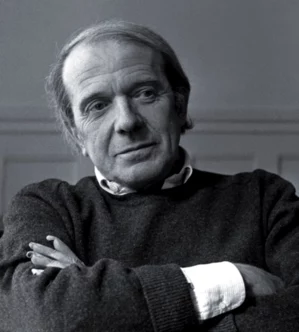
Gilles Deleuze, a seminal figure in 20th-century philosophy, was born on January 18, 1925, in Paris, France. His influence spans across multiple domains of thought, including philosophy, literature, cinema, and psychoanalysis. Deleuze’s work is characterized by its originality, depth, and often, its eccentric approach, challenging traditional philosophical frameworks and offering new perspectives on thought and life. This article delves into the life of Gilles Deleuze, his philosophical journey, the major milestones in his career, and his enduring legacy in contemporary thought.
Early Life and Education
Gilles Deleuze was born into a middle-class family in Paris. His intellectual journey began during his school years, where he was introduced to the classics of French literature. One of his most significant early influences was his teacher, Pierre Halbwachs, who was the son of the renowned sociologist Maurice Halbwachs. Pierre Halbwachs introduced Deleuze to the works of André Gide, Anatole France, and Charles Baudelaire, laying the foundation for Deleuze’s later philosophical explorations.
Deleuze attended the prestigious Lycée Carnot in Paris before enrolling at the Sorbonne in 1944. During his time at the Sorbonne, Deleuze was mentored by some of the most prominent philosophers of the time, including Ferdinand Alquié, Jean Hyppolite, and Georges Canguilhem. These formative years were marked by Deleuze’s growing dissatisfaction with traditional philosophical methodologies, which led him to develop a unique and innovative approach to philosophy.
Academic Career and Early Works
After completing his studies at the Sorbonne in 1948, Deleuze began his teaching career at various lycées, including those in Amiens, Orléans, and Paris. It was during this period that he published his first major work, “Empiricism and Subjectivity,” a monograph on the philosophy of David Hume. This work marked the beginning of Deleuze’s lifelong interest in exploring the boundaries of philosophical thought.
In 1960, Deleuze joined the French National Centre for Scientific Research (CNRS), where he continued his research and writing. Four years later, he was appointed to a position at the University of Lyon. Deleuze’s academic career reached a significant milestone in 1969 when he was appointed a professor at the experimental University of Paris VIII-Vincennes, largely due to the support of his friend and fellow philosopher Michel Foucault.
Major Philosophical Contributions
Deleuze’s work is often associated with the development of a new kind of philosophy that challenges the rigid structures of traditional thought. His two doctoral theses, “Difference and Repetition” and “Spinoza and the Problem of Expression,” are considered his theoretical masterpieces. These works introduced key concepts that would become central to Deleuze’s philosophy, such as the ideas of difference, repetition, and the expression of reality.
Deleuze’s collaboration with the French psychoanalyst Félix Guattari in the 1970s resulted in two of his most famous works, “Anti-Oedipus” and “A Thousand Plateaus.” These books, collectively known as “Capitalism and Schizophrenia,” offer a radical critique of psychoanalysis and propose new ways of understanding the relationship between society, the individual, and the unconscious. The concept of “rhizomes,” introduced in “A Thousand Plateaus,” has become particularly influential in various fields, including cultural studies, sociology, and literary theory.
Deleuze and Foucault: A Philosophical Dialogue
Deleuze’s friendship with Michel Foucault was one of the most important intellectual relationships of his life. The two philosophers shared a deep mutual respect and often engaged in discussions about their respective works. Deleuze’s book “Foucault,” published in 1986, is both a tribute to his friend and a profound exploration of Foucault’s ideas. In this work, Deleuze synthesizes Foucault’s philosophy, highlighting its creative and innovative aspects while also situating it within the broader context of contemporary thought.
Deleuze’s Influence on Contemporary Thought
The impact of Gilles Deleuze’s work extends far beyond the field of philosophy. His ideas have influenced a wide range of disciplines, including literature, film, art, and political theory. Deleuze’s concept of the “body without organs,” for example, has been used to explore new ways of understanding identity, subjectivity, and the human experience.
In the realm of cinema, Deleuze’s two-volume work “Cinema 1: The Movement-Image” and “Cinema 2: The Time-Image” are considered groundbreaking. These books offer a new philosophy of film, analyzing the ways in which cinema can represent and transform reality. Deleuze’s ideas have also been applied to the study of painting, theater, and other forms of art, where they have inspired new approaches to understanding the creative process.
Later Years and Legacy
In the 1980s, as Deleuze neared the end of his teaching career, he returned to the type of work that had characterized his early years—historical and philosophical exercises that allowed him to engage with the great thinkers of the past. His study of Michel Foucault, in particular, stands out as a significant contribution to contemporary philosophy.
Deleuze retired from teaching in 1987, but he continued to write and publish until the end of his life. His final work, an article titled “Immanence: A Life…,” was published just two months before his death in 1995. This piece, which reflects on the nature of life and thought, serves as a fitting conclusion to Deleuze’s philosophical journey.
Tragically, Deleuze’s life came to an end on November 4, 1995, when he took his own life by defenestration from his Paris apartment. He had been suffering from severe respiratory problems, which had required him to undergo a tracheotomy. Despite his physical suffering, Deleuze remained intellectually active until the very end, leaving behind a legacy that continues to inspire and challenge thinkers around the world.
Deleuze in the Context of 20th-Century Philosophy
Gilles Deleuze is often grouped with other post-structuralist and postmodern philosophers, such as Jacques Derrida and Michel Foucault. However, Deleuze’s work defies easy categorization. While he shares with these thinkers a commitment to challenging traditional philosophical ideas, Deleuze’s approach is unique in its emphasis on creativity, difference, and the transformative power of thought.
Deleuze’s philosophy is also notable for its engagement with the history of philosophy. Rather than rejecting the past, Deleuze sought to reinterpret and reinvent the ideas of earlier thinkers, such as Spinoza, Nietzsche, and Bergson. This approach reflects Deleuze’s belief that philosophy is not a static discipline but a dynamic and evolving practice.
The Continuing Relevance of Deleuze’s Thought
More than two decades after his death, Gilles Deleuze’s ideas remain highly relevant in contemporary thought. His work continues to be studied and debated by philosophers, literary theorists, filmmakers, and artists. Deleuze’s emphasis on creativity, difference, and the potential for transformation resonates with contemporary concerns about identity, power, and the nature of reality.
In the digital age, Deleuze’s concept of the “rhizome” has been particularly influential. This idea, which describes a non-hierarchical and decentralized network, has been used to understand the structure of the internet, social media, and other forms of digital communication. Deleuze’s work also continues to inform debates about the nature of subjectivity, the role of art in society, and the possibilities for political and social change.
Conclusion
Gilles Deleuze was a philosopher who refused to be confined by traditional boundaries. His work, which spans a wide range of disciplines, is characterized by its originality, depth, and commitment to exploring new ways of thinking. Deleuze’s influence extends far beyond the field of philosophy, and his ideas continue to inspire and challenge thinkers across the globe.
As we continue to grapple with the complexities of the 21st century, Deleuze’s philosophy offers valuable insights into the nature of thought, creativity, and human existence. His legacy is a testament to the enduring power of ideas to transform the world and our understanding of it.


