
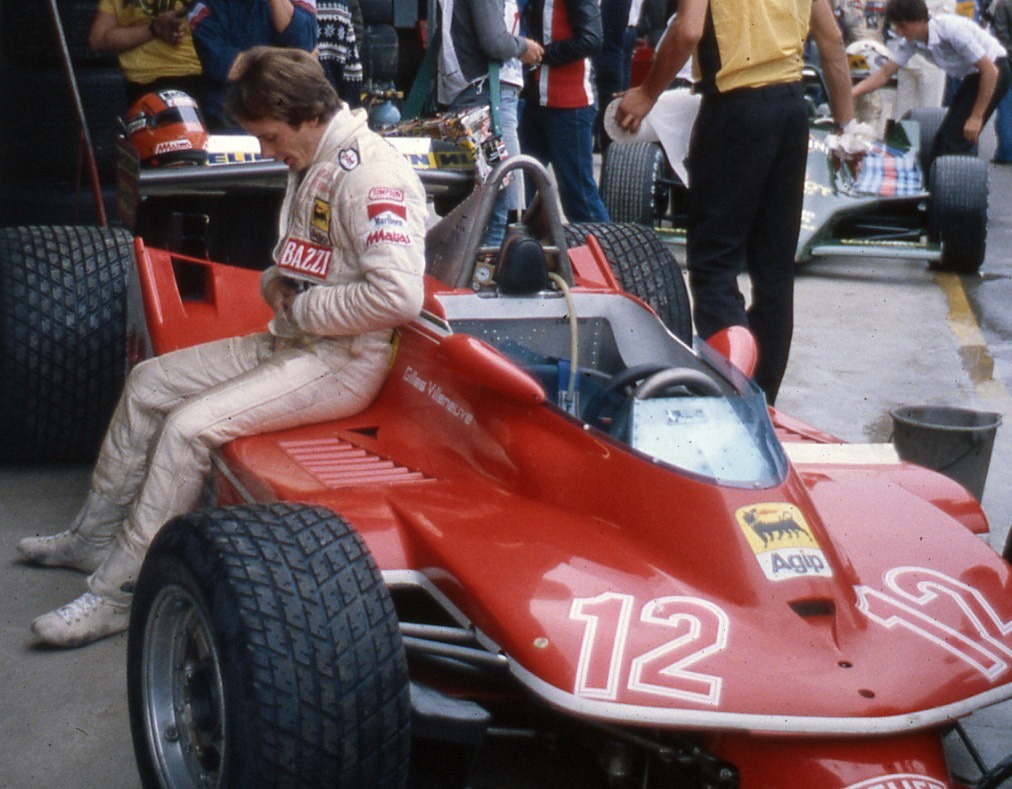
Gilles Villeneuve, born on January 18, 1950, in Chambly, near Montreal, Canada, remains one of the most iconic figures in the world of Formula 1 racing. Known for his fearless driving style and his unwavering passion for speed, Villeneuve’s career, though tragically cut short, left an indelible mark on the sport. His life was a story of relentless pursuit of excellence, from his humble beginnings in Canada to his rise as a Ferrari legend. This article provides a comprehensive exploration of Gilles Villeneuve’s life, career, and lasting legacy, offering insights into his journey, the challenges he faced, and the impact he had on the world of motorsports.
Early Life and Passion for Speed
Gilles Villeneuve was the first of two sons born to a modest family in Chambly, a small town in the province of Quebec, Canada. From an early age, Villeneuve demonstrated an innate love for speed. Growing up in a country where snow dominated much of the year, he initially gravitated towards skiing, a natural choice given the environment. However, it soon became evident that his true passion lay elsewhere. Villeneuve was drawn to anything that involved speed, and as he grew older, this passion began to manifest in more concrete ways.
After completing his education, including a diploma in mechanics, Villeneuve started working in a garage. His mechanical skills were not just a means to earn a living; they also allowed him to tinker with engines and vehicles, further fueling his obsession with speed. His early forays into competitive racing were not on the conventional circuits of motorsport but on the frozen tracks of Canada’s winter landscape. Villeneuve began his racing career on snowmobiles, a sport that perfectly combined his love for speed with the rugged conditions of his homeland.
It was in these early years, racing snowmobiles, that Villeneuve honed the skills that would later define his driving style in Formula 1. The ability to control a vehicle at high speeds on unpredictable surfaces translated well to the high-risk world of motor racing. It wasn’t long before Villeneuve sought out opportunities to race on more traditional tracks, eager to prove himself in the world of motorsport.
The Road to Formula 1
Gilles Villeneuve’s transition from snowmobiles to professional car racing was not without its challenges. In the early 1970s, he began competing in local racing events, initially driving in the Formula Ford and Formula Atlantic series. His talent quickly became apparent, and despite limited financial resources, Villeneuve made a name for himself as a fierce competitor. His big break came in 1976 when he won the Formula Atlantic Championship, a victory that caught the attention of the racing world.
Villeneuve’s success in Formula Atlantic led to an invitation to race in the prestigious Formula 1 series. In 1977, he made his debut in Formula 1, driving for McLaren in the British Grand Prix. Although the race did not yield spectacular results, Villeneuve’s potential was undeniable. His performance caught the eye of Enzo Ferrari, the legendary founder of Ferrari, who was looking for a new driver to replace Niki Lauda, a two-time World Champion who had recently left the team.
In late 1977, Villeneuve signed with Ferrari, marking the beginning of a legendary partnership that would define his career. However, his early days with Ferrari were anything but smooth. The Ferrari 312T2, the car he was assigned to drive, was notoriously difficult to handle, and Villeneuve struggled to adapt. His initial performances were marred by crashes and technical difficulties, leading many to doubt whether he was the right choice for the team.
Despite these setbacks, Villeneuve’s determination never wavered. He spent countless hours at Ferrari’s Fiorano test track, pushing himself and the car to the limit. His perseverance paid off in 1978 when he began to show signs of the brilliance that would later make him a legend. On February 7, 1978, Villeneuve broke the lap record at Fiorano five times in a single day, a feat that silenced many of his critics and solidified his place in the Ferrari team.
Rising Star at Ferrari
The year 1978 was a turning point in Gilles Villeneuve’s career. As he gained more experience, his performances on the track improved dramatically. His fearless driving style, characterized by a willingness to push the car to its absolute limits, endeared him to fans and made him a formidable competitor. Villeneuve’s first major victory came at the Canadian Grand Prix in Montreal, a fitting location for the Canadian driver. This win not only marked his arrival on the world stage but also established him as a serious contender in Formula 1.
Villeneuve’s success continued into 1979, a year that would see him reach new heights. He formed a close partnership with South African driver Jody Scheckter, who was his teammate at Ferrari. The two drivers, despite their different personalities, worked well together, and their collaboration led to one of Ferrari’s most successful seasons. While Scheckter ultimately won the World Championship that year, Villeneuve played a crucial role in securing Ferrari’s dominance. His performances in races such as the South African Grand Prix, the United States Grand Prix at Long Beach, and the United States Grand Prix at Watkins Glen were nothing short of spectacular.
One of the most memorable moments of Villeneuve’s career came at the 1979 French Grand Prix in Dijon. In what is considered one of the greatest duels in Formula 1 history, Villeneuve battled wheel-to-wheel with French driver René Arnoux in the final laps of the race. The two drivers exchanged positions multiple times, with their cars often just inches apart. Villeneuve ultimately finished second, but his display of skill and bravery during that race became the stuff of legend.
A Tragic End to a Brilliant Career
The early 1980s saw Gilles Villeneuve continue to compete at the highest level, but the results were often mixed. Ferrari struggled with reliability issues, and Villeneuve’s aggressive driving style sometimes led to crashes that cost him valuable points in the championship standings. Nevertheless, he remained one of the most popular and respected drivers in the sport, admired for his unyielding spirit and his refusal to back down from a challenge.
Tragically, Villeneuve’s career and life were cut short on May 8, 1982, during qualifying for the Belgian Grand Prix at the Zolder circuit. In a bid to improve his lap time, Villeneuve’s Ferrari collided with the March car of Jochen Mass at a speed of 260 km/h (160 mph). The impact sent Villeneuve’s car airborne, and the ensuing crash was devastating. Villeneuve was thrown from the car, suffering catastrophic injuries. Despite the best efforts of medical staff, Villeneuve succumbed to his injuries the following day, on May 9, 1982, at the age of 32.
Villeneuve’s death was a profound loss for the world of motorsport. He was not just a talented driver; he was a hero to millions of fans who admired his courage, his passion, and his unrelenting pursuit of victory. In the years that followed, Villeneuve’s legacy grew, and he became a symbol of the golden era of Formula 1, a time when drivers pushed the limits of what was possible, often at great personal risk.
Legacy and Impact on Formula 1
Gilles Villeneuve’s impact on Formula 1 extends far beyond his statistics and race results. He is remembered as one of the purest talents the sport has ever seen, a driver who embodied the essence of racing. His style was raw, unrefined, and thrilling, capturing the imagination of fans and fellow drivers alike. Villeneuve’s ability to extract every ounce of performance from his car, even when it meant risking everything, set him apart from his peers.
Villeneuve’s legacy lives on in various ways. The Circuit Gilles Villeneuve in Montreal, home of the Canadian Grand Prix, is named in his honor, serving as a permanent reminder of his contributions to the sport. His son, Jacques Villeneuve, followed in his footsteps, becoming a Formula 1 World Champion in 1997, thereby continuing the Villeneuve legacy in motorsport.
Moreover, Gilles Villeneuve is often cited as an inspiration by modern drivers who admire his fearless approach to racing. His name remains synonymous with the daring, adventurous spirit that defines the best in motorsport. Villeneuve’s career, though tragically brief, serves as a reminder of the risks and rewards of Formula 1 racing, and his story continues to be told to new generations of racing enthusiasts.
Conclusion
Gilles Villeneuve’s life and career are a testament to the passion, dedication, and sheer willpower that define the greatest athletes. From his early days racing snowmobiles in Canada to his meteoric rise in Formula 1, Villeneuve’s journey was one of relentless pursuit of speed and excellence. His legacy as a driver who raced with his heart, never backing down from a challenge, continues to inspire and captivate the world of motorsport.
As we reflect on the life of Gilles Villeneuve, we are reminded of the fleeting nature of greatness in a sport where the line between triumph and tragedy is often razor-thin. Villeneuve’s story is not just about racing; it is about the human spirit’s unyielding desire to push boundaries and achieve the extraordinary. His name will forever be etched in the annals of Formula 1 history, a symbol of the courage and determination that it takes to be a true racing legend.


