
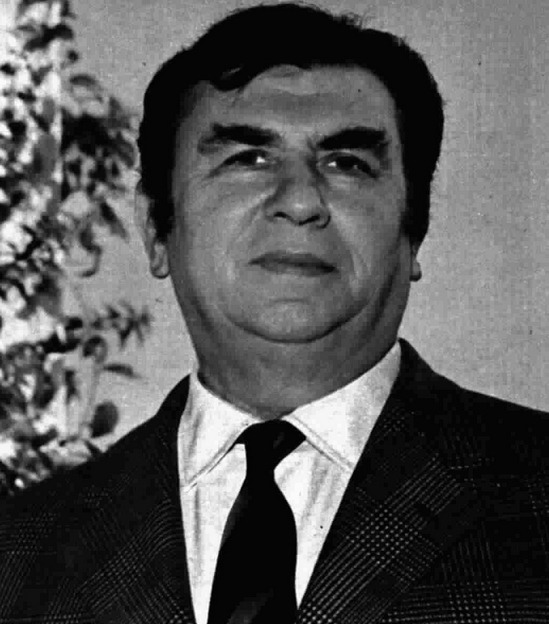
Gino Cervi was an iconic Italian actor whose career spanned over four decades, making him a household name in Italy and beyond. Born on May 3, 1901, in Bologna, Italy, Cervi became renowned for his versatility in acting, excelling in theater, cinema, and television. His portrayal of diverse characters—from Shakespearean heroes to the beloved Peppone in the Don Camillo films—cemented his legacy as one of the most significant actors in Italian entertainment history. This article explores the life, career, and enduring impact of Gino Cervi, providing a detailed account of his rise to fame and the key moments that defined his career.
Early Life and Passion for Theater
Gino Cervi was born into a family with a deep appreciation for the arts. His father, Antonio Cervi, was a respected theater critic for the newspaper Il Resto del Carlino, which undoubtedly influenced Gino’s early exposure to the world of theater. Growing up in Bologna, Cervi developed a passion for acting at a young age. This passion led him to join a local amateur theater company when he was just 20 years old, marking the beginning of his journey in the performing arts.
In 1924, Cervi made his official debut as a professional actor in the play La Vergine Folle by Georges Bataille, where he starred alongside the renowned actress Alda Borelli. This debut performance was well-received, showcasing Cervi’s talent and potential as an actor. The following year, he joined the Teatro d’Arte di Roma, under the direction of the legendary playwright Luigi Pirandello, further honing his craft and solidifying his place in the Italian theater scene.
Rise to Prominence in Italian Theater
The 1930s were a pivotal decade for Gino Cervi as he transitioned from a promising young actor to a leading figure in Italian theater. During this period, he became the leading actor for the Tofano-Maltagliati Company from 1935 to 1937, where he took on prominent roles that demonstrated his range and depth as a performer. His performances were marked by a commanding stage presence, an elegant and incisive style, and a deep, resonant voice that captivated audiences.
In 1938, Cervi joined the semi-permanent company at the Teatro Eliseo in Rome, where he took on the role of director the following year. His tenure at the Teatro Eliseo was marked by a series of acclaimed performances, particularly in classical plays by authors such as Carlo Goldoni, Sophocles, Fyodor Dostoevsky, and especially William Shakespeare. Cervi’s portrayal of Othello in Shakespeare’s Othello became legendary, and it remains one of his most memorable performances. His ability to bring Shakespearean characters to life with emotional depth and authenticity earned him widespread acclaim and established him as one of Italy’s foremost Shakespearean actors.
Transition to Cinema and Early Film Success
Gino Cervi’s transition to cinema began in 1932, where he quickly became one of the most popular actors in Italian film. His entry into the world of cinema was facilitated by director Alessandro Blasetti, who recognized Cervi’s potential and cast him in several significant films. Blasetti directed Cervi in Ettore Fieramosca (1938), where Cervi played the titular role of the Italian hero, further solidifying his status as a leading man in Italian cinema.
Cervi’s collaborations with Blasetti continued with films such as Un’Avventura di Salvator Rosa (1939) and La Corona di Ferro (1941), both of which were well-received by audiences and critics alike. However, it was his role in the 1942 film Quattro Passi fra le Nuvole that marked a turning point in his career. In this film, Cervi played a traveling salesman who helps a young, unwed pregnant woman, showcasing his ability to embody complex characters with compassion and nuance. The film’s neo-realist tones and Cervi’s performance resonated with audiences, making it one of his most celebrated roles during this period.
The Peppone Era: Don Camillo Films
While Gino Cervi had already established himself as a prominent actor in theater and film, it was his portrayal of the character Peppone in the Don Camillo series that brought him enduring fame. The Don Camillo films, based on the stories by Italian writer Giovanni Guareschi, depicted the humorous and often poignant rivalry between a communist mayor, Peppone (played by Cervi), and a Catholic priest, Don Camillo (played by the French actor Fernandel).
The first film in the series, Don Camillo (1952), was an instant success, with Cervi’s portrayal of Peppone—a gruff yet kind-hearted mayor—earning him widespread acclaim. His ability to balance the character’s tough exterior with moments of warmth and humor made Peppone a beloved figure among Italian audiences. The chemistry between Cervi and Fernandel was a key factor in the success of the series, and their on-screen rivalry became iconic.
The success of the first film led to several sequels, including Don Camillo e l’Onorevole Peppone (1955), Don Camillo Monsignore… Ma Non Troppo (1961), and others. Each installment of the series further cemented Cervi’s place in Italian cinematic history. The films were not only popular in Italy but also gained international recognition, with the character of Peppone becoming synonymous with Cervi’s name.
Television Success: Maigret
In addition to his success in film, Gino Cervi achieved significant fame in television during the 1960s with his portrayal of the titular character in the Italian adaptation of Le Inchieste del Commissario Maigret (The Investigations of Commissioner Maigret). The series, based on the novels by Belgian writer Georges Simenon, featured Cervi as the wise and observant French detective, Jules Maigret.
The first cycle of episodes aired in 1964 and was met with critical acclaim. Cervi’s interpretation of Maigret, characterized by his calm demeanor, sharp intellect, and understated intensity, resonated with viewers. His portrayal was so well-received that the series was broadcast not only in Italy but also in France, where it was particularly appreciated for its authentic depiction of the character’s domestic life.
The success of Maigret led to two more cycles of episodes in 1966 and 1968, with the final episode, Maigret in Pensione (Maigret Retires), airing in 1972. The role of Maigret brought Cervi a renewed sense of popularity and introduced him to a new generation of fans. It also showcased his versatility as an actor, proving that he could excel in both comedic and dramatic roles across different media.
Later Career and Legacy
As Gino Cervi entered the later years of his career, he continued to work in both film and television, maintaining the same level of dedication and professionalism that had characterized his earlier work. His final film appearance was in Fratello Ladro (1972), marking the end of a prolific career that spanned over four decades.
Cervi’s contributions to Italian theater, cinema, and television left an indelible mark on the entertainment industry. He was celebrated for his ability to bring depth and humanity to a wide range of characters, from Shakespearean heroes to small-town mayors and detectives. His performances were marked by a unique combination of charisma, warmth, and gravitas, making him one of the most beloved and respected actors of his time.
Gino Cervi passed away on January 3, 1974, in Punta Ala, a seaside town in the province of Grosseto, Italy. His death marked the end of an era, but his legacy continues to live on through the films, plays, and television shows that he left behind.
Conclusion
Gino Cervi’s life and career are a testament to the power of dedication, versatility, and talent in the world of acting. From his early days in the theater to his iconic roles in cinema and television, Cervi consistently demonstrated an ability to captivate audiences and bring characters to life in a way that few actors could. His legacy as one of Italy’s most significant cultural figures is secure, and his work continues to inspire new generations of actors and filmmakers.
As we reflect on the life and achievements of Gino Cervi, it is clear that his contributions to the arts were not only a reflection of his immense talent but also of his deep commitment to the craft of acting. Whether on stage, on screen, or in the hearts of his fans, Gino Cervi remains a towering figure in the history of Italian entertainment.


