
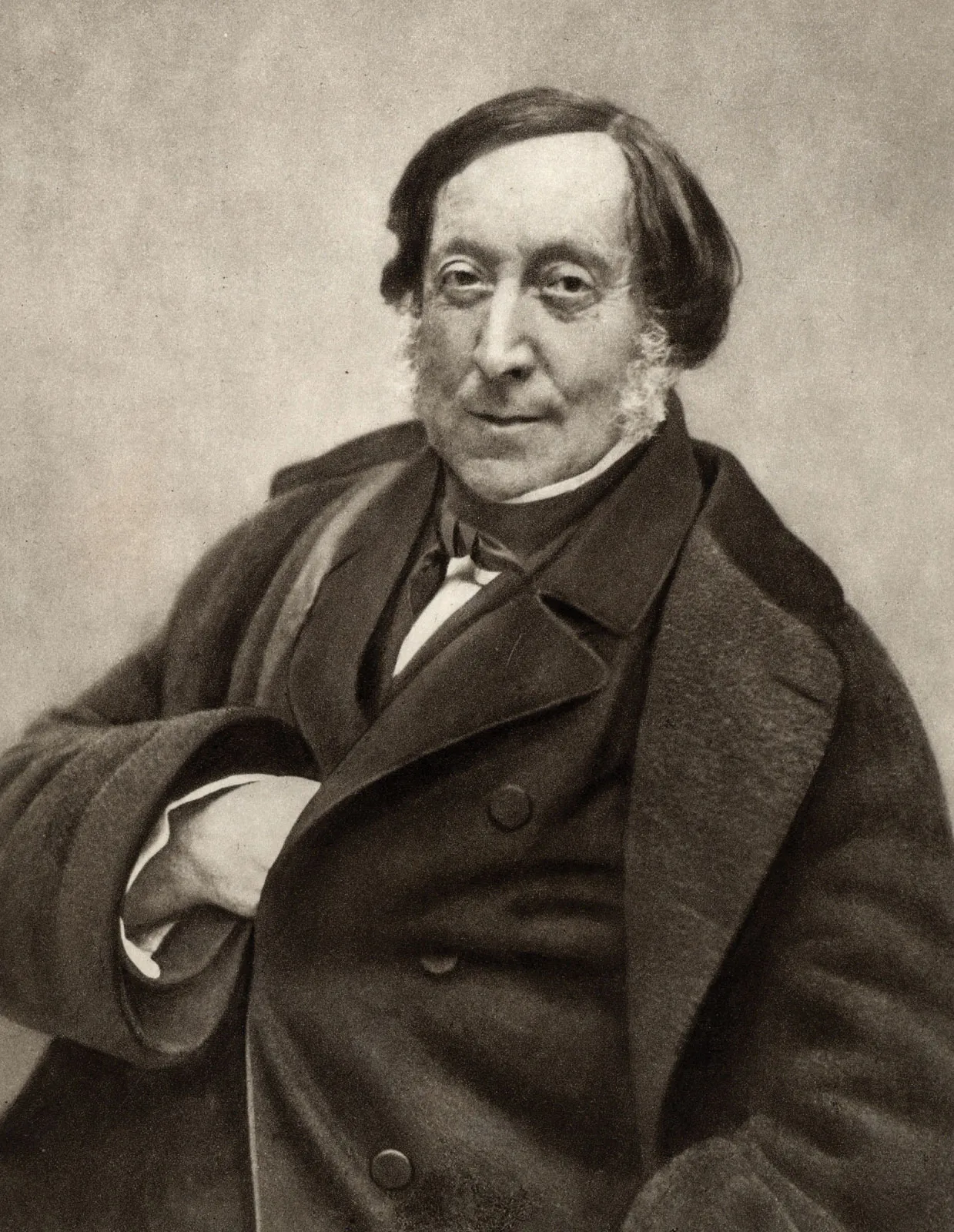
Gioachino Rossini, born on February 29, 1792, in Pesaro, Italy, stands as one of the most iconic composers in the history of Western classical music. Known for his extraordinary contributions to the opera, Rossini’s work is synonymous with the vibrant, lively, and melodic characteristics that define much of Italian music. His career, marked by early success, international fame, and a dramatic withdrawal from the public eye, has left an indelible mark on both Italian culture and the broader world of music.
Early Life and Musical Beginnings
Gioachino Rossini was born into a musically inclined family. His father, Giuseppe Rossini, was a horn player and inspector of slaughterhouses, while his mother, Anna Guidarini, was a singer. Growing up in such an environment, it was no surprise that Rossini displayed musical talent from a young age. His early exposure to the theater and the world of music set the stage for his future career.
Rossini’s formal music education began at the Conservatory of Bologna, where he studied under the guidance of renowned teachers like Padre Stanislao Mattei. His early influences included the works of composers such as Domenico Cimarosa, Franz Joseph Haydn, and Wolfgang Amadeus Mozart. These influences would later shape his compositional style, blending the classical clarity of Mozart with the Italian operatic tradition.
The Rise to Fame: Early Operas and Successes
By the age of 20, Rossini had already made a significant mark in the world of opera. His first opera, Demetrio e Polibio, was composed when he was just 14 years old, though it was not performed until later. His breakthrough came with the opera La Cambiale di Matrimonio in 1810, which showcased his ability to write engaging and entertaining music.
Rossini quickly became known for his opere buffe (comic operas) and opere serie (serious operas). During this time, the distinction between these two genres was quite rigid. Opera seria typically consisted of three acts and focused on serious, often historical or mythological themes, while opera buffa was more light-hearted and comedic, often drawing from the traditions of the commedia dell’arte.
Rossini’s ability to navigate and blend these genres was evident in works like Tancredi (1813) and L’italiana in Algeri (1813). Both operas were met with critical acclaim, and their success established Rossini as a rising star in the Italian opera scene. The former, an opera seria, was praised for its melodic beauty and dramatic depth, while the latter, an opera buffa, was celebrated for its humor and energetic rhythms.
The Barber of Seville and International Stardom
One of Rossini’s most enduring and popular works is Il Barbiere di Siviglia (The Barber of Seville), premiered in 1816. Despite a rocky start—its premiere was met with jeers and disruptions—The Barber of Seville quickly became a favorite and is now considered one of the greatest comic operas ever written. Its lively overture, memorable arias like “Largo al factotum,” and the comedic genius of its libretto have ensured its place in the standard operatic repertoire.
This period also saw Rossini’s increasing influence beyond Italy. In 1815, he was appointed musical director of the Teatro San Carlo in Naples by the powerful impresario Domenico Barbaja. This position allowed him to compose operas with a higher degree of creative control and introduced him to some of the finest singers of the time. Among his works from this period is La Cenerentola (1817), another comic opera that remains a favorite to this day.
Paris and the Creation of Grand Opera
In 1824, Rossini moved to Paris, where he was appointed director of the Théâtre Italien. His time in Paris marked a significant shift in his career. Here, he adapted many of his earlier works to suit the tastes of French audiences and composed new operas, including Guillaume Tell (William Tell) in 1829.
Guillaume Tell was Rossini’s last opera and is considered a masterpiece of the grand opera genre, characterized by its historical themes, elaborate staging, and inclusion of ballet. The opera’s overture, with its vivid depiction of a Swiss dawn, a storm, and the famous “March of the Swiss Soldiers,” remains one of the most recognizable pieces of classical music. This work not only solidified Rossini’s international fame but also marked the end of his operatic career.
The Sudden Retirement and Later Years
At the height of his success, Rossini made the surprising decision to retire from composing operas. The reasons for his retirement are still debated among historians. Some suggest that it was due to health issues, while others believe it was a result of creative exhaustion or satisfaction with his financial security.
After his retirement from opera, Rossini continued to compose, but on a much smaller scale. He wrote a series of short piano pieces and sacred music, including the Petite messe solennelle (1863), which he referred to as the “last of my sins of old age.” Despite the lighter workload, Rossini remained a central figure in the musical world. He returned to Italy in 1836 but later moved back to Paris in 1855, where he lived until his death in 1868.
The Rossinian Legacy: Impact on Music and Culture
Rossini’s impact on the world of music cannot be overstated. He was a master of orchestration and melody, known for his ability to create infectious, energetic music that could convey both comedy and drama with equal skill. His use of the “Rossini crescendo,” a technique where musical phrases are repeated with increasing volume and intensity, became one of his trademarks and influenced countless composers who followed.
Moreover, Rossini’s work helped to bridge the gap between the classical and romantic eras of music. His ability to infuse his compositions with both the elegance of classical music and the emotional depth of the burgeoning romantic style made him a pivotal figure in the evolution of opera.
Rossini also played a crucial role in the development of bel canto singing, a style characterized by beautiful, flowing melodic lines and virtuosic vocal technique. His operas, with their demanding arias and ensembles, pushed singers to new heights of expressiveness and technical skill.
Beyond his musical contributions, Rossini became a cultural icon. His name is synonymous with Italian opera, and his works continue to be performed and celebrated around the world. His influence extends beyond the concert hall; Rossini’s life and work have inspired literature, film, and even cuisine—tournedos Rossini, a dish named in his honor, remains a classic of French haute cuisine.
Conclusion: The Enduring Legacy of Gioachino Rossini
Gioachino Rossini’s life and career encapsulate the essence of the Italian spirit—creative, passionate, and enduring. From his early days as a musical prodigy in Italy to his rise as an international star and his eventual retirement in Paris, Rossini’s journey is a testament to the power of music to transcend boundaries and connect people across cultures.
His operas, filled with humor, pathos, and unforgettable melodies, continue to captivate audiences today, nearly two centuries after they were written. Whether through the comic brilliance of The Barber of Seville or the grand spectacle of William Tell, Rossini’s music remains a vital part of the global cultural heritage.
As we look back on the life and work of Gioachino Rossini, we are reminded of the enduring power of creativity and the timeless appeal of great art. Rossini may have left the world of opera at the height of his powers, but his influence continues to resonate, ensuring that his legacy will live on for generations to come.


