
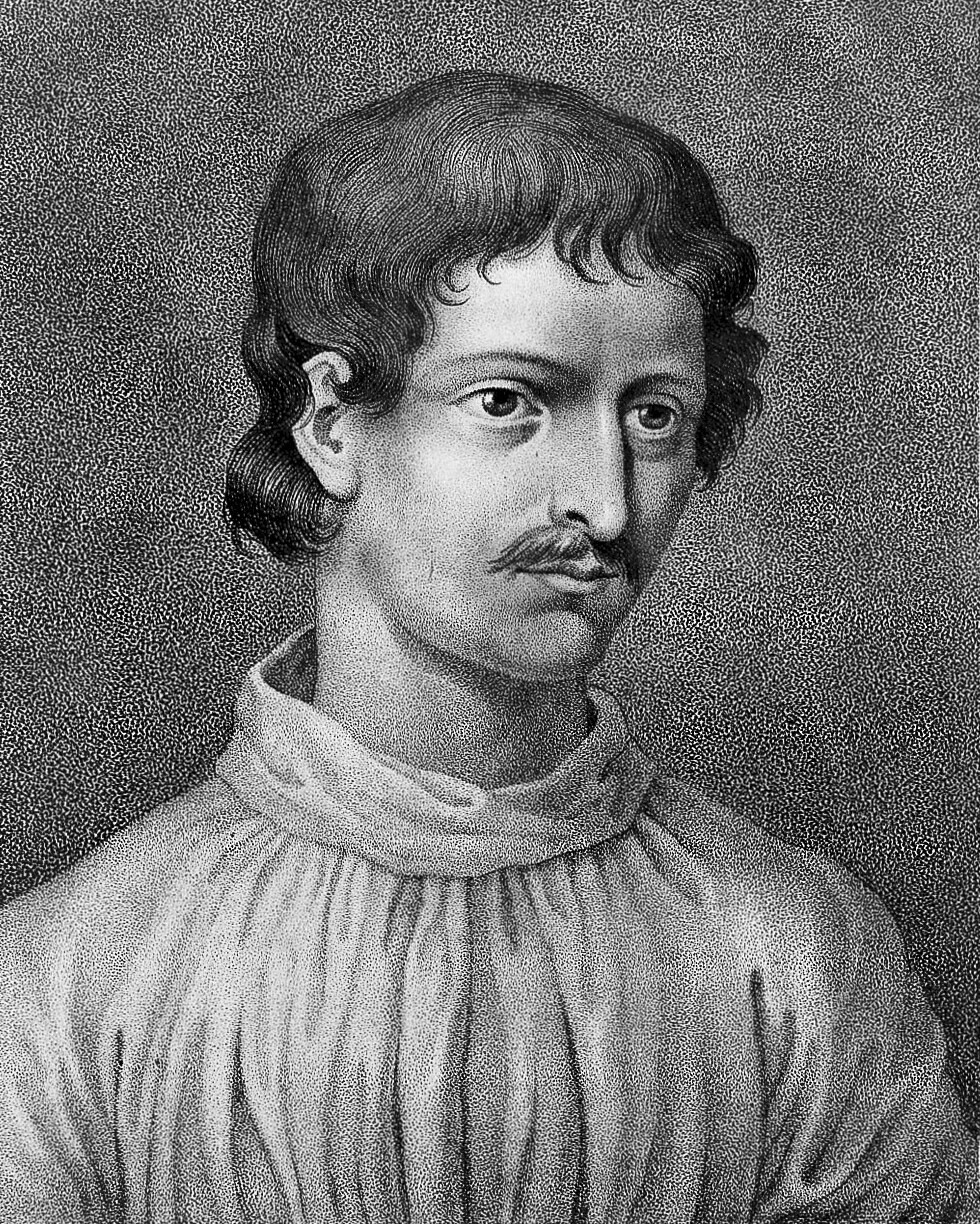
Giordano Bruno, born in 1548 in Nola, near Naples, Italy, is a historical figure whose life and work have left an indelible mark on the world of philosophy, science, and theology. He was a thinker ahead of his time, whose ideas on the universe and its infinite nature challenged the prevailing doctrines of the Roman Catholic Church. Bruno’s life was marked by intellectual brilliance, unyielding curiosity, and ultimately, tragedy, as his radical ideas led to his execution by burning at the stake in 1600. This article explores the life, fame, and significant contributions of Giordano Bruno, while also providing insights into the historical context that shaped his thinking.
Early Life and Education
Giordano Bruno was born Filippo Bruno in 1548 into a noble family in Nola, a small town in the Campania region of Italy. From a young age, he exhibited a keen interest in learning and was drawn to the study of theology and philosophy. At the age of 17, he entered the Dominican convent of San Domenico Maggiore in Naples, where he adopted the name Giordano. It was here that Bruno began his formal education in theology, philosophy, and the classics, and where he first encountered the ideas that would later define his life’s work.
Bruno’s education in the convent was rigorous, exposing him to the works of classical philosophers such as Aristotle and Plato, as well as the teachings of the Church Fathers. However, even as a young novice, Bruno displayed an independent and inquisitive mind, questioning the dogmatic teachings he was expected to accept without critique. This intellectual restlessness would eventually lead him to embrace ideas that were considered heretical by the Church.
The Evolution of Thought: From Priest to Philosopher
Giordano Bruno’s intellectual journey was marked by a growing disillusionment with the rigid doctrines of the Roman Catholic Church. As he delved deeper into the study of philosophy, he began to develop ideas that were radically different from those of his contemporaries. One of the central themes of Bruno’s philosophy was the concept of an infinite universe, which stood in stark contrast to the geocentric model endorsed by the Church.
Bruno’s ideas were heavily influenced by the works of ancient and medieval philosophers, including Heraclitus and Nicholas of Cusa. He embraced a pantheistic view of the world, which posited that God and the universe were one and the same. This belief in an infinite, self-sustaining universe where God was immanent in all things was a direct challenge to the Church’s teaching of a finite cosmos created and governed by a transcendent God.
In 1576, Bruno’s unorthodox views brought him into conflict with the ecclesiastical authorities in Naples. Accused of heresy, he fled the city and embarked on a series of travels across Europe, seeking refuge in various intellectual centers where he could continue his studies and share his ideas. His travels took him to cities such as Geneva, Paris, and London, where he found a more receptive audience for his radical ideas.
The Writings and Philosophical Contributions
Giordano Bruno was a prolific writer, and his works cover a wide range of topics, including cosmology, metaphysics, and memory techniques. His writings reflect his deep engagement with the philosophical and scientific debates of his time, as well as his commitment to challenging established norms.
One of Bruno’s earliest works, “De Umbris Idearum” (“On the Shadows of Ideas”), published in 1582, explores the relationship between memory, knowledge, and the cosmos. In this work, Bruno introduces the concept of a mnemonic system based on the symbolic representation of ideas, which he believed could unlock deeper levels of understanding.
During his time in England (1583-1585), Bruno published some of his most significant works, including “La Cena de le Ceneri” (“The Ash Wednesday Supper”), “De l’Infinito, Universo e Mondi” (“On the Infinite Universe and Worlds”), and “De la Causa, Principio et Uno” (“On Cause, Principle, and Unity”). In these works, Bruno articulated his belief in the infinity of the universe and the multiplicity of worlds, building upon the Copernican heliocentric model to argue that the universe was boundless and filled with countless worlds similar to our own.
Bruno’s rejection of the Aristotelian and Ptolemaic models, which depicted the universe as a finite, hierarchical structure with Earth at its center, was revolutionary. His vision of an infinite universe with no central point challenged the very foundations of the prevailing worldview and posed a direct threat to the authority of the Church.
In addition to his cosmological ideas, Bruno’s work “Spaccio de la Bestia Trionfante” (“The Expulsion of the Triumphant Beast”) (1584) and “Gli Eroici Furori” (“The Heroic Enthusiasms”) (1585) delve into ethical and metaphysical themes. In these works, Bruno advocates for the pursuit of knowledge and the development of intellectual and spiritual virtues as the highest goals of human life. He argued that understanding the infinite nature of the universe could elevate the human spirit and bring individuals closer to the divine.
The Final Years: Arrest, Trial, and Execution
Giordano Bruno’s uncompromising commitment to his ideas eventually led to his downfall. In 1591, he was invited to Venice by a nobleman named Giovanni Mocenigo, who sought to learn from Bruno’s knowledge of memory techniques and possibly explore the practice of magic. However, Mocenigo soon became alarmed by Bruno’s radical ideas and denounced him to the Venetian Inquisition.
Bruno was arrested in 1592 and brought before the Venetian authorities. Initially, he attempted to defend his views, but when the Roman Inquisition demanded his extradition to Rome, Bruno was sent to the Holy City, where he was subjected to a prolonged trial.
During his trial, which lasted several years, Bruno was repeatedly pressured to recant his beliefs. However, he refused to abandon his ideas, even when faced with the threat of death. In 1599, Cardinal Robert Bellarmine, one of the leading figures of the Counter-Reformation, offered Bruno one last chance to recant, but Bruno’s response was firm and unwavering. He was declared a heretic and sentenced to death by burning.
On February 17, 1600, Giordano Bruno was executed in Rome’s Campo de’ Fiori. As he faced the flames, it is said that Bruno’s final words were a declaration that he did not fear death and that his ideas would endure. His martyrdom marked the tragic end of a brilliant mind that dared to challenge the intellectual and religious orthodoxies of his time.
Historical Context and Legacy
To fully appreciate Giordano Bruno’s life and contributions, it is essential to understand the historical context in which he lived. The late 16th century was a period of significant religious and intellectual upheaval in Europe. The Protestant Reformation had fractured the unity of Western Christendom, and the Catholic Church responded with the Counter-Reformation, a movement aimed at reaffirming Catholic doctrine and combating heresy.
Bruno’s ideas emerged at a time when the Church was increasingly intolerant of dissent and vigorously defended its teachings against any perceived threat. The Inquisition, established to root out heresy, was particularly active during this period, and many intellectuals who questioned the Church’s authority faced persecution.
Despite the challenges of his time, Bruno’s ideas had a profound impact on the development of modern thought. His vision of an infinite universe paved the way for future astronomers and scientists, including Galileo Galilei and Johannes Kepler, who would continue to explore the nature of the cosmos. Bruno’s philosophical ideas also influenced the Enlightenment, a period characterized by an emphasis on reason, science, and individualism.
Bruno’s legacy is that of a visionary who, despite the constraints of his time, dared to think beyond the accepted limits of knowledge. His commitment to intellectual freedom and his willingness to challenge established authorities have made him a symbol of the struggle for free thought. Today, Giordano Bruno is remembered as a martyr for science and philosophy, and his life serves as a reminder of the importance of questioning dogma and pursuing truth, even in the face of adversity.
Conclusion
Giordano Bruno’s life and work continue to inspire those who value intellectual freedom and the pursuit of knowledge. His ideas on the infinite universe and the nature of existence were groundbreaking, challenging the dominant paradigms of his time and laying the groundwork for future scientific and philosophical advancements.
Bruno’s tragic fate as a victim of the Inquisition underscores the dangers faced by those who dare to challenge established beliefs. Yet, his refusal to recant his ideas, even in the face of death, exemplifies the courage and determination that are necessary to push the boundaries of human understanding.
In the centuries since his death, Giordano Bruno has been recognized as a key figure in the history of philosophy and science. His life is a testament to the enduring power of ideas and the importance of standing by one’s convictions, no matter the cost. As we continue to explore the mysteries of the universe, we do so in the spirit of inquiry and intellectual bravery that Bruno embodied.


