
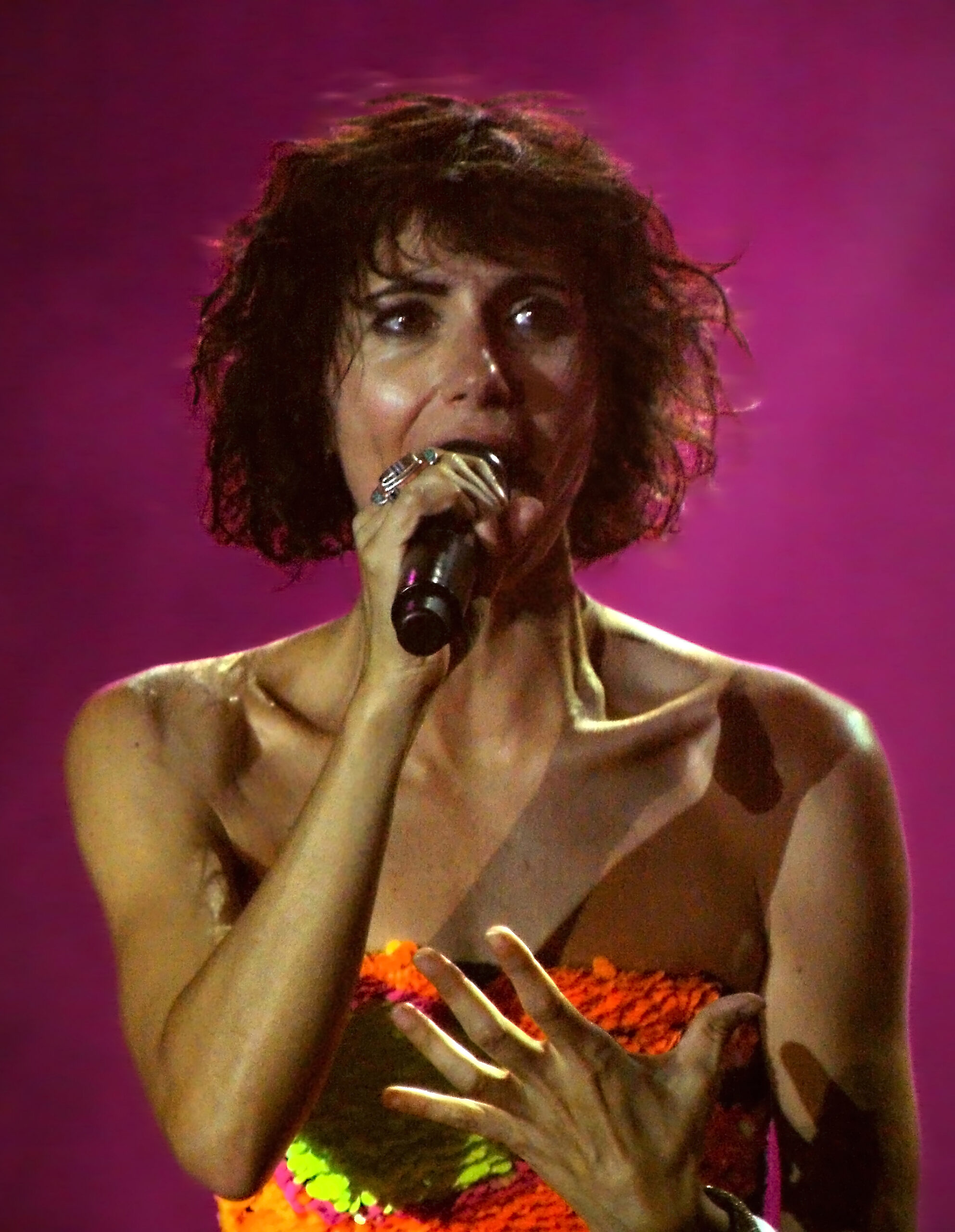
Giorgia Todrani, known simply as Giorgia, is one of Italy’s most iconic and beloved singers. Born on April 26, 1971, in Rome, Italy, Giorgia has captivated audiences with her powerful voice, emotive performances, and an impressive career that has spanned over three decades. As one of the leading figures in Italian pop music, she has not only achieved widespread fame in her home country but has also garnered international recognition. Giorgia’s journey from a young, aspiring singer in Rome to a celebrated artist known for her vocal prowess and emotional depth is a story of talent, perseverance, and enduring appeal.
Early Life and Musical Beginnings
Giorgia was born into a family with a rich musical heritage. Her father, Giulio Todrani, was a musician and singer, and it was through him that Giorgia was introduced to the world of music at a very young age. Growing up in Rome, she was surrounded by the sounds of jazz, soul, and rhythm and blues, genres that would later influence her musical style.
From a young age, Giorgia showed a natural talent for singing. She began performing in local clubs and events, often accompanying her father on stage. Her early exposure to live performances helped her develop a strong stage presence and honed her vocal abilities. By the time she was a teenager, it was clear that Giorgia had a unique gift, and she began to pursue a career in music more seriously.
Her formal education in music included studies in piano and vocal technique, which provided her with a solid foundation for her future career. Giorgia’s early years were marked by a deep dedication to her craft, as she worked tirelessly to refine her skills and prepare for a professional career in music.
Breakthrough and Rise to Fame: The 1990s
Giorgia’s big break came in 1994 when she participated in the Sanremo Music Festival, one of Italy’s most prestigious music competitions. She performed the song “E poi,” which immediately caught the attention of both the judges and the audience. Although she did not win the competition, her performance was widely praised, and it marked the beginning of her rise to fame.
Later that year, Giorgia released her self-titled debut album, which included the hit single “E poi.” The album was a commercial success and established her as a new and powerful voice in Italian pop music. Giorgia’s unique blend of pop, soul, and R&B, combined with her emotive delivery, set her apart from other artists at the time. Her ability to convey deep emotion through her music resonated with listeners, and she quickly gained a loyal fan base.
The success of her debut album was followed by her sophomore release, “Come Thelma & Louise,” in 1995. The album included the hit single “Come saprei,” which won Giorgia the Sanremo Music Festival that year. The song became one of her signature hits and is still considered one of the most iconic Italian pop songs of the 1990s. This victory solidified Giorgia’s status as one of Italy’s leading female artists and set the stage for a successful career.
Throughout the 1990s, Giorgia continued to release a string of successful albums and singles. Her music was characterized by its emotional depth, powerful vocals, and a blend of contemporary pop with soulful influences. By the end of the decade, Giorgia had established herself as one of Italy’s most respected and influential musicians.
International Recognition and Musical Evolution
As Giorgia’s career progressed into the 2000s, she began to explore new musical directions and expand her audience beyond Italy. Her fifth studio album, “Girasole” (1999), marked a turning point in her career, as she began to incorporate more diverse musical influences, including jazz, soul, and electronic music. The album was a commercial success and showcased Giorgia’s versatility as an artist.
In 2001, Giorgia released the album “Senza ali,” which included the hit single “Di sole e d’azzurro.” The song was another significant success and earned her widespread acclaim for its vocal performance and emotional depth. Around this time, Giorgia also began to collaborate with international artists, further broadening her appeal. Notably, she worked with the legendary tenor Andrea Bocelli on the duet “Vivo per lei,” which became a major hit both in Italy and internationally.
Giorgia’s ability to adapt and evolve her musical style has been a key factor in her enduring success. Throughout the 2000s, she continued to experiment with different genres, incorporating elements of rock, jazz, and electronic music into her work. This period of her career was marked by a series of critically acclaimed albums, including “Ladra di vento” (2003) and “Stonata” (2007), both of which showcased her growth as an artist.
Her willingness to take risks and explore new musical territories has earned Giorgia a reputation as one of the most innovative and versatile artists in Italian music. Her music has remained relevant and influential, and she continues to be a dominant force in the industry.
Personal Life and Overcoming Challenges
Despite her professional success, Giorgia’s life has not been without personal challenges. One of the most significant and publicized events in her life was the tragic death of her partner, Alex Baroni, in 2002. Baroni, a fellow singer, died in a motorcycle accident, leaving Giorgia devastated. The loss had a profound impact on her, both personally and professionally.
Giorgia has often spoken about the grief and pain she experienced following Baroni’s death. For a time, she withdrew from the public eye, struggling to come to terms with the tragedy. However, Giorgia eventually channeled her grief into her music, using it as a form of therapy and expression. The raw emotion and vulnerability that characterize her music during this period resonated deeply with her fans, who admired her strength and resilience.
One of the most poignant songs from this period is “Gocce di memoria,” which Giorgia wrote in memory of Baroni. The song, included in the soundtrack of the 2003 film “La finestra di fronte,” became one of her most beloved and iconic tracks. Its success further solidified Giorgia’s place as one of Italy’s most emotional and authentic voices in music.
Giorgia’s ability to overcome personal tragedy and continue to produce powerful music is a testament to her resilience and dedication to her craft. Her personal experiences have enriched her music, giving it a depth and authenticity that few artists can match.
Continued Success and Influence: The 2010s and Beyond
As Giorgia entered the 2010s, her career continued to flourish. She released a series of successful albums that not only topped the charts in Italy but also demonstrated her continued relevance in the ever-evolving music industry. Albums such as “Dietro le apparenze” (2011) and “Senza paura” (2013) were both commercial hits and critical successes, featuring collaborations with international artists and exploring contemporary sounds while staying true to Giorgia’s signature style.
“Senzo paura,” in particular, was notable for its international collaborations, including a duet with Alicia Keys on the song “I Will Pray (Pregherò).” This collaboration with a global superstar underscored Giorgia’s appeal beyond the Italian market and highlighted her ability to connect with artists and audiences across cultural and linguistic barriers.
In 2016, Giorgia released the album “Oronero,” which debuted at number one on the Italian charts and was certified platinum. The album featured the title track “Oronero,” a powerful song that addressed themes of human fragility, social issues, and the complexity of modern life. The success of “Oronero” confirmed that Giorgia remained a significant force in the Italian music scene, capable of producing work that resonates deeply with both old and new fans.
Throughout her career, Giorgia has also remained a prominent figure in live performance, known for her powerful and emotive stage presence. Her concerts are celebrated for their emotional intensity and technical excellence, showcasing her vocal abilities and her connection with her audience. Her ability to deliver live performances that are both technically flawless and emotionally moving has made her one of the most respected live performers in Italy.
Giorgia’s Legacy and Impact on Italian Music
Giorgia’s legacy in Italian music is profound and enduring. She is widely regarded as one of the greatest Italian vocalists of her generation, known for her powerful voice, emotional depth, and versatility. Her music has transcended genres, blending pop, soul, R&B, and jazz into a unique sound that is distinctly her own.
Over the years, Giorgia has inspired countless other artists and musicians, both in Italy and internationally. Her willingness to experiment with different musical styles and her ability to convey deep emotion through her music have made her a role model for aspiring singers. Many of today’s Italian pop artists cite Giorgia as an influence, and her impact on the Italian music industry is undeniable.
In addition to her musical achievements, Giorgia has also been recognized for her contributions to Italian culture more broadly. She has received numerous awards and honors, including multiple wins at the Sanremo Music Festival and several Wind Music Awards. Her influence extends beyond music; she is also seen as a cultural icon, representing the best of Italian artistry and creativity.
Personal Reflections and Future Endeavors
As Giorgia continues her career, she remains deeply connected to her roots in Rome and her love for music. Despite the challenges she has faced, both personally and professionally, Giorgia has remained true to her artistic vision, consistently producing music that resonates with her audience. Her work ethic, resilience, and passion for her craft have ensured that she remains a significant figure in the Italian music scene.
Looking to the future, Giorgia has expressed a desire to continue evolving as an artist. She has hinted at exploring new musical directions and potentially collaborating with other international artists. Her willingness to push boundaries and experiment with new sounds suggests that her best work may still be ahead of her.
In addition to her music, Giorgia has also expressed an interest in other creative endeavors, including writing and producing. Her deep understanding of the music industry and her experience as a performer give her a unique perspective that she could bring to these new projects.
As Giorgia looks to the future, there is little doubt that she will continue to be a force in the world of music and beyond. Her legacy is already secure, but her journey is far from over. Fans can look forward to many more years of powerful music and heartfelt performances from one of Italy’s most beloved artists.
Conclusion: The Enduring Appeal of Giorgia
Giorgia’s life and career offer a compelling narrative of talent, perseverance, and artistic integrity. From her early days as a young singer in Rome to her rise as one of Italy’s most beloved and respected artists, Giorgia’s journey is a testament to her extraordinary talent and unwavering commitment to her craft.
Her music, characterized by its emotional depth and vocal power, has resonated with audiences across generations. Giorgia’s ability to connect with listeners on a deeply personal level has made her a cultural icon and ensured her place in the pantheon of great Italian artists.
As we reflect on Giorgia’s career, it is clear that her influence on Italian music and culture is profound and lasting. Her legacy as one of Italy’s greatest singers is secure, but her story is far from over. With a career that continues to evolve and inspire, Giorgia remains a vital and enduring presence in the world of music.


