
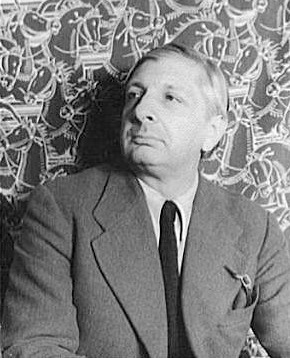
Giorgio De Chirico, born on July 10, 1888, in Volos, Greece, stands as a seminal figure in 20th-century art. His legacy, primarily linked to the metaphysical art movement, transcends his contemporaries, making him a subject of continued fascination. De Chirico’s life, marked by a deep engagement with philosophy, literature, and the classical traditions of art, is a testament to his unique vision and the profound influence he wielded over modern art.
Early Life and Influences
Giorgio De Chirico was born into a family of mixed heritage; his father was a railroad engineer, and his mother, a Genoese noblewoman. The early death of his sister Adele, coupled with his father’s passing in 1905, left a significant emotional imprint on young Giorgio. These losses would later echo in his art, where themes of melancholy, solitude, and the uncanny pervade.
De Chirico’s artistic journey began under the guidance of the Greek painter Mavrudis, and his formal education continued at the Polytechnic Institute in Athens. However, it was his exposure to the works of German symbolists like Arnold Böcklin and Max Klinger during his time in Munich that significantly shaped his artistic direction. The philosophical works of Nietzsche, Schopenhauer, and Weininger also profoundly influenced De Chirico, contributing to the metaphysical depth of his later work.
Metaphysical Art: A New Frontier
In 1910, De Chirico returned to Italy, where he began to develop his distinct metaphysical style. His paintings from this period, characterized by eerie cityscapes, deserted squares, and enigmatic figures, diverged sharply from the prevailing trends in European art. De Chirico’s work sought to evoke a sense of mystery and alienation, stripping away the familiar to reveal the uncanny within everyday objects and scenes.
This approach culminated in his famous metaphysical paintings, where objects are depicted out of their usual context, bathed in an eerie light, and placed in vast, empty spaces. These works are not just paintings but philosophical statements, challenging the viewer to reconsider the nature of reality. De Chirico believed that art should create new sensations and experiences, unmoored from the conventional and the accepted. His declaration that art must “create unknown sensations, strip away the common and accepted… liberate painting once and for all from anthropomorphism” was a radical departure from traditional artistic practices.
Rise to Fame in Paris
De Chirico’s move to Paris in 1911 marked a turning point in his career. Here, he was introduced to the avant-garde circles, meeting influential figures like Guillaume Apollinaire, who played a crucial role in promoting his work. Apollinaire was among the first to recognize the potential of De Chirico’s metaphysical art, coining the term “metaphysical” in reference to his work. Through Apollinaire, De Chirico was introduced to other leading artists of the time, including Picasso, Brancusi, and Braque.
His work quickly gained recognition, and De Chirico exhibited at the Salon d’Automne and the Salon des Indépendants, where his paintings were met with critical acclaim. His friendships with these artists, coupled with the philosophical underpinnings of his work, positioned De Chirico as a leading figure in the modern art movement.
The Impact of World War I and Further Evolution
The outbreak of World War I brought De Chirico back to Italy, where he served in the military. His time in the psychiatric hospital in Ferrara during the war proved to be a fertile period for his art. It was in Ferrara that De Chirico’s metaphysical style fully matured. The urban landscape of Ferrara, with its desolate squares and enigmatic architecture, became a recurring motif in his paintings.
During this period, De Chirico produced some of his most famous works, including “Hector and Andromache” and “The Disquieting Muses.” These paintings are quintessential examples of his metaphysical approach, combining classical themes with a modern, surreal aesthetic. The figures in these works, often depicted as mannequins or statues, exude a sense of timelessness and otherworldliness, further emphasizing the metaphysical themes of his art.
Later Career and Legacy
After the war, De Chirico’s reputation continued to grow. He became involved in various artistic projects, including scenography for ballet and opera, and illustrated works by Apollinaire and Jean Cocteau. His involvement in these multidisciplinary projects showcased his versatility and the breadth of his artistic vision.
In 1935, De Chirico traveled to the United States, where his work was met with great enthusiasm. His influence on the American art scene was profound, and he left a lasting impact on the development of surrealism and modern art. Despite this success, De Chirico remained a controversial figure, often at odds with the prevailing trends in the art world.
In the latter part of his career, De Chirico distanced himself from his earlier metaphysical works, referring to them as “invented and poetic” while championing what he called “real painting,” which he associated with the techniques of the Renaissance masters. This shift in focus led to a reevaluation of his earlier work, with some critics questioning his later output.
However, De Chirico’s legacy as the father of metaphysical art remains undisputed. His work continues to inspire and challenge artists and viewers alike, offering a unique perspective on the nature of reality and the role of art in society.
Giorgio De Chirico’s Death and Posthumous Recognition
Giorgio De Chirico passed away on November 20, 1978, in Rome. His death marked the end of an era, but his influence on the art world endures. Today, his paintings are celebrated for their visionary quality, their philosophical depth, and their ability to evoke a sense of mystery and wonder.
De Chirico’s art remains a subject of study and admiration, with exhibitions dedicated to his work held in major museums around the world. His contribution to the development of modern art, particularly in the realms of surrealism and metaphysical painting, cements his place as one of the most important artists of the 20th century.
In conclusion, Giorgio De Chirico’s life and work offer a fascinating glimpse into the complexities of modern art. His unique vision, shaped by his philosophical and literary influences, set him apart from his contemporaries and established him as a pivotal figure in the history of art. De Chirico’s exploration of the metaphysical, his challenge to conventional artistic norms, and his enduring legacy make him a figure of continued relevance and importance in the art world.


