
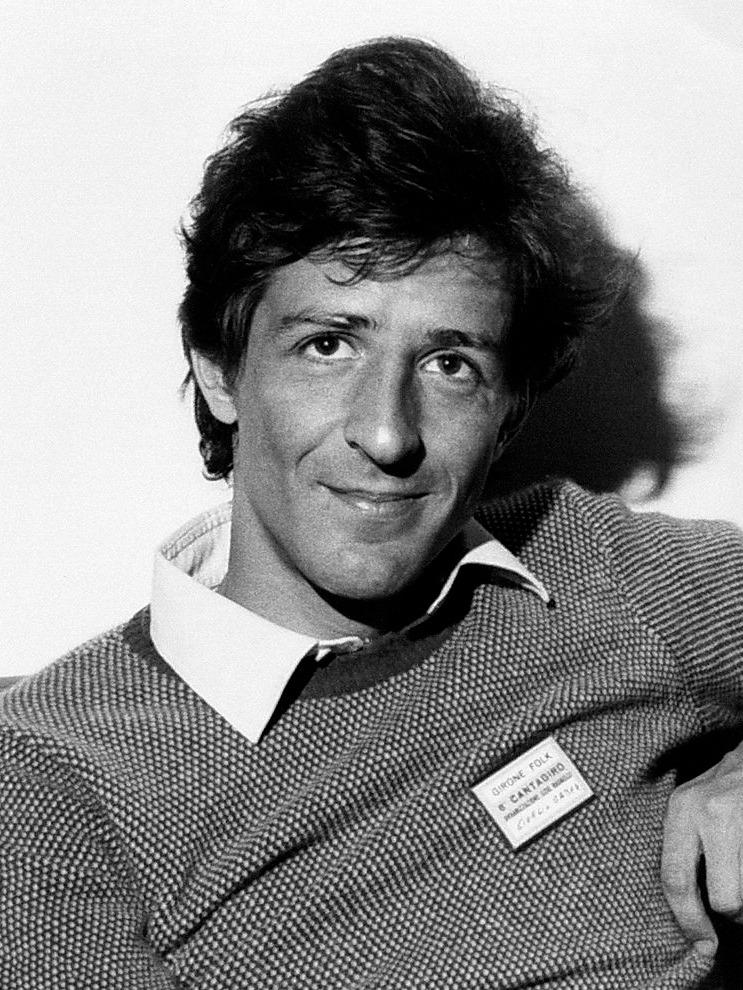
Giorgio Gaber, born Giorgio Gaberščik on January 25, 1939, in Milan, Italy, was a multifaceted artist whose influence spanned music, theater, and television. Often referred to as “Il Signor G,” Gaber was a pioneering figure in the Italian music scene, known for his deep, reflective lyrics and his innovative approach to performance. His work, characterized by a unique blend of irony, social commentary, and introspection, left an indelible mark on Italian culture. This article explores the life, career, and enduring legacy of Giorgio Gaber, providing detailed insights into the man behind the music and the movements he inspired.
Early Life and Musical Beginnings
Giorgio Gaber was born into a mixed-heritage family; his father was of Slovenian descent, while his mother was Italian. Gaber’s early years were marked by a struggle with health issues, specifically a paralysis in his left arm, which led him to begin playing the guitar as a form of therapy. This early connection to music would become a cornerstone of his life, setting the stage for a career that would intertwine with the evolution of modern Italian music.
After completing his studies in accounting, Gaber enrolled at Bocconi University in Milan to study economics and commerce. However, his passion for music soon overshadowed his academic pursuits. He began performing at local venues, including the famous Santa Tecla in Milan, where he connected with other emerging artists of the time, such as Adriano Celentano, Enzo Jannacci, and Mogol. These connections proved to be crucial, as they led to his first recording contract with Ricordi, marking the beginning of his professional music career.
The Rise of a Music Icon
Gaber’s early recordings reflected the musical trends of the time, with influences from rock and roll and the Italian canzone. His first notable success came with the song “Ciao, ti dirò,” co-written with Luigi Tenco, another influential figure in Italian music. This track, along with others like “Non arrossire” and “Torpedo blu,” established Gaber as a rising star in the Italian music scene.
Gaber’s music was not just about catchy tunes; it was deeply influenced by the French chanson tradition, particularly the works of Jacques Brel, whom Gaber often cited as a significant influence. His lyrics began to explore more complex themes, including social issues and personal introspection, which set him apart from many of his contemporaries.
During the 1960s, Gaber participated in four editions of the Sanremo Music Festival, Italy’s most prestigious music competition. His entries included “Benzina e cerini” (1961), “Così felice” (1964), “Mai mai mai Valentina” (1966), and “E allora dai” (1967). These performances helped cement his reputation as a versatile and innovative artist.
Transition to Theater: The Birth of “Il Signor G”
The late 1960s marked a significant turning point in Gaber’s career. While he continued to enjoy success in the music industry, he began to explore new avenues for his creative expression. This exploration led him to the theater, where he developed a unique form of performance that combined music, monologues, and theatrical elements. This new format, which he called “teatro canzone” (song theater), became his signature style.
In 1970, Gaber introduced “Il Signor G,” a character that would become central to his theatrical performances. “Il Signor G” was a vehicle through which Gaber could explore a wide range of social, political, and existential themes. The character resonated deeply with audiences, offering a mirror to the complexities of contemporary life in Italy. Gaber’s performances were not just entertainment; they were a form of social commentary that challenged audiences to think critically about the world around them.
Some of his most significant works during this period include “Far finta di essere sani” (1972), “Libertà obbligatoria” (1976), and “Polli d’allevamento” (1978). These productions were characterized by their incisive wit, sharp social critique, and the ability to blend humor with profound insights into the human condition.
Social Commentary and Political Engagement
Giorgio Gaber was more than just a musician or a performer; he was a commentator on Italian society. His work often reflected his deep concerns about the state of the world, addressing issues such as freedom, conformity, and the role of the individual in society. Gaber’s songs and monologues delved into topics that were often considered taboo or controversial, making him a polarizing figure at times.
One of his most famous songs, “Destra-Sinistra,” from the album “La mia generazione ha perso” (2001), is a perfect example of his ability to blend humor with political commentary. The song critiques the often arbitrary distinctions between political ideologies, using irony to expose the contradictions within Italian politics. This track, released during a pre-election period in Italy, remains relevant today, reflecting the timeless nature of Gaber’s observations.
Gaber’s engagement with social and political issues was not limited to his music. He was also an active participant in the cultural and intellectual debates of his time. Through his performances and public statements, Gaber consistently pushed the boundaries of what was considered acceptable discourse in Italian society.
Personal Life and Legacy
Giorgio Gaber’s personal life was deeply intertwined with his artistic endeavors. In 1965, he married Ombretta Colli, a singer and actress who would later become a politician. Their partnership was both personal and professional, with Colli often collaborating with Gaber on various projects. The couple had one daughter, Dalia Gaberscik, who would go on to continue her father’s legacy in the arts.
Gaber’s influence extended beyond his own generation, inspiring countless artists and performers who followed in his footsteps. His innovative approach to performance, his willingness to tackle difficult subjects, and his commitment to authenticity have made him a revered figure in Italian culture.
Tragically, Giorgio Gaber’s life was cut short by a long illness. He passed away on January 1, 2003, at the age of 63, in his villa in Montemagno di Camaiore, in Tuscany. His death marked the end of an era, but his legacy lives on through his music, his theatrical works, and the countless artists he inspired.
Shortly after his death, his final album, “Io non mi sento italiano” (I Don’t Feel Italian), was released. This posthumous release served as a poignant farewell from Gaber, encapsulating his complex relationship with his national identity and his enduring skepticism of political and social institutions.
Historical and Cultural Context
Giorgio Gaber’s work must be understood within the broader context of post-war Italy, a period marked by rapid social change, political upheaval, and cultural transformation. The 1960s and 1970s, in particular, were decades of significant turmoil in Italy, with the country experiencing economic growth, social unrest, and the rise of both left- and right-wing political movements.
Gaber’s art was a reflection of these times. His work engaged directly with the social and political issues of the day, offering a critique of both the establishment and the countercultural movements that opposed it. In this sense, Gaber was both a product of his time and a commentator on it, using his art to explore the contradictions and challenges of contemporary Italian life.
The “teatro canzone” format that Gaber pioneered was particularly suited to this context. It allowed him to combine music, theater, and social commentary in a way that was both entertaining and intellectually engaging. This format also gave Gaber the flexibility to address a wide range of topics, from personal introspection to broad societal critiques, making his work relevant to a diverse audience.
Enduring Influence and Recognition
Since his passing, Giorgio Gaber’s influence has continued to grow. His work has been the subject of numerous tributes, retrospectives, and academic studies, highlighting his enduring impact on Italian culture. The “Fondazione Giorgio Gaber,” established to preserve and promote his legacy, has played a crucial role in keeping his work alive for new generations of artists and audiences.
Gaber’s influence is also evident in the work of contemporary Italian musicians, writers, and performers who draw inspiration from his innovative approach to art and his commitment to social commentary. His songs, monologues, and theatrical performances continue to be performed and celebrated, ensuring that his legacy remains a vital part of Italy’s cultural landscape.
Conclusion
Giorgio Gaber was more than just a musician or a performer; he was a cultural icon who used his art to engage with the most pressing issues of his time. His work, characterized by its wit, intelligence, and emotional depth, has left an indelible mark on Italian culture. As an artist who consistently challenged the status quo and pushed the boundaries of what was possible in music and theater, Gaber’s legacy is one of creativity, courage, and a deep commitment to truth.
His life and career offer a powerful example of how art can be used to explore and critique society, and his influence continues to be felt in the work of artists and thinkers around the world. Giorgio Gaber may have passed away, but his spirit lives on in the songs, performances, and ideas that he left behind.


