
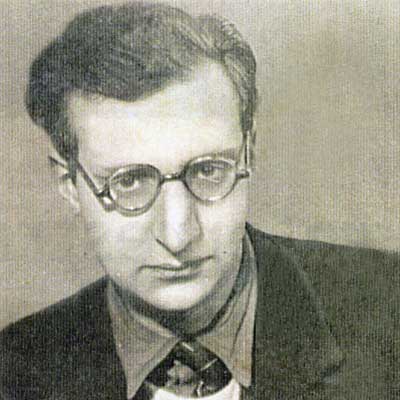
Giorgio Manganelli, born on November 15, 1922, in Milan, Italy, is a name synonymous with intellectual rigor, literary innovation, and the complex interplay between reality and fiction. As a writer, translator, journalist, literary critic, and a prominent theorist of the Italian neo-avant-garde movement, Manganelli left an indelible mark on 20th-century literature. His life, rich with both academic pursuits and creative endeavors, offers a fascinating glimpse into the mind of a man who constantly challenged the boundaries of language and narrative.
Early Life and Education
Giorgio Manganelli’s intellectual journey began in a household that valued education and the arts. His mother, Amelia, was an elementary school teacher and a poet, while his father, Paolino, worked as a stockbroker. The environment in which Manganelli was raised fostered a deep appreciation for literature and intellectual pursuits. During his high school years in Milan, Manganelli, along with notable classmates such as Giorgio Strehler and Oreste Del Buono, founded the literary magazine “La Giostra,” where they published their early works.
Manganelli’s formal education continued at the University of Parma, where he studied political science. He graduated in 1945 with a thesis that focused on the political doctrines of 17th-century Italy. This period was marked by the upheavals of World War II, during which Manganelli was actively involved in the Italian resistance movement. Captured by German forces, he narrowly escaped execution, an experience that likely influenced his later literary works, which often explored themes of absurdity, fear, and survival.
Career and Literary Contributions
After the war, Manganelli’s career took various turns. He initially taught in high schools and later became an assistant professor of English literature at the University of Rome, La Sapienza. His academic career, however, was secondary to his growing involvement in the literary scene. In the early 1960s, Manganelli became a key figure in the “Gruppo 63,” a collective of writers and intellectuals associated with the neo-avant-garde movement in Italy. This group sought to break away from traditional forms of literature, embracing experimental narratives and linguistic innovation.
Manganelli’s writing is characterized by its complexity and his deliberate use of language to challenge conventional storytelling. His 1967 work, “La Letteratura come Menzogna” (“Literature as Lie”), encapsulates his belief that literature’s role is to transform reality into fiction, creating a space where truth and falsehood coexist. This idea of literature as a form of deception, where reality is manipulated into something entirely new, became a hallmark of his style. His works often oscillate between the visionary and the philosophical, blending narrative with critique in a manner that demands active engagement from the reader.
Influence and Legacy
Giorgio Manganelli’s influence extended beyond his writing. He was a prolific translator, known for his careful and nuanced translations of works by authors such as Edgar Allan Poe, T.S. Eliot, and Henry James. His translation work is notable for its fidelity to the original text’s tone and style, while also bringing a distinct Manganellian sensibility to the translation.
Manganelli was also a regular contributor to several leading Italian newspapers, including “Il Giorno,” “La Stampa,” “Il Corriere della Sera,” and “Il Messaggero.” His journalistic work often mirrored the complexity of his literary output, blending sharp critique with a playful use of language.
In 1987, Manganelli, along with Dante Isella, founded the “Fondazione Pietro Bembo,” dedicated to the preservation and study of Italian literature. This initiative reflected his deep commitment to the literary tradition, even as he continuously sought to push its boundaries.
Notable Works
Manganelli’s bibliography is extensive, with each work contributing to his reputation as one of Italy’s most innovative and challenging writers. Some of his most significant works include:
-
“Centuria: Cento romanzi fiume” (1979): A collection of one hundred short stories, each a mini-novel, showcasing Manganelli’s mastery of the form. This work is often cited as a quintessential example of his literary experimentation.
-
“La Letteratura come Menzogna” (1967): A critical exploration of the role of literature, where Manganelli argues that literature’s primary function is to deceive, to transform reality into something else entirely.
-
“Pinocchio: Un libro parallelo” (1977): A reimagining of Carlo Collodi’s classic, this work exemplifies Manganelli’s approach to literature as a space for radical reinterpretation and critique.
-
“Salons” (1986): This book blends narrative with critical reflection, offering a unique glimpse into Manganelli’s thoughts on literature, art, and society.
-
“Hilarotragedia” (1964): One of his earlier works, this novel exemplifies the blend of humor and tragedy that would become a hallmark of Manganelli’s style.
Giorgio Manganelli: The Man Behind the Words
Understanding Giorgio Manganelli requires not just a reading of his works, but an appreciation for the man himself. Manganelli was a complex figure, known for his sharp intellect, his wit, and his uncompromising approach to literature. His personal life, marked by his marriage to poet Fausta Chiaruttini and the birth of their daughter Lietta, was intertwined with his literary pursuits. The couple lived in Milan, where Manganelli remained deeply engaged with the city’s vibrant cultural scene.
Manganelli’s death in Rome on May 28, 1990, marked the end of an era, but his works continue to inspire and challenge readers and writers alike. Roberto Saviano, a contemporary Italian writer, described Manganelli’s literature as “a structure strong in its foundations, elegant, and indestructible, maintaining fortresses of fog and towers of clouds.” This poetic description captures the essence of Manganelli’s literary output: works that are at once grounded and ethereal, inviting readers into a world where the boundaries between reality and fiction are constantly blurred.
Giorgio Manganelli’s Legacy in Contemporary Literature
Today, Giorgio Manganelli is remembered not only for his literary works but also for his contributions to the intellectual and cultural landscape of Italy. His involvement with the “Gruppo 63” and his editorial work with prestigious publishing houses such as Einaudi, Adelphi, and Mondadori, have cemented his legacy as a key figure in the evolution of modern Italian literature.
Manganelli’s influence can be seen in the works of contemporary writers who continue to explore the themes of absurdity, deception, and the fluid nature of reality. His commitment to pushing the boundaries of language and narrative continues to inspire new generations of writers, both in Italy and beyond.
The Enduring Relevance of Giorgio Manganelli
In a literary landscape often dominated by realism and straightforward narratives, Giorgio Manganelli’s work stands out for its complexity, its playfulness, and its deep philosophical underpinnings. His exploration of literature as a space for deception, where truth and fiction intermingle, remains as relevant today as it was during his lifetime.
As readers and scholars continue to engage with his works, Manganelli’s legacy as a master of literary form and an innovator in the art of storytelling is assured. His life, marked by both intellectual rigor and creative daring, serves as a testament to the power of literature to challenge, to provoke, and to transform.


