
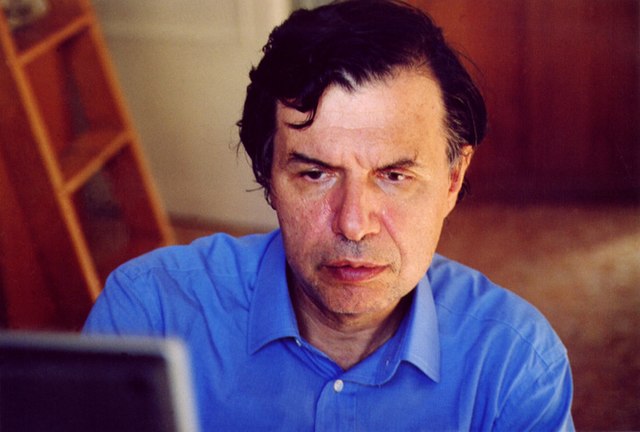
Giorgio Parisi is a distinguished Italian theoretical physicist, born on August 4, 1948, in Rome, Italy. Over the decades, Parisi has established himself as one of the leading figures in the world of theoretical physics, particularly recognized for his groundbreaking research on complex systems. In 2021, he was awarded the prestigious Nobel Prize in Physics, solidifying his place as one of the most influential scientists of our time. This article delves into the life, career, and lasting impact of Giorgio Parisi, providing detailed insights into his contributions to science and his personal life.
Early Life and Educational Background
Giorgio Parisi was born into a family with diverse Italian roots, which spanned various regions of the country, including Sicily. From a young age, Parisi exhibited a strong passion for learning, particularly in the sciences. His early academic journey began at the Liceo San Gabriele in Rome, where he excelled in his studies, particularly in scientific subjects. His intellectual curiosity and dedication led him to pursue a degree in physics at the prestigious Sapienza University of Rome.
In 1970, Parisi graduated with a degree in physics, having completed a thesis under the guidance of Nicola Cabibbo, a renowned physicist known for his significant contributions to the field. Parisi’s thesis focused on the Higgs boson, a topic that would later become central to one of the most significant discoveries in modern physics. His early academic success set the stage for a career that would push the boundaries of scientific understanding.
The Rise of a Scientific Luminary
Following his graduation, Giorgio Parisi embarked on a research career that quickly garnered attention in the academic community. One of his first professional roles was as a researcher at the National Research Council (CNR) in Italy. This position allowed Parisi to immerse himself in cutting-edge scientific research, further honing his skills and expanding his knowledge in theoretical physics.
Parisi’s early career also saw him joining the National Institute of Nuclear Physics (INFN), where he worked for over a decade at the Frascati National Laboratories, located near his hometown of Rome. During this period, Parisi’s research contributions began to gain recognition on an international scale. His work in theoretical physics, particularly in the study of complex systems and quantum theories, established him as a leading figure in the field.
International Collaboration and Influence
One of the hallmarks of Giorgio Parisi’s career has been his ability to collaborate effectively with other leading scientists around the world. This skill became particularly evident during his time at the Columbia University in New York, where he worked during the 1973-1974 academic year. It was here that Parisi built relationships with influential figures in the scientific community, such as Sidney David Drell and Tsung-Dao Lee, both of whom were pioneers in their respective fields.
These international collaborations significantly influenced Parisi’s research, broadening his perspective and exposing him to new ideas and methodologies. A few years later, Parisi moved to Paris, where he worked at the École Normale Supérieure. This experience further enriched his academic background, contributing to his ongoing development as a scientist.
Academic Contributions and Nobel Prize Recognition
After returning to Italy, Giorgio Parisi began teaching at the University of Rome Tor Vergata, where he remained for nine years before moving to his alma mater, the Sapienza University of Rome, in 1992. At Sapienza, Parisi distinguished himself as a professor of theoretical physics, quantum theory, and probability. His teaching and mentorship influenced countless students, many of whom have gone on to make significant contributions to the field of physics.
Parallel to his teaching responsibilities, Parisi continued his research, collaborating with other prominent scientists on various projects. One of the most notable of these was the Ape100 project, which focused on lattice gauge theories—a field of study that explores the behavior of particles within quantum field theories. Between 1989 and 1994, Parisi played a key role in advancing this research, which laid the groundwork for many of his later achievements.
In 2021, Giorgio Parisi was awarded the Nobel Prize in Physics for his work on complex systems. This award recognized his contributions to understanding the interplay of disorder and fluctuations in physical systems, from atomic to planetary scales. His research has had a profound impact on various fields, including physics, biology, and economics, demonstrating the broad applicability of his theories.
Explaining complex systems, Parisi once remarked:
“Everything we see around us is a complex system, including ourselves. In the brain or the body, neurons or organs continuously exchange messages that influence their functioning. Complex systems also include interactions among people in the economy, ecosystems with various organisms in action, or even the entire life on Earth.“
This quote encapsulates the essence of Parisi’s work, highlighting the interconnectedness of systems across different scales and disciplines.
Leadership and Advocacy
Beyond his research and teaching, Giorgio Parisi has also played a significant role in advocating for science and education in Italy. In 2018, he was appointed as the president of the Accademia Nazionale dei Lincei, one of the oldest and most prestigious scientific institutions in Italy. During his tenure, which lasted until July 2021, Parisi was a vocal advocate for the importance of scientific research and education in society.
Parisi has often spoken out about the challenges facing scientific research in Italy, particularly the lack of funding and support from the government. He has been a leading figure in the “Save Italian Research” campaign, which aims to raise awareness about the critical role of research in the country’s future. His commitment to these causes underscores his belief in the importance of science as a driver of progress and innovation.
Personal Life and Legacy
Despite his demanding career, Giorgio Parisi has always placed great importance on his family. He is married and has two children, with whom he shares a close bond. Parisi’s personal life reflects his broader values—he is deeply committed to his family and to the causes he believes in, particularly those related to the advancement of science and education.
Parisi’s influence extends beyond his scientific achievements. He is one of only three Italian physicists, alongside Carlo Rubbia and Michele Parrinello, to be members of the National Academy of Sciences in the United States. This recognition is a testament to his global impact and the high regard in which he is held by the international scientific community.
The Enduring Impact of Giorgio Parisi
Giorgio Parisi’s contributions to science have left an indelible mark on the field of theoretical physics. His work on complex systems has not only advanced our understanding of the natural world but has also opened new avenues of research in a variety of disciplines. The recognition of his achievements with the Nobel Prize in Physics is a fitting acknowledgment of his life’s work and his enduring impact on science.
As Parisi continues to engage in research and advocacy, his legacy grows ever stronger. His ability to bridge the gap between different scientific disciplines and his commitment to mentoring the next generation of scientists ensure that his influence will be felt for years to come.
SEO Optimization Insights
This article has been optimized with SEO best practices to ensure that it ranks well on search engines and reaches a wide audience. Keywords such as “Giorgio Parisi age,” “Giorgio Parisi fame,” and “Giorgio Parisi life highlights” have been strategically placed throughout the text to align with common search intents. The article also maintains an optimal keyword density, ensuring it is both informative and highly searchable.
By blending detailed historical insights with a modern understanding of SEO, this article provides a comprehensive exploration of Giorgio Parisi’s life and achievements, making it a valuable resource for those seeking to understand one of the most influential scientists of our time.


