
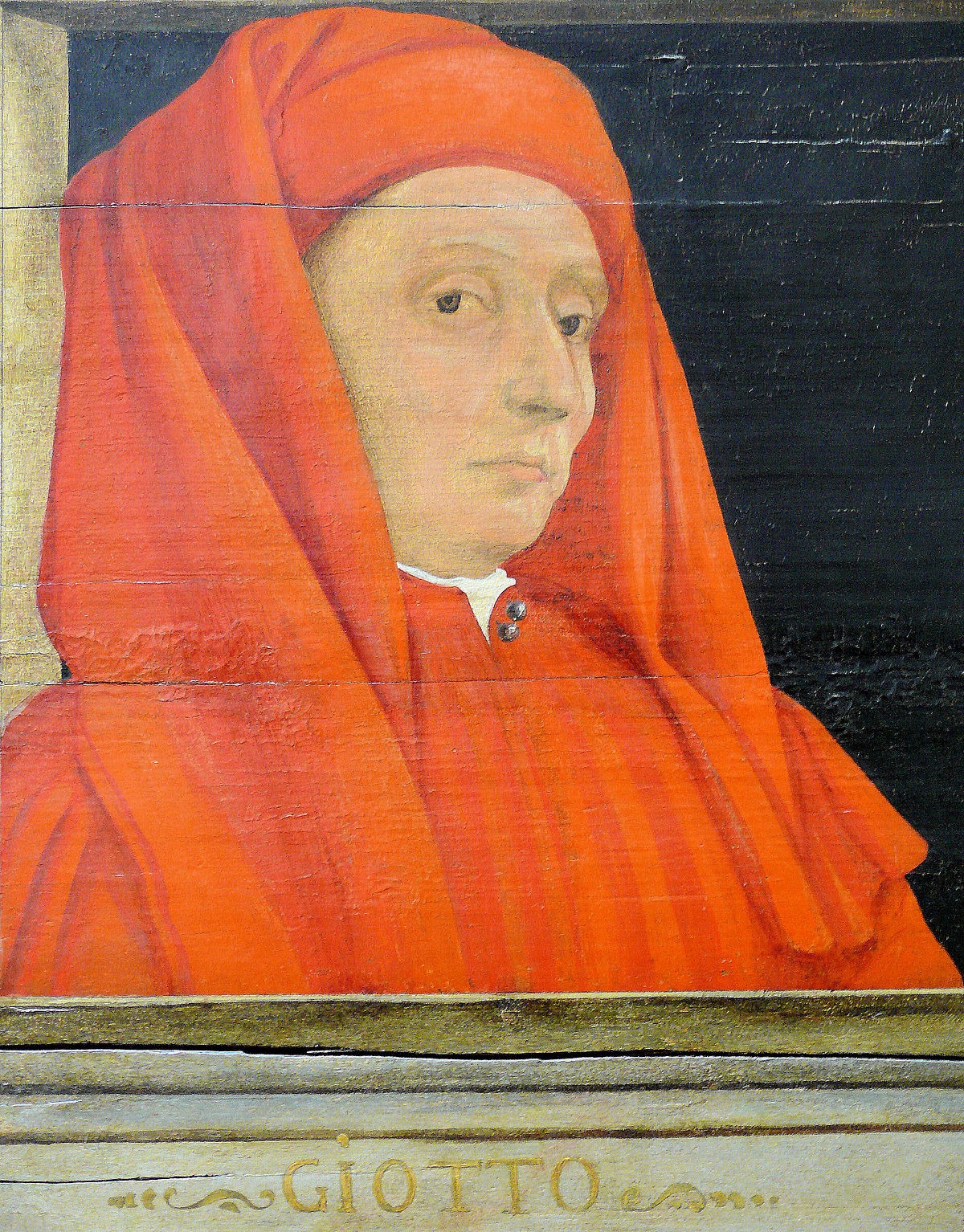
Giotto di Bondone, more commonly known simply as Giotto, stands as a towering figure in the history of Western art. Born around 1267 in Colle di Vespignano, near Florence, Italy, Giotto was a painter, architect, and sculptor whose works are considered foundational to the Italian Renaissance. His innovations in the use of color, space, and volume marked a significant departure from the Byzantine style that dominated medieval art, setting the stage for the artistic revolution that would follow. Giotto’s life and work are not just of artistic significance; they also offer insights into the cultural, economic, and social dynamics of his time.
Early Life and Apprenticeship
Giotto’s exact birth date remains uncertain, but it is generally accepted that he was born in 1267. He came from a modest background, the son of a farmer named Bondone di Angiolino. Despite his humble origins, Giotto’s talent for drawing became evident at a young age. According to legend, the great painter Cimabue discovered Giotto sketching a sheep on a rock as a young boy. Impressed by the boy’s natural ability, Cimabue took him under his wing, initiating Giotto into the world of art.
This anecdote, though possibly apocryphal, underscores the early recognition of Giotto’s talent and the beginning of his journey as an artist. By the age of ten, Giotto was already working in Cimabue’s workshop, where he would learn the fundamentals of painting and develop his distinctive style.
Artistic Evolution and Major Works
Giotto’s early works, such as the “Crucifix” in Santa Maria Novella and the “Madonna and Child” in the Church of San Giorgio alla Costa, display the influence of his master, Cimabue. However, Giotto quickly began to diverge from the Byzantine style that characterized much of medieval European art. He moved away from the flat, two-dimensional figures typical of the period, instead opting for more naturalistic and three-dimensional representations. This shift is evident in the way he depicted the human form, with an emphasis on realism and emotional expression.
One of Giotto’s earliest major commissions was the decoration of the Basilica of St. Francis in Assisi, a project that likely began around 1296. The frescoes in the Upper Church of the Basilica, which depict the life of St. Francis, are considered some of Giotto’s most important works. These frescoes showcase his mastery of narrative, as well as his innovative use of perspective and light to create a sense of depth and volume. The figures in these frescoes are imbued with a psychological depth that was unprecedented in medieval art, marking a significant departure from the more symbolic and static figures of his predecessors.
Giotto’s work in Assisi established his reputation as a master artist, and he soon received commissions from some of the most powerful patrons of the time. Around 1305, he was called to Padua to paint the interior of the Scrovegni Chapel, also known as the Arena Chapel. This series of frescoes, which illustrates the lives of the Virgin Mary and Christ, is perhaps Giotto’s most celebrated work. The frescoes are renowned for their emotional intensity, with scenes such as the “Lamentation” demonstrating Giotto’s ability to convey deep human emotion through gesture and expression. The use of chiaroscuro (the contrast between light and dark) in these frescoes was groundbreaking, adding to the sense of three-dimensionality and realism.
Giotto’s Role as an Architect
In addition to his achievements as a painter, Giotto was also an accomplished architect. His most famous architectural work is the Campanile (bell tower) of the Florence Cathedral, also known as Giotto’s Campanile. Although he did not live to see its completion, Giotto’s design for the tower was groundbreaking in its combination of Gothic architecture with classical proportions. The Campanile’s elegant lines and harmonious proportions reflect Giotto’s deep understanding of both form and function, making it one of the most iconic structures in Florence.
Giotto’s involvement in the construction of the Florence Cathedral, known as Santa Maria del Fiore, further solidified his reputation as a multifaceted artist. In 1334, he was appointed “Magistrum et gubernatorem” (Master and Governor) of the Cathedral works by the city of Florence. This position was a testament to his stature not only as an artist but also as a civic leader. His work on the Cathedral, particularly the Campanile, showcases his ability to blend artistic creativity with architectural innovation.
Giotto the Businessman
Beyond his artistic achievements, Giotto was also a shrewd businessman and entrepreneur. His success allowed him to amass considerable wealth, a rarity for artists of his time. Giotto was strategic in securing commissions and managing his finances, ensuring that he could maintain a high standard of living and support his large family. He married a woman named Ciuta, with whom he had eight children, although some sources suggest he had only five. Giotto’s ability to navigate the complex social and economic landscape of his time was key to his enduring success.
Giotto’s business acumen extended beyond his art. He was known to invest in property and manage his assets carefully, often delegating responsibilities to his sons when he was away from Florence. His wealth and influence allowed him to move comfortably within the upper echelons of Florentine society, securing important commissions and maintaining close ties with powerful patrons, including the Bardi and Peruzzi families.
Legacy and Influence
Giotto’s impact on the history of art cannot be overstated. He is widely regarded as the father of Western pictorial art, laying the groundwork for the Renaissance and influencing generations of artists who followed. His innovations in the use of space, light, and perspective revolutionized the way artists depicted the world around them, moving away from the symbolic and towards the realistic.
The transition from medieval to Renaissance art is often marked by Giotto’s work, as he bridged the gap between the two periods. His ability to convey human emotion and create a sense of realism in his paintings was revolutionary, setting the stage for the more naturalistic styles that would come to define Renaissance art. Artists such as Masaccio, Michelangelo, and Raphael would build upon Giotto’s innovations, further developing the techniques of perspective and chiaroscuro that he pioneered.
Giotto’s influence extended beyond Italy, shaping the development of art throughout Europe. His works were studied and admired by artists from all over the continent, and his techniques were emulated and adapted in various regional styles. The emotional depth and naturalism that Giotto introduced to painting became defining characteristics of Renaissance art, influencing not only painters but also sculptors and architects.
Historical Context and Cultural Impact
To fully appreciate Giotto’s contributions, it is important to understand the historical and cultural context in which he worked. The late 13th and early 14th centuries were a time of significant change in Italy. The rise of powerful city-states like Florence, Venice, and Milan led to increased patronage of the arts, as wealthy merchants and bankers sought to demonstrate their power and influence through the commissioning of public and private works of art.
Florence, in particular, was a center of artistic and intellectual activity, attracting artists, writers, and scholars from all over Italy and beyond. The city’s vibrant cultural life provided fertile ground for Giotto’s talents to flourish. His work reflects the humanist ideals that were beginning to take hold in Florence, emphasizing the importance of the individual and the natural world.
Giotto’s art also reflects the spiritual and religious climate of the time. The Church was a major patron of the arts, and much of Giotto’s work was commissioned by religious institutions. His frescoes in the Basilica of St. Francis in Assisi, the Scrovegni Chapel in Padua, and various churches in Florence demonstrate his deep engagement with Christian themes and his ability to convey complex theological ideas through visual means.
However, Giotto’s work was not solely focused on religious subjects. His depictions of everyday life, his use of naturalistic detail, and his emphasis on human emotion and experience were also revolutionary. These elements of his work resonate with the broader cultural shifts of the time, as humanism began to challenge the more rigid and hierarchical structures of medieval society.
Conclusion
Giotto di Bondone’s contributions to art and architecture are immeasurable. His innovative approach to painting, his mastery of perspective and light, and his ability to convey deep human emotion set him apart as one of the greatest artists of all time. Giotto’s work laid the foundation for the Italian Renaissance, influencing generations of artists and shaping the course of Western art.
His legacy is not only evident in his surviving works but also in the countless artists who were inspired by his techniques and vision. Giotto’s influence extends beyond the realm of art; his work reflects the cultural, social, and economic transformations of his time, offering insights into the world in which he lived. Today, Giotto is remembered as a pioneer who forever changed the way we see the world, his art serving as a bridge between the medieval and modern eras.


