
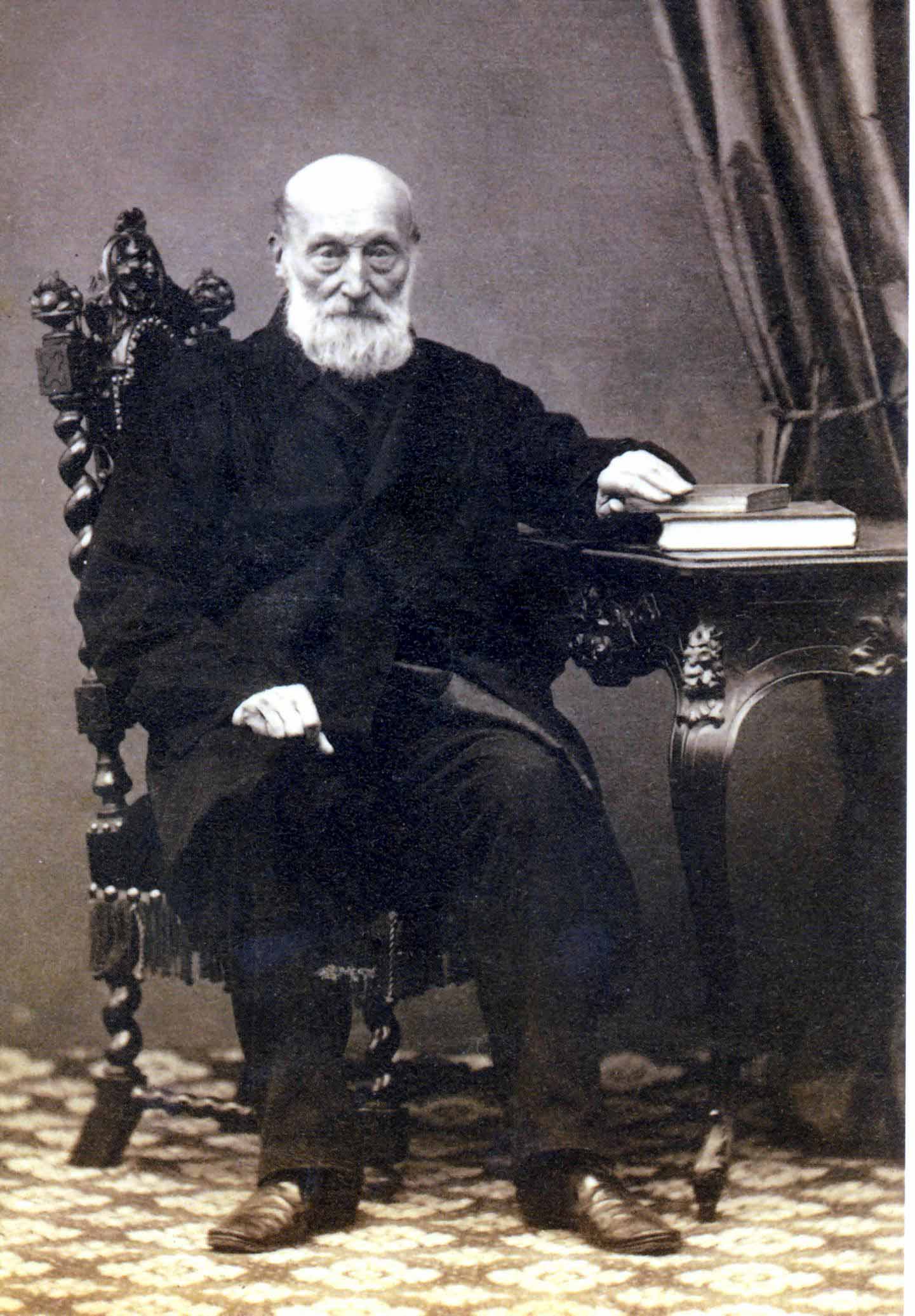
Early Life and Origins
Giovan Pietro Vieusseux, a figure often associated with the Italian Risorgimento, was born on September 28, 1779, in Oneglia, a town in the Liguria region of Italy. His family hailed from Geneva, Switzerland, which explains the distinctively French-sounding name in the heart of Italy. The Vieusseux family was involved in trade, and from a young age, Giovan Pietro was deeply involved in his father’s commercial activities, which took him across Europe, including Russia. These travels played a pivotal role in shaping his worldview, instilling in him a love for books, culture, and liberal ideas, all of which would define his later contributions to Italian society.
The Founding of the Gabinetto Vieusseux
By 1819, Vieusseux had settled in Florence, where he founded the Gabinetto Scientifico e Letterario, often referred to simply as the Gabinetto Vieusseux. This institution was not just a library but a vibrant cultural hub where intellectuals gathered to read newspapers, books, and engage in deep discussions. The Gabinetto quickly became a meeting place for the brightest minds of the era, attracting individuals like Giacomo Leopardi, Gino Capponi, Pietro Colletta, and Vincenzo Gioberti. The institution’s influence was profound, laying the groundwork for a national literature that contributed significantly to the cultural movements leading up to Italian unification.
The Cultural and Political Influence
Vieusseux’s Gabinetto was more than just a place for intellectual discourse; it was a breeding ground for ideas that would challenge the status quo and push the boundaries of what was culturally and politically acceptable in Italy. In 1821, Vieusseux, along with his close collaborator Gino Capponi, launched the cultural and political magazine “L’Antologia.” This publication became a platform for some of the most influential voices of the time, including Giuseppe Mazzini and Nicolò Tommaseo. However, the magazine was not without controversy. In 1833, it was suppressed by the Austrian authorities, who were increasingly uncomfortable with its content, particularly the outspoken articles penned by Tommaseo.
Despite the suppression of “L’Antologia,” Vieusseux’s commitment to cultural and political discourse did not wane. He continued his work, and in 1842, again in collaboration with Capponi, he founded the “Archivio Storico Italiano,” a historical journal that further cemented his legacy as a pivotal figure in the Italian intellectual landscape.
Contribution to Italian Liberalism and Risorgimento
Giovan Pietro Vieusseux’s activities were not merely cultural but were deeply intertwined with the political movements of his time. His work is often considered a precursor to the liberal ideals that would later define the Risorgimento, the movement for Italian unification. The Gabinetto Vieusseux was a melting pot of ideas that fostered discussions on national identity, liberalism, and the future of Italy. It can be argued that without institutions like the Gabinetto, the cultural foundation necessary for the political unification of Italy might not have been as robust.
Vieusseux’s influence extended beyond his lifetime. The Gabinetto continued under the direction of his nephew Eugenio and later his son Carlo, maintaining its status as a center for intellectual and cultural exchange. Among the notable figures who were associated with the Gabinetto in later years was the renowned poet Eugenio Montale, who served as its director.
Publishing Ventures and Editorial Work
In addition to his work as a cultural promoter, Giovan Pietro Vieusseux was also an accomplished publisher. His publishing efforts included the “Giornale Agrario Toscano,” first issued in 1827, which focused on agricultural issues, reflecting the economic and social concerns of the time. Another significant publication was Raffaele Lambruschini’s “Guida dell’educatore,” published in 1836, which aimed at providing educational guidance, further underscoring Vieusseux’s commitment to the intellectual development of society.
Vieusseux’s editorial ventures were not just about disseminating information; they were part of a larger project to educate and inform the public, contributing to the broader cultural awakening that was sweeping through Europe in the 19th century.
Legacy and Historical Impact
Giovan Pietro Vieusseux passed away on April 28, 1863, in Florence, at the age of 84. His life was a testament to the power of culture and intellectual discourse in shaping political and social change. His contributions to the Risorgimento, although indirect, were nonetheless significant. By fostering a space where ideas could be freely exchanged and debated, he helped to lay the intellectual groundwork for the unification of Italy.
The Gabinetto Vieusseux, which he founded, remains active to this day, continuing to serve as a testament to his enduring legacy. The institution has evolved over the years, adapting to the changing cultural landscape, but its core mission of promoting intellectual exchange and cultural growth remains unchanged. The Gabinetto’s continued operation is a fitting tribute to a man who dedicated his life to the pursuit of knowledge and the betterment of society.
Historical Context and Nuances
To fully appreciate the impact of Giovan Pietro Vieusseux, it’s important to understand the historical context in which he lived. The late 18th and early 19th centuries were a period of great turmoil and transformation in Europe. The French Revolution, followed by the Napoleonic Wars, had shaken the old order to its core, leading to the spread of revolutionary ideas across the continent. In Italy, these ideas found fertile ground among the emerging middle class, which was increasingly disillusioned with the conservative regimes that dominated the Italian states.
Vieusseux was part of this burgeoning class of intellectuals and liberals who saw in culture and education the keys to national renewal. His Gabinetto was, in many ways, a microcosm of the larger cultural movement that was sweeping through Italy. The debates and discussions that took place within its walls were not just about literature or philosophy; they were about the future of Italy itself.
Moreover, Vieusseux’s work must be seen in the context of the Italian Risorgimento, a complex and multifaceted movement that sought to unite the various Italian states into a single nation. While the Risorgimento is often remembered for its political and military aspects, the cultural dimension was equally important. The creation of a national literature, the spread of liberal ideas, and the promotion of a sense of Italian identity were all crucial components of the movement. Vieusseux played a key role in this cultural aspect of the Risorgimento, making his contributions all the more significant.
Conclusion
Giovan Pietro Vieusseux was a towering figure in the cultural and intellectual life of 19th-century Italy. His work as a cultural promoter, publisher, and intellectual laid the foundation for many of the ideas that would later come to define the Italian Risorgimento. Through his Gabinetto, his publishing ventures, and his editorial work, Vieusseux helped to shape the cultural landscape of Italy, fostering the exchange of ideas and promoting the liberal ideals that would eventually lead to the unification of the country.
His legacy is one of intellectual curiosity, cultural engagement, and a deep commitment to the betterment of society. As we look back on his life and work, we can see in Giovan Pietro Vieusseux a figure whose contributions continue to resonate in the cultural and intellectual life of Italy today.


