
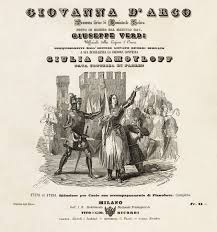
Giovanna D’Arco, known in English as Joan of Arc, is one of the most iconic figures in history, celebrated for her unwavering faith, military leadership, and ultimate sacrifice. Born on January 6, 1412, in Domrémy, a small village in the region of Lorraine, France, Giovanna D’Arco rose from humble beginnings to become a national heroine and a saint, symbolizing the spirit of resistance and devotion to God. Her life, though tragically short, had a profound impact on the course of the Hundred Years’ War between France and England, and her legacy continues to inspire people around the world.
Early Life: Humble Beginnings in a Troubled France
Giovanna D’Arco was born into a peasant family in the midst of a turbulent period in French history. The Kingdom of France had been embroiled in the Hundred Years’ War with England since 1337, a conflict that saw the French monarchy weakened and the nation divided. The political and social landscape of France was fraught with instability, as powerful feudal lords often sought to assert their independence, and English forces occupied significant portions of French territory.
Growing up in this context, Giovanna was deeply religious from a young age. She claimed to have experienced visions and heard voices of saints, including Saint Michael, Saint Catherine of Alexandria, and Saint Margaret of Antioch, who she believed were sent by God to guide her in a divine mission. These mystical experiences shaped her understanding of her role in the world and fueled her conviction that she was chosen to save France from its enemies.
The Divine Mission: From Peasant Girl to Warrior
By the time Giovanna reached her teenage years, she had become convinced that her calling was to help Charles VII, known as the Dauphin, reclaim his throne and drive the English out of France. In 1429, at the age of 17, Giovanna embarked on an extraordinary journey to fulfill this mission. She traveled over 250 miles from her village to the court of Charles VII in Chinon, a daunting feat for a young, illiterate peasant girl.
Giovanna’s arrival at the court was met with skepticism, but her fervent faith and the conviction with which she spoke impressed Charles VII and his advisors. She convinced the Dauphin to allow her to lead an army to lift the siege of Orléans, a strategic city that had been under English control. Dressed in armor and carrying a white banner emblazoned with the names of Jesus and Mary, Giovanna led the French forces to a series of stunning victories, culminating in the liberation of Orléans in May 1429.
This victory was a turning point in the Hundred Years’ War, as it bolstered French morale and solidified Giovanna’s reputation as the “Maid of Orléans.” Her success at Orléans was followed by a string of victories that allowed Charles VII to be crowned king of France in Reims on July 17, 1429, a momentous event that Giovanna believed was the fulfillment of her divine mission.
The Struggles and Betrayal: The Fall of a Heroine
Despite her military successes, Giovanna D’Arco’s influence at court began to wane after the coronation of Charles VII. The king, now more concerned with political alliances and negotiations than with military campaigns, became hesitant to continue the aggressive tactics that had brought him to power. Giovanna, who remained committed to the complete expulsion of the English from France, found herself increasingly isolated.
In September 1429, Giovanna led an assault on Paris, which was still under English control, but the attack failed, and she was wounded in the process. This setback marked the beginning of a decline in her fortunes. Despite her injuries, Giovanna continued to fight, but her efforts were no longer met with the same level of support from the French leadership.
In May 1430, while defending the town of Compiègne from Anglo-Burgundian forces, Giovanna was captured during a skirmish. She was handed over to the Burgundians, who were allied with the English, and eventually sold to the English themselves. The capture of Giovanna D’Arco was a devastating blow to the French cause, and her enemies wasted no time in exploiting her downfall.
The Trial: A Martyr for Faith and Country
Giovanna D’Arco’s trial remains one of the most infamous episodes in medieval history. After her capture, she was taken to Rouen, the English-held capital of Normandy, where she was put on trial by a pro-English ecclesiastical court. The trial was a sham, designed to discredit her and undermine the legitimacy of Charles VII’s reign by portraying her as a heretic and a witch.
The charges against Giovanna included heresy, witchcraft, and cross-dressing (as she had worn male military attire during her campaigns). The trial was heavily biased, with the judges intent on securing a guilty verdict. Despite being subjected to intense questioning and harsh treatment, Giovanna remained steadfast in her faith and refused to renounce her claims of divine guidance.
On May 30, 1431, Giovanna D’Arco was convicted of heresy and sentenced to death by burning. She was led to the stake in the marketplace of Rouen, where she was tied to a wooden pillar and set ablaze. As the flames consumed her, witnesses reported hearing her call out the name of Jesus multiple times before she finally succumbed. She was just 19 years old.
The execution of Giovanna D’Arco was a deeply polarizing event. To her enemies, it was a necessary act to eliminate a dangerous influence. To her supporters, it was the martyrdom of a saint. Nineteen years after her death, in 1450, a posthumous retrial ordered by Charles VII cleared her name, declaring her innocent and a martyr.
Canonization and Legacy: The Making of a Saint
The story of Giovanna D’Arco did not end with her death. Over the centuries, her life and legacy have inspired countless works of literature, art, and music. She became a symbol of French nationalism and the embodiment of the struggle for freedom and justice. Her canonization by the Catholic Church in 1920, almost five centuries after her death, solidified her status as a saint and a national heroine.
Giovanna’s canonization was the culmination of a long process of recognition, beginning with the efforts of the French monarchy to rehabilitate her image and culminating in the 19th and early 20th centuries, when her story gained renewed significance in the context of French national identity.
Throughout history, Giovanna D’Arco has been depicted in various ways, from the pious and devout maiden chosen by God to the fearless warrior leading armies into battle. Writers such as William Shakespeare, Friedrich Schiller, and George Bernard Shaw have all contributed to the mythos surrounding her, each interpreting her story through the lens of their own time and cultural context.
Musicians and composers have also found inspiration in Giovanna’s life. Giuseppe Verdi’s opera Giovanna d’Arco and Franz Liszt’s Jeanne d’Arc au bûcher are among the many works that have immortalized her in music. These artistic representations have helped to keep her memory alive and to communicate the enduring power of her story to new generations.
Historical Context and Nuances: Understanding Giovanna D’Arco’s World
To fully appreciate the significance of Giovanna D’Arco’s life, it is important to understand the historical and cultural context in which she lived. The Hundred Years’ War was not just a conflict between two nations; it was a struggle for the very identity of France. The war saw the rise and fall of dynasties, the shifting of alliances, and the involvement of various European powers, all vying for control over French territory.
In this context, Giovanna’s emergence as a leader was extraordinary. As a young woman from a peasant background, she defied the rigid social hierarchies of the time. Her ability to convince seasoned military commanders and a skeptical royal court to follow her into battle speaks to her exceptional charisma and the deep religious conviction that drove her.
Giovanna’s life also sheds light on the complex relationship between religion and politics in medieval Europe. Her visions and the sense of divine mission that guided her were not unusual in a time when spiritual experiences were often intertwined with political legitimacy. However, her gender and social status made her an anomaly, and her success challenged the established norms of both the Church and the aristocracy.
The trial and execution of Giovanna D’Arco highlight the brutal realities of medieval justice, where political expediency often trumped fairness. Her trial was less about theology and more about discrediting a figure who had become a powerful symbol of resistance against English domination.
Conclusion: The Enduring Legacy of Giovanna D’Arco
Giovanna D’Arco’s legacy is one of faith, courage, and sacrifice. Her life and death continue to resonate with people around the world, serving as a reminder of the power of conviction and the impact that one individual can have on history. Her story is a testament to the idea that true heroism comes not from noble birth or military prowess, but from an unwavering commitment to a higher cause.
As a saint, a national heroine, and an enduring symbol of resistance, Giovanna D’Arco’s influence extends far beyond the confines of her own time. She remains a figure of inspiration for those who fight for justice, freedom, and the dignity of all people. Her life, marked by extraordinary achievements and profound tragedy, serves as a powerful reminder of the potential for greatness within us all.


