
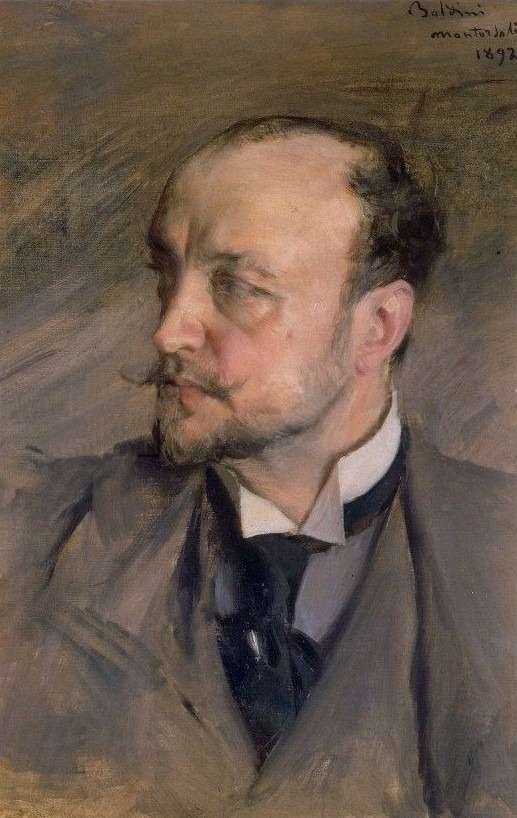
Giovanni Boldini, born on December 31, 1842, in Ferrara, Italy, is celebrated as one of the most prominent Italian portrait painters of the late 19th and early 20th centuries. Known for his dynamic brushwork and ability to capture the elegance of high society, Boldini’s career spanned several countries and left an indelible mark on the art world. This article delves into his life, career, and significant achievements, providing detailed insights and exploring the nuances of his contributions to the arts.
Early Life and Education
Giovanni Boldini was the eighth of thirteen children born to Benvenuta Caleffi and Antonio Boldini, a painter who had studied under Tommaso Minardi. His father’s influence was instrumental in his early artistic development. By 1855, Boldini had created his first known work, “Il cortile della casa paterna” (“The Courtyard of the Family Home”), followed by a self-portrait at the age of sixteen.
In 1858, Boldini began formal studies under Girolamo Domenichini and Giovanni Pagliarini, where he was introduced to the works of Parmigianino, Dosso Dossi, and the great 15th-century Ferrarese painters. This education laid the foundation for his future artistic endeavors.
Early Artistic Career and the Macchiaioli
In the early 1860s, Boldini moved to Florence to attend the Academy of Fine Arts. Here, he studied under Enrico Pollastrini and Stefano Ussi, immersing himself in the vibrant artistic community. He frequented the Caffè Michelangelo, a meeting place for the Macchiaioli, a group of Italian painters who were forerunners of the Impressionists. Among his acquaintances were Telemaco Signorini, Odoardo Borrani, and Giovanni Fattori, as well as the influential art critic and patron Diego Martelli.
During his time in Florence, Boldini developed a keen interest in the elegant salons of the high bourgeoisie and aristocracy, themes that would later dominate his work. His early works, such as “Ritratto di Lilia Monti nata contessa Magnoni” (“Portrait of Lilia Monti née Countess Magnoni”) in 1864, and various portraits in 1865, showcased his growing prowess as a portraitist.
Travels and European Influence
In 1866, Boldini traveled to Naples with his friend Cristiano Banti and later moved to Paris with the Falconer family. In Paris, he had the opportunity to visit the Exposition Universelle and meet influential artists such as Édouard Manet, Alfred Sisley, and Edgar Degas. These experiences profoundly influenced his style, integrating elements of French Impressionism into his work.
By 1870, Boldini had temporarily settled in London, invited by William Cornwallis-West. However, he soon returned to Paris, where he opened a studio and began working with prominent art dealers. His reputation as a skilled portraitist grew, leading to commissions from high-profile clients.
Rise to Fame in Paris
Boldini’s move to Paris marked the beginning of his most productive and influential period. He became a prominent figure in the Parisian art scene, known for his ability to capture the essence of his subjects with lively brushstrokes and a keen eye for detail. His works from this period, such as the two portraits of Giuseppe Verdi in 1886, demonstrated his exceptional talent and established him as a leading portrait painter.
In 1889, Boldini was appointed commissioner for the Italian section of the Exposition Universelle in Paris, further cementing his status in the art world. His works were celebrated for their dynamism and ability to convey the personality and elegance of his subjects.
Later Years and Decline in Health
The early 20th century saw Boldini continue to work and travel extensively. He was welcomed into the homes of aristocrats and celebrities, producing portraits that captured the opulence and grace of his era. However, his health began to decline in the 1920s, with his eyesight deteriorating significantly, complicating his ability to work.
Despite these challenges, Boldini remained active in the art world. In 1926, he met Emilia Cardona, a young journalist whom he married three years later. This period was marked by both personal and professional resilience, as Boldini continued to paint and participate in exhibitions.
Legacy and Influence
Giovanni Boldini passed away on January 11, 1931, in Paris. He was buried in the Certosa di Ferrara cemetery alongside his parents. His legacy as a master portraitist endures, with his works held in high regard for their vibrant energy and exquisite detail.
Contribution to Portraiture
Boldini’s contribution to portraiture is significant. His innovative use of brushstrokes and his ability to capture the fleeting expressions and movements of his subjects set him apart from his contemporaries. His portraits are characterized by a sense of immediacy and intimacy, making them highly sought after by collectors and museums.
Cultural Impact
Boldini’s work provides a window into the society of his time, reflecting the elegance and sophistication of the late 19th and early 20th centuries. His portraits of notable figures such as Giuseppe Verdi, Sarah Bernhardt, and various members of the European aristocracy offer a glimpse into the lives of the cultural elite.
Honors and Recognitions
Throughout his career, Boldini received numerous accolades and recognitions. He was awarded the Legion of Honor by the French government in 1919, a testament to his impact on the art world. His works continue to be exhibited in major galleries and museums, affirming his status as a significant figure in art history.
Historical Context and Significance
Understanding Boldini’s impact requires an appreciation of the historical and cultural context of his career. The late 19th and early 20th centuries were periods of significant social and artistic change. The rise of Impressionism and the subsequent evolution of modern art influenced Boldini’s work, allowing him to merge traditional portraiture with contemporary techniques.
Influence of the Macchiaioli
Boldini’s early association with the Macchiaioli played a crucial role in shaping his artistic vision. The group’s emphasis on capturing light and color through patches of paint (macchie) influenced Boldini’s later works, evident in his dynamic brushwork and vibrant compositions.
Parisian Art Scene
Boldini’s relocation to Paris placed him at the heart of the European art scene. Paris was a hub of artistic innovation and creativity, attracting artists from around the world. Boldini’s interactions with prominent figures such as Manet, Degas, and Sisley enriched his artistic vocabulary and contributed to his development as a portraitist.
Challenges and Personal Struggles
Despite his success, Boldini faced several personal and professional challenges. His perfectionism often led to self-criticism, and his declining health in later years affected his ability to work. Nevertheless, his resilience and dedication to his craft ensured that he continued to produce exceptional works until the end of his life.
Personal Relationships
Boldini’s personal relationships also played a significant role in his life and work. His connections with influential figures in the art world provided him with opportunities for collaboration and patronage. His marriage to Emilia Cardona in his later years brought companionship and support during a challenging period of declining health.
Future Prospects
As the art world continues to evolve, Giovanni Boldini’s works remain relevant and highly regarded. His portraits are celebrated for their technical brilliance and ability to capture the essence of his subjects. Future exhibitions and scholarly research will likely continue to explore his contributions to art, ensuring that his legacy endures.
Conclusion: Giovanni Boldini’s Enduring Legacy
Giovanni Boldini’s life and work exemplify the profound impact that a dedicated and talented artist can have on the cultural landscape. His contributions to portraiture and his ability to capture the elegance and dynamism of his subjects have left an indelible mark on the art world. Boldini’s innovative techniques, combined with his keen eye for detail, make his works timeless pieces of art.
As we continue to appreciate and study his works, Boldini’s legacy serves as a reminder of the power of art to capture the human experience and reflect the society of its time. His portraits not only immortalize the individuals he painted but also provide a window into the cultural and social milieu of the late 19th and early 20th centuries. Giovanni Boldini’s enduring influence ensures that his contributions to art will be remembered and celebrated for generations to come.


