
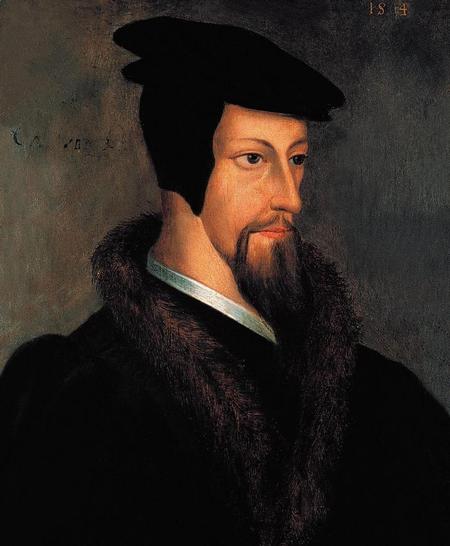
Giovanni Calvino, better known as John Calvin in the English-speaking world, was born on July 10, 1509, in Noyon, France. He is one of the most influential figures in the Protestant Reformation, a religious movement that transformed Christianity in Europe during the 16th century. Calvin’s work not only reshaped religious thought but also had profound implications for the development of modern society, particularly in areas such as governance, economics, and education. This article explores Calvin’s life, his rise to prominence, and the lasting impact of his ideas.
Early Life and Education
Calvin was born into a relatively prosperous family in Noyon, a small town in northern France. His father, Gérard Cauvin, was a notary and a registrar at the local cathedral, which allowed Calvin to receive a high-quality education. Initially, his father intended for him to enter the priesthood, and Calvin was sent to Paris to study theology. However, Gérard Cauvin later decided that his son would be better suited for a career in law, prompting Calvin to switch his focus to legal studies.
In Paris, Calvin was exposed to the humanist ideas that were gaining popularity during the Renaissance. He studied Latin, classical literature, and philosophy, all of which would later influence his theological writings. The intellectual environment of Paris at the time was vibrant, with a growing interest in reforming the Catholic Church. Calvin absorbed these ideas, and they began to shape his thinking about religion and society.
Conversion to Protestantism
Calvin’s path to becoming a leading figure in the Protestant Reformation was marked by a personal religious transformation. Sometime around 1533, he experienced what he described as a “sudden conversion,” which led him to embrace the ideas of the Reformation. This movement, initiated by Martin Luther and other reformers, sought to address what they saw as the corruption and doctrinal errors of the Catholic Church.
Calvin’s conversion was a turning point in his life. He abandoned his legal career and devoted himself to studying the Bible and writing about theology. His commitment to reform was so strong that he eventually broke away from the Catholic Church, despite the risks involved. At the time, France was staunchly Catholic, and Protestantism was viewed as heresy, punishable by death. Calvin’s decision to align himself with the Reformation was both a spiritual and a political act, as it placed him in direct opposition to the established religious authorities.
The Institutes of the Christian Religion
One of Calvin’s most significant contributions to the Reformation was his book Institutes of the Christian Religion (Institutio Christianae Religionis), first published in 1536. This work is considered one of the foundational texts of Protestant theology and is still studied by theologians today. The Institutes were intended to provide a systematic explanation of Reformed theology, covering topics such as the nature of God, the role of Jesus Christ, and the importance of faith.
The Institutes are notable for their clarity and organization, which made them accessible to a wide audience. Calvin wrote the book in Latin, the scholarly language of the time, but it was soon translated into several other languages, including French, English, and German. This helped spread Calvin’s ideas across Europe, making him one of the most influential voices of the Reformation.
In the Institutes, Calvin emphasized the sovereignty of God and the doctrine of predestination, the belief that God has predetermined who will be saved and who will be damned. This idea was controversial, even among other reformers, but it became a central tenet of Calvinism, the branch of Protestantism that emerged from Calvin’s teachings. The concept of predestination highlighted the power and mystery of God’s will, and it underscored the importance of faith and humility in the Christian life.
Leadership in Geneva
Calvin’s ideas gained traction in various parts of Europe, but it was in Geneva, Switzerland, that he made his most lasting impact. In 1536, Calvin was persuaded by Guillaume Farel, another Protestant reformer, to help establish a Reformed church in Geneva. Despite initial resistance from the city’s authorities, Calvin eventually became the spiritual leader of Geneva, a position he held for most of his life.
Under Calvin’s leadership, Geneva became a model of a Reformed Christian community. He implemented a strict moral code that governed all aspects of life, from religious practices to social behavior. The city was governed according to Calvin’s interpretation of biblical principles, with an emphasis on discipline, order, and piety. Calvin’s governance of Geneva is often seen as an early example of a theocracy, where religious leaders have direct control over the state.
Calvin’s influence extended beyond the church. He established the Geneva Academy, which provided education in both religious and secular subjects. The Academy attracted students from across Europe, many of whom went on to become leaders in the Reformed churches of their own countries. This helped spread Calvinism throughout Europe and even to the New World, where it became the foundation for various Protestant denominations.
Calvinism and Capitalism
One of the most enduring aspects of Calvin’s legacy is his influence on the development of modern capitalism. This connection was famously explored by the German sociologist Max Weber in his seminal work The Protestant Ethic and the Spirit of Capitalism. Weber argued that the Calvinist emphasis on hard work, frugality, and discipline contributed to the rise of capitalist economies, particularly in Northern Europe.
Calvin taught that all work, not just religious or charitable work, was a calling from God. This “doctrine of vocation” encouraged people to pursue their occupations with diligence and integrity, seeing their work as a form of worship. Calvin also promoted the idea that wealth, if earned honestly and used for the common good, was a sign of God’s favor. However, he condemned the excessive pursuit of wealth and the exploitation of the poor, distinguishing between legitimate profit and usury.
Weber’s thesis suggests that Calvinism provided the ethical foundation for modern capitalism, promoting values that were conducive to economic growth. While this connection is still debated by scholars, there is little doubt that Calvin’s teachings had a profound impact on the social and economic structures of the societies that embraced his ideas.
The Doctrine of Predestination
One of the most distinctive and controversial aspects of Calvin’s theology is the doctrine of predestination. According to Calvin, God has predetermined the fate of every individual, deciding who will be saved (the elect) and who will be condemned to eternal damnation (the reprobate). This decision is based solely on God’s will and not on any merit or action on the part of the individual.
Predestination was a central theme in Calvin’s writings, and it set Calvinism apart from other branches of Protestantism. The doctrine was rooted in Calvin’s belief in the absolute sovereignty of God. He argued that, because God is all-knowing and all-powerful, He must have control over every aspect of creation, including the destiny of each human soul.
The doctrine of predestination was troubling to many, even within the Reformed tradition. It raised difficult questions about free will, justice, and the nature of God. How could a just and loving God predestine some people to eternal punishment? Calvin acknowledged these concerns but maintained that God’s ways are beyond human understanding and must be accepted in faith.
Despite its complexity, the doctrine of predestination played a crucial role in shaping Calvinist thought and practice. It encouraged believers to live lives of piety and discipline, not in an attempt to earn salvation, but as evidence of their election by God. This emphasis on moral living had a profound impact on the communities that embraced Calvinism, fostering a culture of responsibility, self-discipline, and community service.
Calvin’s Impact on Education
Another significant aspect of Calvin’s legacy is his influence on education. Calvin believed that education was essential for both the spiritual and social development of individuals. He argued that a well-educated populace was better equipped to understand the Bible and to live according to its teachings. To this end, he established the Geneva Academy in 1559, which provided a rigorous education in both religious and secular subjects.
The Geneva Academy was one of the first institutions of higher learning to be based on Reformed principles, and it became a model for Protestant schools across Europe. The curriculum included theology, philosophy, classical languages, and the natural sciences, reflecting Calvin’s belief in the importance of a broad education. The Academy attracted students from all over Europe, many of whom went on to become influential leaders in the Reformed churches of their own countries.
Calvin’s emphasis on education also had a lasting impact on the development of public schooling. In Geneva, he established a system of compulsory education for children, with the aim of ensuring that everyone, regardless of social status, had access to basic literacy and religious instruction. This commitment to education was a key factor in the spread of Calvinism and in the development of literate, informed communities that were capable of self-governance.
The Legacy of Giovanni Calvino
Giovanni Calvino died on May 27, 1564, in Geneva, but his influence continued to grow after his death. Calvinism spread throughout Europe, particularly in Switzerland, France, the Netherlands, and Scotland, where it became the dominant form of Protestantism. The ideas and institutions that Calvin helped to establish played a crucial role in the development of Western society, shaping everything from religious practice to economic and political thought.
In France, Calvinism took root as the Huguenot movement, which faced severe persecution from the Catholic majority. Despite this, the Huguenots played a significant role in French history, and their struggle for religious freedom laid the groundwork for the later development of secularism and human rights in France.
In Scotland, Calvinism was embraced by John Knox and became the foundation of the Presbyterian Church, which would go on to have a significant impact on the political and social life of Scotland and, later, the United States. The Presbyterian emphasis on self-governance and the rule of law influenced the development of democratic institutions in these countries.
Calvin’s ideas also had a lasting impact on the development of capitalism, as discussed earlier. His teachings on work, wealth, and the moral responsibility of the individual helped to shape the economic ethos of the societies that embraced Calvinism, contributing to the rise of modern capitalist economies.
Conclusion
Giovanni Calvino was a complex and influential figure whose ideas had a profound impact on the course of Western history. His contributions to theology, education, and social thought continue to be felt today, particularly in the areas of religion, economics, and governance. Calvin’s legacy is a testament to the power of ideas to shape the world, and his life and work remain subjects of study and debate for scholars, theologians, and historians alike.
The influence of Calvinism, with its emphasis on discipline, education, and moral responsibility, can still be seen in many aspects of modern society. Whether through the spread of democratic ideals, the development of capitalist economies, or the emphasis on public education, Calvin’s ideas continue to resonate in the contemporary world. As such, Giovanni Calvino remains one of the most significant figures in the history of Christianity and Western civilization.


