
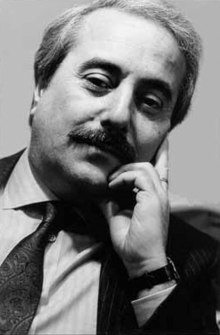
Giovanni Falcone, born on May 18, 1939, in Palermo, Sicily, is widely regarded as one of the most important and influential figures in the fight against organized crime in Italy. His work as an anti-mafia magistrate changed the landscape of law enforcement in Italy and left an indelible mark on the country’s legal and social history. Falcone’s life was tragically cut short by the very forces he sought to dismantle, yet his legacy continues to inspire generations in the ongoing battle against organized crime.
Early Life and Education
Falcone was born into a middle-class family in Palermo, the heart of Sicily, an island that has long been associated with the activities of the mafia. His father, Arturo Falcone, was the director of the provincial chemical laboratory, while his mother, Luisa Bentivegna, was a housewife. Growing up in Palermo, Falcone was acutely aware of the influence of the mafia in Sicilian life, but he initially showed little interest in the legal profession.
After completing his studies at the prestigious Liceo Classico Umberto, Falcone briefly attended the Naval Academy in Livorno. However, his aspirations shifted, and he returned to Palermo to study law. He graduated from the University of Palermo in 1961 with a degree in law and soon embarked on a career in the judiciary.
Early Career in the Judiciary
Falcone’s career in the judiciary began in the mid-1960s when he became a magistrate after passing the required competitive examination. His first appointment was as a pretore (magistrate) in Lentini, a small town in Sicily. He quickly moved to the role of a substitute prosecutor in Trapani, where he served for about twelve years. It was in Trapani that Falcone’s interest in criminal law, particularly in cases involving organized crime, began to take shape.
Falcone’s early years as a prosecutor were marked by a growing frustration with the inefficiencies and complexities of the Italian legal system, particularly in civil law. However, he found a deep sense of purpose in the objective evaluation of criminal cases, which contrasted with the often convoluted procedures of civil litigation. This inclination toward criminal law would later define his career.
The Turning Point: Palermo and the Anti-Mafia Effort
The late 1970s were a turning point in Falcone’s career. In 1979, after the assassination of Judge Cesare Terranova, Falcone was transferred to Palermo, where he began working in the Ufficio Istruzione (Investigative Office) under the direction of Judge Rocco Chinnici. Chinnici recognized Falcone’s talent and dedication and assigned him to investigate the activities of Rosario Spatola, a mafioso with significant connections to the U.S. crime syndicates.
This investigation marked the beginning of Falcone’s deep involvement in anti-mafia work. He quickly realized that to effectively combat the mafia, it was necessary to follow the money—tracking financial transactions, tracing assets, and understanding the economic foundations of organized crime. This approach was revolutionary at the time and would later become a cornerstone of anti-mafia investigations.
Tragically, on July 29, 1983, Chinnici was assassinated in a car bombing. His death shook the judiciary but also reinforced the resolve of those who continued his work. Falcone, along with fellow magistrates Paolo Borsellino, Giuseppe Di Lello, and Leonardo Guarnotta, formed what became known as the “Anti-Mafia Pool,” a team of magistrates dedicated to investigating and prosecuting mafia crimes.
The Maxi Trial and International Collaboration
One of the most significant achievements of the Anti-Mafia Pool was the Maxi Trial (Maxiprocesso), which began in 1986. This was the largest anti-mafia trial in history, with 475 defendants and 338 convictions. The trial was a landmark in the fight against the mafia, demonstrating for the first time the power of coordinated legal action against organized crime. The Maxi Trial was based largely on the testimonies of pentiti (mafia informants), particularly Tommaso Buscetta, whose cooperation with Falcone provided unprecedented insights into the structure and operations of Cosa Nostra, the Sicilian Mafia.
The Maxi Trial’s success came at a significant cost. The mafia retaliated with a wave of violence, targeting law enforcement, journalists, and anyone perceived as a threat. In the summer of 1985, two of Falcone’s closest collaborators, police officers Giuseppe Montana and Ninni Cassarà, were murdered. The escalating violence led to heightened security measures for Falcone and his colleagues, including their temporary relocation to the Asinara prison for their protection.
Falcone’s work extended beyond Italy’s borders. He recognized the international dimensions of organized crime and established strong ties with law enforcement agencies in other countries, particularly the United States. His collaboration with Rudolph Giuliani, then the U.S. Attorney for the Southern District of New York, led to Operation Iron Tower, which targeted the heroin trafficking operations of the Gambino and Inzerillo families. This operation underscored the global reach of the mafia and the need for international cooperation in combating it.
Challenges and Setbacks
Despite his successes, Falcone faced significant challenges from within the Italian judicial system. In 1988, after the retirement of Antonino Caponnetto, the head of the Ufficio Istruzione, Falcone was expected to succeed him. However, the Consiglio Superiore della Magistratura (CSM) chose Antonino Meli instead, a decision that many saw as a deliberate move to undermine the Anti-Mafia Pool’s work. Meli’s leadership led to the dissolution of the pool and the fragmentation of ongoing investigations, a setback that Falcone and his colleagues viewed as a serious blow to the anti-mafia effort.
Falcone’s frustration with the Italian legal system and its resistance to reform was palpable. Despite this, he continued his work with determination, focusing on the need for a more coordinated and effective approach to combating organized crime. His efforts were not in vain. In 1991, he was appointed to the Ministry of Justice, where he took on the role of Director of Criminal Affairs. In this position, he worked on a number of initiatives aimed at strengthening the legal framework for anti-mafia operations, including the establishment of the Direzione Nazionale Antimafia (National Anti-Mafia Directorate).
The Capaci Bombing and Falcone’s Legacy
On May 23, 1992, Giovanni Falcone, along with his wife Francesca Morvillo and three members of his security detail, was assassinated in the Capaci bombing. The attack, orchestrated by the mafia, involved the detonation of a massive quantity of explosives placed under the highway near Capaci, a town close to Palermo. The explosion was so powerful that it caused a section of the highway to collapse, killing Falcone and his entourage instantly. The Capaci bombing sent shockwaves throughout Italy and the world, marking one of the darkest days in the fight against organized crime.
Falcone’s assassination, followed just two months later by the murder of his friend and colleague Paolo Borsellino, galvanized public opinion against the mafia and led to a renewed commitment to anti-mafia efforts. The Italian government, under immense pressure, enacted new laws and measures aimed at dismantling the mafia’s power structure. Falcone’s death also led to greater international cooperation in the fight against organized crime.
In the years since his death, Giovanni Falcone has become a symbol of courage, integrity, and the rule of law. Schools, public buildings, and streets have been named in his honor, and his life and work have been the subject of numerous books, documentaries, and films. His legacy is not just one of legal innovation and reform, but of a moral stand against corruption and criminality. Falcone’s belief in the power of the law to bring about justice continues to inspire those who fight against organized crime today.
Reflections on Falcone’s Impact
Giovanni Falcone’s impact on Italy and the world cannot be overstated. His work transformed the way organized crime is understood and prosecuted, not only in Italy but globally. Falcone’s approach—meticulous, methodical, and rooted in a deep understanding of the law—set new standards for anti-mafia investigations. He recognized the importance of following the money and understanding the economic underpinnings of organized crime, strategies that are now central to anti-crime efforts worldwide.
Falcone’s life also highlights the complexities and dangers of standing up to powerful criminal organizations. His story is one of personal sacrifice, as he and those close to him faced constant threats to their lives. Despite the personal risks, Falcone remained committed to his mission, driven by a profound sense of duty and justice.
The challenges Falcone faced within the Italian judiciary and government also underscore the difficulties of fighting entrenched systems of power and corruption. His struggles with the Consiglio Superiore della Magistratura and other institutions reveal the obstacles that can arise even within the structures meant to uphold justice. Yet, Falcone’s perseverance in the face of these challenges serves as a powerful example of resilience and dedication.
Today, Giovanni Falcone’s name is synonymous with the fight against the mafia and organized crime. His legacy is a reminder that the battle against criminal organizations is ongoing and requires constant vigilance, innovation, and collaboration. Falcone’s work laid the foundation for many of the successes in this fight, and his memory continues to inspire those who seek to uphold the law and protect society from the scourge of organized crime.


