
Introduction
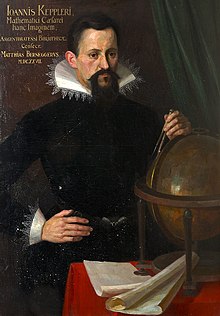
Giovanni Keplero, known in English as Johannes Kepler, stands as one of the most influential figures in the history of science. Born on December 27, 1571, in Weil der Stadt, Germany, Kepler’s groundbreaking work in astronomy and mathematics fundamentally transformed our understanding of the cosmos. His contributions laid the groundwork for modern physics and astronomy, making him a pivotal figure in the Scientific Revolution.
Early Life and Education
Johannes Kepler was born into a tumultuous period in European history, characterized by religious strife and scientific exploration. His father, Heinrich Kepler, was a mercenary, and his mother, Katharina, faced numerous hardships, including accusations of witchcraft. Despite these challenges, Kepler demonstrated an early aptitude for learning.
Kepler’s education began at the University of Tübingen, where he studied theology and philosophy. It was here that he encountered the works of Copernicus, whose heliocentric model of the solar system profoundly influenced him. Kepler’s exposure to this revolutionary idea marked the beginning of his journey into astronomy.
In 1594, Kepler transferred to the University of Gratz to study mathematics, where he continued to build upon his understanding of celestial mechanics. His academic endeavors led him to a position as a mathematics teacher, which provided him with the opportunity to delve deeper into the study of astronomy.
Breakthroughs in Astronomy
Kepler’s career took a significant turn when he was appointed as an assistant to the renowned astronomer Tycho Brahe in Prague in 1600. This position was pivotal for Kepler, as it allowed him to access Brahe’s extensive and precise observational data. Brahe’s meticulous observations of planetary movements provided Kepler with the empirical evidence needed to develop his own theories.
The Laws of Planetary Motion
Kepler’s most notable achievements are his three laws of planetary motion, which fundamentally changed the field of astronomy:
-
Kepler’s First Law (The Law of Ellipses): This law states that planets move in elliptical orbits with the Sun at one of the two foci. This was a significant departure from the previously accepted circular orbits and laid the foundation for modern celestial mechanics.
-
Kepler’s Second Law (The Law of Equal Areas): According to this law, a line segment joining a planet and the Sun sweeps out equal areas during equal intervals of time. This law explains the varying speeds at which planets travel in their orbits, with planets moving faster when closer to the Sun and slower when farther away.
-
Kepler’s Third Law (The Law of Harmonies): This law describes the relationship between the time a planet takes to orbit the Sun and its average distance from the Sun. Specifically, the square of a planet’s orbital period is proportional to the cube of its average distance from the Sun. This law provided a clear mathematical relationship between the distance of planets from the Sun and their orbital periods.
These laws not only supported the heliocentric model proposed by Copernicus but also provided a more accurate and detailed description of planetary motion.
Influence and Legacy
Kepler’s work had a profound influence on subsequent scientific developments and thinkers. His laws of planetary motion were crucial for the advancement of classical mechanics and provided a foundation for Isaac Newton’s theory of universal gravitation. Newton’s work built upon Kepler’s observations and laws, leading to a deeper understanding of the forces governing planetary motion.
Contributions to Optics
In addition to his work in astronomy, Kepler made significant contributions to the field of optics. His studies on the behavior of light and lenses led to the formulation of Kepler’s laws of vision, which describe how the human eye forms images. He also investigated the nature of telescopic vision, contributing to the development of optical instruments.
Kepler’s advancements in optics were instrumental in improving telescopic designs and enhancing the accuracy of astronomical observations. His work in this area paved the way for future discoveries and technological advancements in both astronomy and optics.
Personal Challenges and Achievements
Despite his scientific successes, Kepler faced numerous personal and professional challenges throughout his life. His work was often met with resistance from contemporaries who were skeptical of his ideas. Additionally, Kepler’s personal life was marked by financial difficulties and family tragedies. His wife, Barbara, passed away in 1612, and he faced ongoing financial struggles due to his reliance on patronage for support.
Despite these hardships, Kepler’s perseverance and dedication to his work remained unwavering. His commitment to scientific inquiry and his innovative approach to understanding the cosmos continued to drive his research and contributions.
Historical Context and Impact
Johannes Kepler’s work emerged during a period of significant scientific and philosophical change. The Scientific Revolution, which spanned the 16th and 17th centuries, was characterized by a shift away from traditional Aristotelian and Ptolemaic views of the universe towards a more empirical and mathematical approach.
Kepler’s contributions were integral to this transformation. His adherence to empirical data and his use of mathematical models to describe celestial phenomena represented a departure from the speculative and qualitative methods of his predecessors. This approach set a new standard for scientific inquiry and established the principles of modern science.
Kepler’s Writings and Publications
Kepler authored several influential works throughout his career, including:
-
“Mysterium Cosmographicum” (The Cosmographic Mystery, 1596): This work presented Kepler’s initial ideas on the structure of the solar system and his belief in the harmony and order of the cosmos.
-
“Astronomiae Nova” (New Astronomy, 1609): In this publication, Kepler introduced his first two laws of planetary motion, marking a significant advancement in the field of astronomy.
-
“Harmonices Mundi” (The Harmony of the World, 1619): This work presented Kepler’s third law of planetary motion and explored the mathematical relationships governing celestial bodies.
-
“Epitome Astronomiae Copernicanae” (Epitome of Copernican Astronomy, 1617-1621): This comprehensive work synthesized Kepler’s astronomical theories and provided a detailed exposition of the heliocentric model.
These writings not only demonstrated Kepler’s scientific achievements but also influenced the development of modern astronomical and mathematical theories.
Legacy and Recognition
Johannes Kepler’s legacy extends far beyond his lifetime. His work laid the foundation for subsequent discoveries and advancements in astronomy and physics. Kepler is often regarded as one of the key figures in the Scientific Revolution, and his contributions continue to be celebrated and studied by scientists and historians alike.
Kepler’s influence is evident in the field of astronomy, where his laws of planetary motion remain fundamental to our understanding of celestial mechanics. His contributions to optics also continue to impact the design and use of optical instruments.
In recognition of his achievements, Kepler has been honored with various accolades and commemorations. The Kepler spacecraft, launched by NASA in 2009, was named in his honor and aimed to discover Earth-like planets in other star systems. Additionally, the Kepler crater on the Moon and the Kepler-22b exoplanet are named after him, reflecting his lasting impact on the field of astronomy.
Conclusion
Johannes Kepler’s remarkable contributions to science and mathematics have left an indelible mark on our understanding of the universe. His pioneering work in astronomy, including his laws of planetary motion, transformed the field and provided a foundation for future discoveries. Kepler’s legacy endures through his contributions to optics, his influence on subsequent scientists, and his role in shaping the Scientific Revolution.
As we continue to explore the cosmos and expand our knowledge of the universe, Kepler’s work remains a testament to the power of scientific inquiry and the pursuit of knowledge. His dedication to understanding the natural world and his innovative approach to scientific research continue to inspire and inform the field of astronomy.


