
Introduction
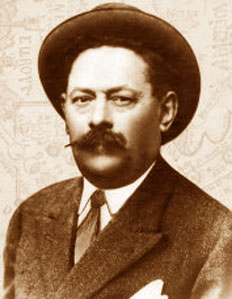
Giovanni Paneroni is a figure of historical curiosity, known for his unorthodox views on astronomy and his tireless crusade against the widely accepted heliocentric model of the solar system. Born on January 23, 1871, in Rudiano, a small town near Brescia, Italy, Paneroni’s life and legacy are marked by his fervent belief in a flat Earth and his vocal opposition to the scientific consensus of his time. This article delves into the life, fame, and lasting impact of Giovanni Paneroni, exploring the context of his ideas and the cultural environment that both shaped and challenged him.
Early Life and Education
Giovanni Paneroni was born into a world on the brink of great change. The year 1871 was significant for Italy, as Rome was declared the capital of the newly unified Italian Kingdom. Paneroni’s early years were spent in a country grappling with its new national identity, and his life was influenced by the cultural and political shifts of the time.
Paneroni’s father, Battista, recognized his son’s intellectual potential and encouraged him to pursue education. After completing elementary school—a notable achievement at a time when many Italians were still illiterate—Paneroni was enrolled in a seminary in Bergamo. However, his time there was short-lived; he left after just two years due to a lack of vocation for the priesthood. Despite this early departure, the education he received laid the groundwork for his later intellectual pursuits and his eventual development of a radical and controversial worldview.
A Career and a Calling
Following his departure from the seminary, Paneroni moved to Bergamo, where he began working in a confectionery shop. It was here that he learned the craft of making “Tiramolla,” a popular sweet of the time. This skill provided him with a steady livelihood, enabling him to support a large family of eight children. Yet, Paneroni’s true passion lay in his self-appointed mission to challenge the scientific orthodoxy of his day.
During the late 19th and early 20th centuries, Italy was still a largely rural and traditional society, with a significant portion of the population lacking formal education. In the 1871 census, it was revealed that half of Lombardy’s population was illiterate. In this environment, Paneroni’s ability to read and write set him apart and equipped him with the tools he needed to articulate and spread his unconventional ideas.
The Flat Earth Crusade
Giovanni Paneroni is best known for his fervent belief in the flat Earth theory. He rejected the heliocentric model proposed by Galileo Galilei and defended by modern science, instead advocating for a geocentric model in which the Sun revolved around a flat, stationary Earth. His arguments were often delivered in public spaces—at street corners and in town squares—where he would set up simple experiments to “prove” his theories to passersby.
Paneroni’s approach was more theatrical than scientific. He would gather crowds with his charismatic presence and bold statements, often beginning his lectures with the provocative phrase, “The Earth does not move, you fools!” His demonstrations, though scientifically flawed, were designed to captivate and persuade, using a combination of rhetoric and spectacle to challenge the established scientific authorities.
His influence was such that even prominent figures like the journalist and historian Indro Montanelli took notice. Paneroni’s slogan, “La Terra non gira, o bestie” (“The Earth does not move, you beasts”), became iconic, symbolizing his defiance against the academic and scientific institutions of his time.
Paneroni’s Publications and Artistic Expressions
In addition to his public demonstrations, Paneroni was also a prolific writer and artist. He produced a wide array of pamphlets and drawings, in which he illustrated his ideas about the cosmos. These materials often featured the Sun orbiting a flat Earth and were filled with passionate arguments against the heliocentric model.
Paneroni distributed these pamphlets widely, even selling them in Rome, the heart of Italy’s political and cultural life. His writings were not just scientific tracts; they were also a form of social and political commentary, laced with criticism of the “professoroni universitari” (“university professors”) and the Fascist regime that later came to power in Italy. Paneroni saw himself as a rebel against not just scientific consensus but also against the authoritarianism and intellectual elitism that he believed stifled free thought.
Challenges and Controversies
Paneroni’s radical views and confrontational style did not endear him to the scientific community or the authorities. Throughout his life, he faced ridicule, censorship, and even imprisonment. The academic establishment dismissed him as a crackpot, and the government, particularly during the Fascist era, saw him as a potential troublemaker who challenged the status quo.
Despite these challenges, Paneroni remained undeterred. He continued to travel across northern Italy, bringing his message to universities, schools, and the general public. His unwavering commitment to his beliefs, even in the face of overwhelming opposition, became a defining feature of his legacy.
Later Life and Legacy
Giovanni Paneroni’s crusade against the heliocentric model continued until his death on January 2, 1950, in his hometown of Rudiano. He was 79 years old. Paneroni’s death marked the end of an era for a man who had spent his life battling against what he saw as the falsehoods of modern science.
In the years following his death, Paneroni became something of a folk hero in certain circles, admired for his stubborn defiance and his willingness to stand up for his beliefs, no matter how unpopular or discredited they were. His story serves as a reminder of the complexities of the human spirit—how conviction and passion can drive individuals to challenge the very foundations of accepted knowledge.
Historical Context and Significance
To fully understand Giovanni Paneroni’s life and beliefs, it is important to place him within the broader historical and cultural context of his time. The late 19th and early 20th centuries were periods of significant scientific advancement, with figures like Galileo Galilei and Isaac Newton having long established the principles of heliocentrism and gravity. However, these advances were not universally accepted, particularly in rural and less-educated areas where traditional views held sway.
Paneroni’s flat Earth beliefs can be seen as part of a broader reaction against the rapid changes and modernizations of the time. For many, the world was becoming an increasingly complex and alien place, with traditional beliefs being challenged by new ideas in science, politics, and culture. Paneroni’s defiance of modern science can be viewed as a manifestation of this broader cultural resistance to change.
The Impact on Modern Flat Earth Movements
In recent years, the flat Earth theory has experienced a resurgence, largely due to the internet and social media, which have allowed fringe theories to gain new audiences. While Paneroni’s work is not directly connected to these modern movements, his legacy as one of the early and most vocal proponents of the flat Earth theory provides historical continuity to this phenomenon.
Modern flat Earthers, like Paneroni, often position themselves as rebels against a corrupt and deceptive scientific establishment. They use many of the same rhetorical strategies that Paneroni employed—appealing to common sense, distrust of authority, and the idea that mainstream science is hiding the “truth.” In this way, Paneroni’s legacy lives on in the ongoing debates over the shape of the Earth, illustrating the enduring power of unconventional ideas and the human tendency to challenge accepted knowledge.
Conclusion
Giovanni Paneroni was a man ahead of his time in his determination to stand against the consensus of the scientific community. His life was marked by a relentless pursuit of what he believed to be the truth, even in the face of widespread ridicule and opposition. While his theories have long been discredited, Paneroni’s story is a fascinating chapter in the history of science and a testament to the complexities of human belief.
Paneroni’s legacy is one of passion, defiance, and the courage to challenge the established order. His life reminds us that the pursuit of knowledge is not always linear and that sometimes, it is the most unconventional voices that leave the most lasting impressions on history.


