
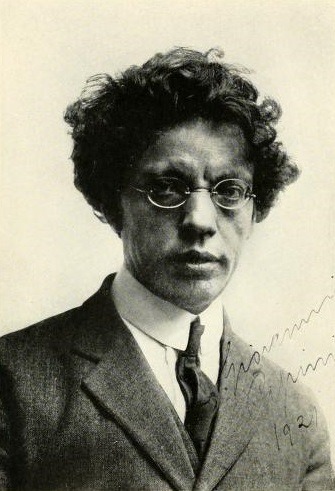
Giovanni Papini is a name that resonates with a profound influence in the landscape of early 20th-century Italian literature. A multifaceted writer, philosopher, and cultural critic, Papini’s work spans across various genres, reflecting the intellectual turmoil and avant-garde movements of his time. This article delves deep into the life, fame, and highlights of Giovanni Papini, exploring his contributions to literature, his philosophical endeavors, and the complex historical context that shaped his career.
Early Life and Intellectual Beginnings
Born on January 9, 1881, in Florence, Italy, Giovanni Papini grew up in an environment rich in cultural and intellectual stimuli. From a young age, he was deeply engaged in reading and writing, demonstrating a remarkable enthusiasm for knowledge. By the turn of the century, Papini had already established himself as a key figure in the intellectual circles of Florence, associating with prominent thinkers and writers of the time.
In 1900, Papini co-founded an association of “free spirits” with Giuseppe Prezzolini and Ercole Luigi Morselli. This group was characterized by its individualistic, anarchistic, and idealistic leanings. Just three years later, Papini, along with Prezzolini and Giovanni Vailati, launched the magazine Il Leonardo. The magazine aimed to challenge and deconstruct the academic culture in Italy, drawing inspiration from the works of Friedrich Nietzsche and Rudolf Steiner. This early phase of Papini’s career was marked by a fervent rejection of traditional philosophical and cultural norms, laying the groundwork for his future endeavors.
Literary Contributions and Philosophical Works
Giovanni Papini’s literary output was as diverse as it was prolific. In 1903, he published his first collection of metaphysical short stories, Il tragico quotidiano (The Tragic Everyday), followed by Il pilota cieco (The Blind Pilot) in 1907. These works showcased Papini’s penchant for exploring the deeper, often darker, aspects of human existence, a theme that would recur throughout his career.
Papini’s philosophical inclinations were equally significant. In 1907, disillusioned with the logical pragmatism of his peers, he co-founded the magazine Il Leonardo, which eventually ceased publication that same year. This marked the end of one phase of Papini’s intellectual journey and the beginning of another, more radical phase. That year, he also published his first major philosophical work, Il crepuscolo dei filosofi (The Twilight of the Philosophers). In this book, Papini launched scathing critiques against six major figures in contemporary philosophy—Immanuel Kant, Friedrich Hegel, Arthur Schopenhauer, Auguste Comte, Herbert Spencer, and Friedrich Nietzsche—declaring the death of philosophy in favor of an irrational, vitalistic worldview.
Papini’s shift towards a more avant-garde approach became even more pronounced with the founding of the magazine Lacerba in 1913, alongside Ardengo Soffici. Lacerba positioned itself in opposition to the more moderate magazine La Voce, and it quickly became the mouthpiece for the Florentine Futurist movement, which sought to radically transform Italian culture through art, literature, and social discourse. Papini’s association with Futurism, though intense, was also marked by a certain ambivalence, as he continued to produce works that diverged from the movement’s core tenets.
The Autobiographical and Poetic Works
In 1913, Giovanni Papini published one of his most significant and personal works, Un uomo finito (A Finished Man). This book, part autobiography and part existential diary, reflects Papini’s inner turmoil and his relentless quest for truth, both religious and philosophical. The work is a profound exploration of the human condition, marked by Papini’s characteristic blend of lyricism, introspection, and a yearning for the sublime.
During this period, Papini also produced poetic prose, including Cento pagine di poesia (One Hundred Pages of Poetry) in 1915 and Opera prima (First Work) in 1917. These works reveal a softer, more lyrical side of Papini, distinct from his earlier, more combative writings. Here, Papini’s focus shifts towards the sublime and the mystical, exploring themes of beauty, spirituality, and the ineffable aspects of human experience.
Conversion and Religious Writings
One of the most pivotal moments in Giovanni Papini’s life was his conversion to Christianity in 1921. This conversion marked a dramatic shift in his worldview and had a profound impact on his subsequent writings. Papini announced his conversion with great public fanfare and followed it with the publication of Storia di Cristo (The Story of Christ), a work that blended religious devotion with his unique literary style.
Following his conversion, Papini continued to write prolifically on religious themes, though his works often strayed from orthodox Catholic teachings. His book Sant’Agostino (Saint Augustine) in 1929 and Dante vivo (Dante Alive) in 1933 are notable examples of his religious writings. The latter, in particular, received praise from none other than Jorge Luis Borges, who admired Papini’s bold and sometimes irreverent approach to religious subjects. Papini’s later works, such as Il diavolo (The Devil) in 1953, further exemplify his continued engagement with theological and existential questions.
Papini and Fascism: A Controversial Legacy
Giovanni Papini’s relationship with the Fascist regime in Italy remains one of the most controversial aspects of his life and legacy. Under Mussolini’s rule, Papini became a prominent cultural figure, serving as a kind of unofficial writer for the regime. In 1935, he was offered a chair in Italian literature at the University of Bologna, and two years later, he was appointed an academic of Italy. Papini also directed an Institute of Renaissance Studies and took charge of the magazine La Rinascita.
This period of Papini’s life is fraught with complexities. While he undoubtedly benefited from his association with the Fascist regime, his earlier works and public stances were often at odds with the authoritarianism of Mussolini’s government. Papini’s alignment with Fascism can be seen as a pragmatic choice, allowing him to maintain his influence and continue his literary work during a difficult political era. However, this alignment also tarnished his reputation, especially in the post-war years.
The Final Years and Last Works
The final years of Giovanni Papini’s life were marked by physical decline and a growing sense of disillusionment. As Italy emerged from the devastation of World War II and the collapse of Fascism, Papini found himself increasingly isolated. The literary and intellectual circles that had once celebrated him now viewed him with suspicion, and the younger generation of writers criticized him for what they perceived as a betrayal of his earlier radical ideals.
Despite his declining health—Papini eventually lost his sight—he continued to work on his literary projects. He spent his last years dictating his thoughts and writings to a secretary, producing works such as Il diavolo and the Schegge (Shards), a collection of lyrical and reflective pieces that were posthumously published in 1971. He also worked on Giudizio universale (Universal Judgment), a work that he began as early as 1903 under the title Adamo but was never able to complete.
Giovanni Papini passed away on July 8, 1956, in his beloved Florence. His death marked the end of a tumultuous and multifaceted career, one that had seen him rise to the heights of literary fame and fall into the shadows of controversy and disfavor.
Legacy and Influence
Giovanni Papini’s legacy is as complex as the man himself. He was a writer who embraced contradiction, who reveled in the avant-garde while also seeking the sublime and the eternal. His works, ranging from scathing critiques of philosophy to lyrical meditations on faith and existence, continue to captivate readers with their intensity and intellectual depth.
Papini’s influence extended beyond Italy’s borders. His works were translated into several languages, and his ideas found resonance among writers and thinkers across Europe and Latin America. Jorge Luis Borges, the renowned Argentine writer, counted Papini among his influences, and Papini’s bold, iconoclastic style can be seen reflected in Borges’s own work.
However, Papini’s association with Fascism and his controversial stances on various issues have left a stain on his reputation. In the post-war period, many of his works were overshadowed by the political choices he made, and his contributions to literature were often re-evaluated in light of his political affiliations. Yet, despite these controversies, Giovanni Papini remains a figure of significant literary and cultural importance, a writer whose work continues to provoke thought and debate.
Conclusion: Giovanni Papini’s Place in Italian Literature
Giovanni Papini was a man of contradictions—a fervent intellectual who embraced both the avant-garde and the mystical, a writer who sought to challenge established norms while also seeking deeper truths. His life and work reflect the turbulent times in which he lived, marked by rapid social, cultural, and political changes.
As we look back on Giovanni Papini’s life, it is clear that he was a pivotal figure in the early 20th-century Italian literary scene. His contributions to literature, philosophy, and cultural criticism have left an indelible mark, and his works continue to be studied and appreciated for their boldness, their intellectual rigor, and their emotional depth.
While his legacy may be complicated by his political choices, there is no denying the impact Giovanni Papini had on the literary world. His writings, whether they are celebrated or criticized, remain a testament to his unyielding quest for truth and his refusal to conform to the expectations of his time.


