
Introduction
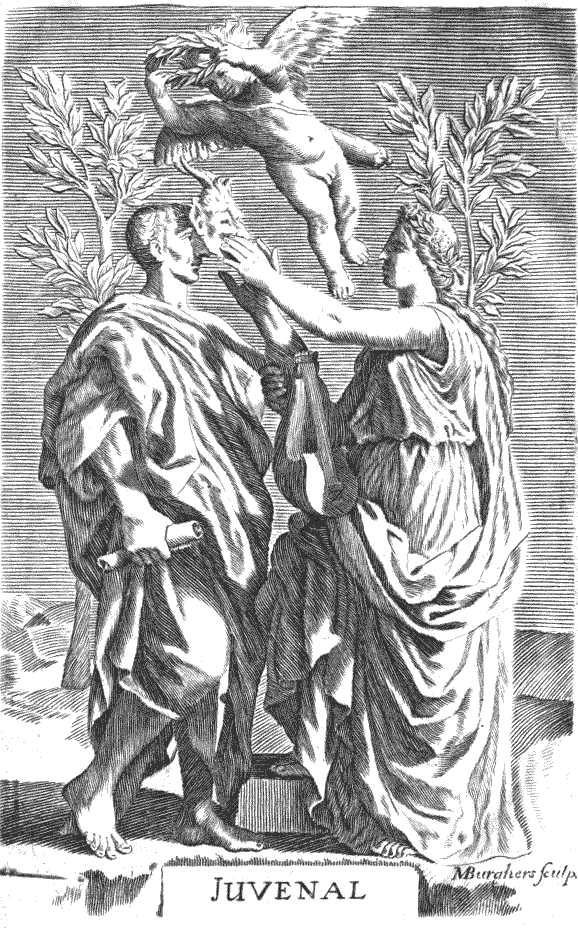
Decimus Junius Juvenalis, known more commonly as Giovenale, was a prominent Roman poet and satirist whose works have stood the test of time, offering profound insights into the social and moral fabric of ancient Rome. Born between 55 and 60 AD in Aquino, a town in the southern part of Lazio, Giovenale’s life and writings provide a window into the decadence, corruption, and social inequalities of his time. This article delves into the life, fame, and literary contributions of Giovenale, exploring the nuances of his satirical works and the historical context in which they were created.
Early Life and Education
Giovenale was born into a well-off family, which afforded him the opportunity to receive a robust rhetorical education. This education was instrumental in shaping his future as a satirist, providing him with the skills necessary to craft the biting and incisive commentary for which he would later become famous. Despite his privileged upbringing, Giovenale’s early career as a lawyer was not as lucrative as he had hoped. By the time he reached his 40s, disillusioned with his legal profession, he turned his focus entirely to writing.
The Struggles of a Satirist
Living under the shadow of various powerful men, Giovenale found himself in the precarious position of a cliens, a dependent in the Roman patron-client system. This position severely limited his economic independence and political freedom, fueling the pessimism that permeates much of his work. Giovenale’s satires are thus deeply rooted in his personal experiences of social injustice and the nostalgia for a bygone era when moral values were, in his view, more strictly upheld.
The Satirical Works of Giovenale
Giovenale’s literary output consists of sixteen satires, divided into five books. These satires tackle a wide range of themes, from the moral decay of Rome to the societal roles of different classes. His first satire serves as a prologue, setting the tone for his critique of the moral and social decline he observed in Rome. In this opening work, Giovenale famously declares, “Difficile est saturam non scribere” (“It is difficult not to write satire”), underscoring his compulsion to comment on the vices surrounding him.
Critique of the Past to Condemn the Present
A distinctive feature of Giovenale’s work is his strategy of critiquing past generations as a means to indirectly criticize his contemporaries. By lamenting the loss of the past’s moral virtues, Giovenale effectively condemns the present’s moral and social decay without directly attacking specific individuals or institutions.
For instance, in his second satire, Giovenale addresses the topic of homosexuality, predicting a time when same-sex unions might be legally recognized—a prophetic observation that underscores his ability to foresee social changes. His critique in this satire is not merely an attack on sexual mores but also a reflection on the broader societal shifts occurring in Rome.
The Infamous Sixth Satire: A Diatribe Against Women
One of Giovenale’s most controversial works is his sixth satire, which is a vehement invective against women, particularly targeting the matrons of Rome. In this satire, Giovenale paints a scathing picture of Roman women as immoral, deceitful, and overly liberated, reflecting his disdain for what he perceived as the erosion of traditional gender roles. He singles out figures like Messalina, whom he labels an “Augusta meretrix” (imperial prostitute), as symbols of this moral decay.
The sixth satire has been widely regarded as one of the most misogynistic pieces of literature in history, filled with harsh descriptions of women’s behavior. Giovenale accuses Roman women of being wasteful, unethical, and responsible for a host of societal ills, from premeditated murders to the maltreatment of servants and rampant infidelity. This work remains a stark reminder of the deeply entrenched gender biases of the time and offers a window into the patriarchal values that dominated Roman society.
Cultural Decline and the Struggles of the Intellectual Class
In his seventh satire, Giovenale laments the cultural decline of his era, drawing a stark contrast between the literary landscape of his time and that of the Augustan Age. He bemoans the poverty and marginalization of intellectuals, who, unlike in the days of Augustus, no longer enjoyed the patronage and respect that once allowed them to thrive. Giovenale’s portrayal of the struggling literati highlights the broader decline in societal values and the diminishing importance of intellectual pursuits in a Rome increasingly obsessed with wealth and power.
Education and Moral Decline
The fourteenth satire focuses on the education of children, emphasizing the importance of combining instruction with moral examples. Giovenale argues that the moral corruption of parents is passed down to their offspring, perpetuating a cycle of vice and decadence. This satire reflects Giovenale’s belief in the decline of moral values as a root cause of Rome’s social ills.
Religious Fanaticism and Cannibalism
One of the more extreme examples of Giovenale’s satirical prowess is found in his fifteenth satire, which recounts a shocking episode of cannibalism in Egypt. This horrifying tale serves as a commentary on the dangers of religious fanaticism and the lengths to which people will go in the name of misguided beliefs. The satire is a powerful indictment of the irrationality and brutality that can arise from unchecked zealotry.
The Evolution of Giovenale’s Satire
Giovenale’s earlier works are characterized by their intensity and directness, fueled by his frustration with the social and political injustices of his time. However, as he aged, his approach to satire began to change. By the time Emperor Hadrian came to power, Giovenale’s writing had taken on a more detached and disenchanted tone. He began to distance himself from the fiery indignation that had defined his earlier work, opting instead for a more stoic and apathetic outlook.
This shift in perspective is evident in his later satires, where his critiques become more abstract and generalized. Rather than directly attacking specific targets, Giovenale adopts a broader view, reflecting on the human condition with a sense of resigned acceptance. This evolution in his writing style marks a return to the satirical tradition that initially influenced him, blending the sharpness of his early works with a newfound philosophical detachment.
Legacy and Historical Context
Giovenale’s satires offer invaluable insights into the social and moral landscape of ancient Rome, serving as a powerful critique of the decadence, corruption, and inequality that plagued the empire. His works are a testament to the enduring power of satire as a tool for social commentary, capable of challenging the status quo and provoking thought long after the author’s time.
Despite the lack of extensive biographical details about Giovenale’s life, his satires have cemented his place in literary history. His ability to blend humor, irony, and moral critique has made his work a cornerstone of Roman literature, influencing generations of writers and thinkers.
Giovenale’s satires also reflect the broader historical context of his time, a period marked by political instability, economic inequality, and social unrest. His works capture the frustrations of a society grappling with the decline of traditional values and the rise of new, often troubling, social dynamics.
Conclusion
Decimus Junius Juvenalis, or Giovenale, remains one of the most significant figures in the history of satire. His sharp wit, incisive critiques, and profound insights into the human condition have left an indelible mark on literature. Through his satires, Giovenale not only captured the essence of his time but also provided timeless observations that continue to resonate with readers today. His legacy endures as a reminder of the power of satire to illuminate the flaws and follies of society, challenging us to reflect on our own values and the world we live in.


