
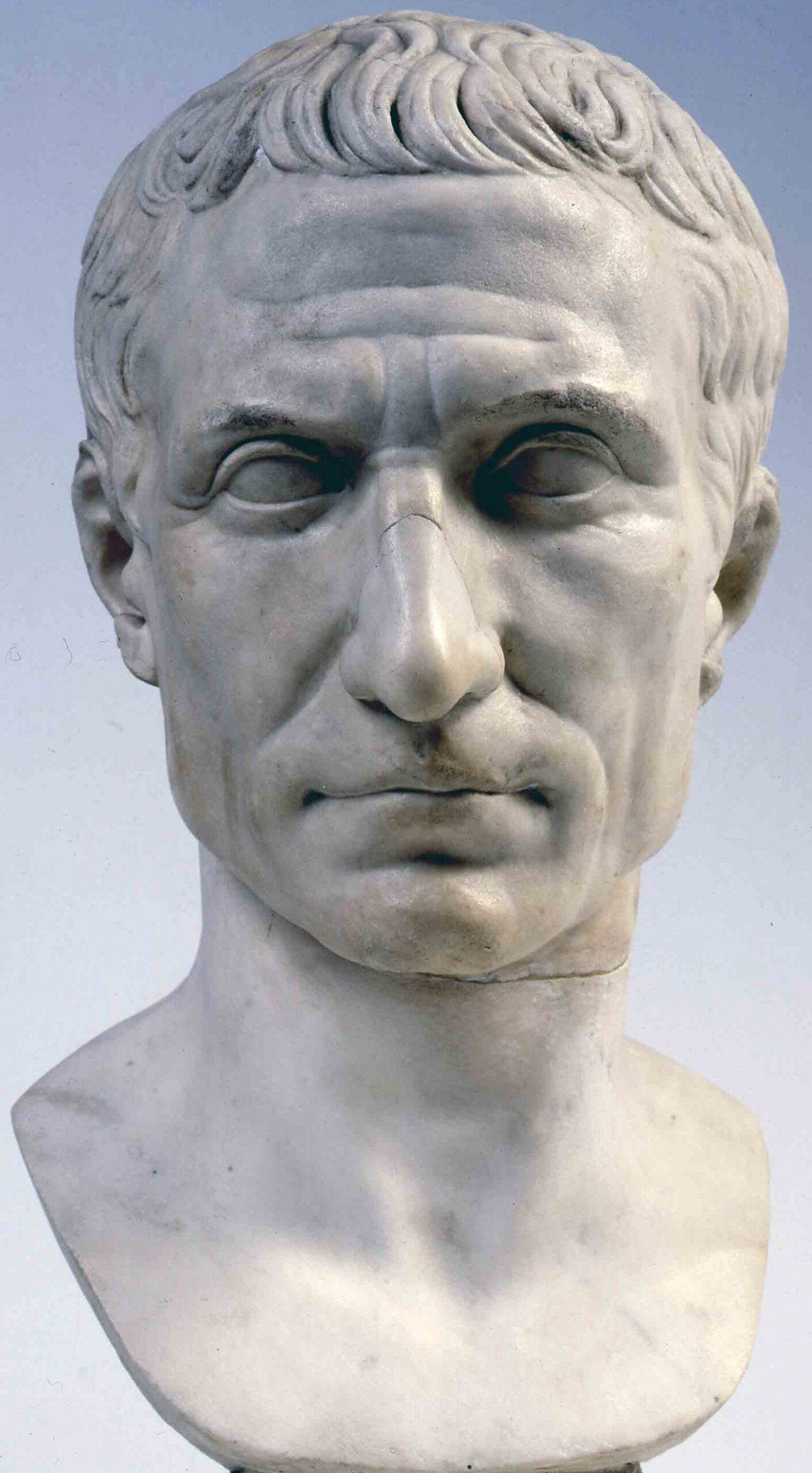
Gaius Julius Caesar, known as Giulio Cesare in Italian, is one of the most influential figures in the history of Rome and the Western world. Born on July 12, 100 BCE, in Rome, Caesar’s life and career shaped the trajectory of Roman history and laid the foundations for the transformation of the Roman Republic into the Roman Empire. Caesar was not only a brilliant military general but also a shrewd politician, an accomplished writer, and a key figure in the end of the Roman Republic. This article provides an in-depth look at the life, achievements, and enduring legacy of Giulio Cesare, focusing on his rise to power, military conquests, and the events that led to his assassination.
Early Life and Family Background
Giulio Cesare was born into the ancient and noble Julian family, the gens Julia, which claimed descent from Iulus, the son of Aeneas, a legendary Trojan hero and purported son of the goddess Venus. This illustrious lineage gave Caesar a sense of destiny and legitimacy in his pursuit of power. Despite his noble background, Caesar’s early life was marked by political turbulence. His family was closely aligned with the populares, a political faction that supported the rights of the common people against the conservative senatorial aristocracy, known as the optimates.
Caesar’s early education was typical of a Roman nobleman, focusing on rhetoric, philosophy, and military training. At the age of 16, following the death of his father, Caesar became the head of his household. His early career was marked by his involvement in various military campaigns in Asia and his service in the Roman priesthood as a flamen dialis, a high-ranking priest dedicated to the worship of Jupiter.
Early Political Career and the Path to Power
Caesar’s political career began in earnest in 69 BCE when he was elected as a quaestor, a junior magistrate in the Roman Republic. This role marked the start of his cursus honorum, the sequential order of public offices held by aspiring politicians in Rome. Caesar’s marriage to Cornelia, the daughter of Lucius Cornelius Cinna, a prominent leader of the populares, further solidified his political alliances.
During this period, Caesar’s association with the populares put him at odds with the dictator Lucius Cornelius Sulla, who had seized power in Rome. Sulla ordered Caesar to divorce Cornelia, but Caesar refused, demonstrating his resolve and loyalty to his political allies. This defiance forced Caesar into hiding, and his political career was temporarily derailed. However, after Sulla’s death in 78 BCE, Caesar returned to Rome and resumed his political activities.
Caesar’s rise to prominence was marked by a series of key appointments, including his election as aedile in 65 BCE, where he gained popularity by organizing lavish games and public entertainments. His strategic use of public spectacle endeared him to the people and increased his influence in Roman politics.
In 63 BCE, Caesar was elected pontifex maximus, the chief priest of the Roman state religion, a prestigious position that further enhanced his public profile. The following year, he was elected praetor, a senior magistrate responsible for the administration of justice. During his time as praetor, Caesar aligned himself with prominent figures such as Marcus Licinius Crassus and Gnaeus Pompeius Magnus, also known as Pompey, forming alliances that would shape the course of Roman history.
The First Triumvirate
By 60 BCE, Caesar had established himself as a formidable political force in Rome. Recognizing the need for strong allies, he formed a political alliance known as the First Triumvirate with Crassus, the wealthiest man in Rome, and Pompey, Rome’s most successful military commander. This informal coalition was designed to bypass the traditional structures of the Roman Senate and consolidate power among the three men.
The Triumvirate was a pragmatic arrangement that allowed each member to pursue their respective goals: Caesar sought military command and political power; Pompey wanted land for his veterans and political recognition; Crassus desired wealth and military glory. In 59 BCE, Caesar secured the consulship, the highest elected office in the Roman Republic, and used his position to advance the interests of the Triumvirate.
One of Caesar’s significant achievements during his consulship was the passage of the agrarian law, which distributed public lands to veterans and the urban poor. This move not only fulfilled Pompey’s demands but also garnered Caesar widespread support among the lower classes. At the end of his consulship, Caesar was appointed governor of the provinces of Cisalpine Gaul (Northern Italy) and Illyricum (the western Balkans), along with a command in Transalpine Gaul (Southern France).
The Gallic Wars and Military Conquests
Caesar’s tenure as governor of Gaul marked the beginning of his military career that would make him one of history’s greatest generals. From 58 BCE to 50 BCE, Caesar waged a series of campaigns known as the Gallic Wars, which culminated in the Roman conquest of the entire region of Gaul (modern-day France and Belgium).
Caesar’s Commentarii de Bello Gallico (Commentaries on the Gallic War) provides a detailed account of these campaigns, offering insights into his military strategies and the challenges he faced. The Gallic Wars were not just a series of battles but a complex military and political endeavor that involved subduing a vast and diverse array of tribes, each with its own alliances and rivalries.
One of Caesar’s most significant victories came in 52 BCE at the Battle of Alesia, where he defeated the Gallic chieftain Vercingetorix. This battle showcased Caesar’s military genius, as he successfully besieged the fortified city of Alesia while simultaneously defending against a massive Gallic relief force. The victory at Alesia effectively ended Gallic resistance and solidified Caesar’s reputation as a military commander.
The conquest of Gaul brought immense wealth to Caesar and his legions, making him one of the most powerful men in Rome. It also provided him with a loyal and battle-hardened army, which he would later use to challenge the authority of the Roman Senate.
The Civil War and the Rise to Dictatorship
The death of Crassus in 53 BCE and the growing rivalry between Caesar and Pompey led to the breakdown of the First Triumvirate. By 49 BCE, tensions between Caesar and the Senate, now aligned with Pompey, had reached a breaking point. The Senate, fearing Caesar’s growing power, ordered him to disband his army and return to Rome as a private citizen. Caesar refused, knowing that without his army, he would be vulnerable to his political enemies.
In a decisive and fateful move, Caesar crossed the Rubicon River with his army in January 49 BCE, a direct violation of Roman law that forbade a general from leading troops into Italy. As he crossed the Rubicon, Caesar reportedly declared, “Alea iacta est” (“The die is cast”), signifying his commitment to the path of civil war.
The subsequent civil war between Caesar and Pompey lasted from 49 BCE to 45 BCE. Despite being outnumbered, Caesar’s military prowess and the loyalty of his troops led to a series of victories. One of the most notable battles was the Battle of Pharsalus in 48 BCE, where Caesar decisively defeated Pompey’s forces, forcing Pompey to flee to Egypt, where he was assassinated.
With Pompey dead and his enemies in retreat, Caesar returned to Rome in triumph. He was appointed dictator, initially for a limited term, but by 44 BCE, he had been declared dictator perpetuo (dictator for life). Caesar used his power to implement a series of reforms aimed at stabilizing Rome and addressing the issues that had plagued the Republic, including debt relief, land redistribution, and the expansion of the Senate.
The Assassination and Legacy
Despite his reforms, Caesar’s concentration of power and his apparent disregard for the traditional republican institutions generated significant opposition among the senatorial class. Many feared that Caesar intended to abolish the Republic and establish a monarchy, with himself as king. This fear culminated in a conspiracy led by several senators, including Marcus Junius Brutus and Gaius Cassius Longinus, both of whom had previously been allies of Caesar.
On March 15, 44 BCE, known as the Ides of March, Caesar was assassinated in the Senate chamber. The conspirators stabbed him 23 times, believing that his death would restore the Republic. However, Caesar’s assassination led to further turmoil, plunging Rome into a series of civil wars that ultimately resulted in the end of the Republic and the rise of the Roman Empire under Caesar’s adopted heir, Octavian (later known as Augustus).
Caesar’s legacy is complex and multifaceted. On one hand, he is remembered as a military genius and a reformer who sought to address the deep-seated issues within the Roman Republic. His conquests expanded the Roman world and brought immense wealth and resources to Rome. On the other hand, his concentration of power and his role in the demise of the Republic have led to his portrayal as a tyrant by some historians.
Caesar’s impact on the Roman world and Western history is undeniable. The Julian calendar, which he introduced, is the precursor to the modern Gregorian calendar. His writings, particularly the Commentaries on the Gallic War, remain important historical sources and are still studied for their literary and rhetorical excellence. Caesar’s life and death have inspired countless works of literature, art, and political thought, cementing his place as one of history’s most enduring figures.


