
Giuseppe Arcimboldo, also known as Giuseppe Arcimboldi in many archival documents, remains a unique and fascinating figure in the history of art. Born in 1526 in Milan to a family with aristocratic roots, Arcimboldo’s contributions to art, particularly his famous “composite heads,” have left an indelible mark on the world. This comprehensive biography will delve into his early life, artistic journey, major works, and lasting legacy.
Early Life and Background
Giuseppe Arcimboldo was born into a family with strong ties to the artistic and cultural heritage of Milan. His father, Biagio, was a painter employed by the Veneranda Fabbrica del Duomo, the organization responsible for the construction and maintenance of Milan’s iconic cathedral. Growing up in such an environment, Giuseppe was naturally inclined towards the arts.
Arcimboldo’s artistic career began in earnest around 1549 in his father’s workshop, where he was involved in creating designs for the cathedral’s stained glass windows. This early exposure to large-scale projects honed his skills in drawing and composition, laying the groundwork for his future innovations.
The Turning Point: Vienna and the Habsburg Court
A pivotal moment in Arcimboldo’s career came in 1562 when he was invited to Vienna by Maximilian II of Habsburg, the future Holy Roman Emperor. This move to the Austrian capital marked the beginning of Arcimboldo’s rise to fame and significant financial rewards. Although much of his work from this period has been lost, the surviving pieces highlight his unique style and creativity.
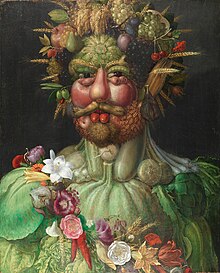
Arcimboldo is best known for his “composite heads,” which are grotesque yet fascinating portraits made by assembling images of various objects such as fruits, vegetables, flowers, and animals. These works were not merely whimsical; they reflected the Renaissance fascination with allegory, symbolism, and the intricate relationships between the natural world and human beings.
Major Works and Artistic Innovations
Among Arcimboldo’s most famous works are the series depicting the Four Elements (Earth, Air, Fire, and Water) and the Four Seasons. These paintings were created for the walls of Emperor Maximilian II’s residence and are celebrated for their vibrant colors and meticulous detail. Each element and season is personified through a combination of related objects, creating a visual puzzle that delighted and intrigued contemporary viewers.
The Four Elements
- Earth is depicted through a collage of terrestrial creatures and plants.
- Air is represented by birds and other flying animals.
- Fire is illustrated with images of flames, candles, and fiery creatures.
- Water features a variety of aquatic life forms.
The Four Seasons
- Spring is a lush assembly of flowers and young plants.
- Summer is constructed from ripe fruits and mature plants.
- Autumn is a harvest-themed collection of vegetables and grains.
- Winter uses barren branches and other symbols of the cold season.
These series were not just artistic endeavors; they served as diplomatic gifts and symbols of imperial power, with variants and copies sent to European monarchs and noble families.
Court Life and Contributions
Arcimboldo’s role at the Habsburg court extended beyond painting. He was also responsible for organizing elaborate festivals, ceremonies, and masquerades. His creativity shone during events such as the marriage of Maria Anna of Bavaria to Archduke Charles II of Austria, where his designs and theatrical presentations added splendor to the celebrations.
A collection of 148 drawings known as the “Carnet de Rodolphe II,” now housed in the Uffizi Gallery in Florence, documents these court entertainments. These drawings include detailed depictions of parades, costumes, knights, ladies, and various court festivities, showcasing Arcimboldo’s diverse talents and his importance in the cultural life of the Habsburg court.
Later Years and Return to Milan
Arcimboldo remained a court artist even after the death of Maximilian II, serving under his successor, Rudolph II. Rudolph, with his deep interest in the esoteric and alchemical, found a kindred spirit in Arcimboldo. When the imperial court moved from Vienna to Prague, Arcimboldo followed, becoming a trusted advisor and eventually being named a Count Palatine in recognition of his contributions to the court’s cultural and economic life.
In 1587, Arcimboldo returned to Milan, where he continued to create notable works such as “Rudolph II as Vertumnus,” a portrait of the emperor as the Roman god of seasons and change, and “Ninfa Flora.” He passed away on July 11, 1593.
Rediscovery and Legacy
Arcimboldo’s fame waned in the centuries following his death, only to be revived in the 20th century with the rise of surrealism. Artists and critics began to appreciate his imaginative and symbolic approach, recognizing the “composite heads” as precursors to surrealist techniques. These works, with their playful yet profound commentary on nature and human identity, resonated with modern sensibilities.
Arcimboldo’s influence extends beyond painting; his works have inspired a wide range of artistic disciplines, including literature, theater, and film. His unique ability to merge the real and the fantastical continues to captivate audiences and artists alike.
Conclusion
Giuseppe Arcimboldo’s life and work embody the creative spirit of the Renaissance. His innovative use of allegory and symbolism, combined with his mastery of traditional techniques, set him apart as one of the most distinctive artists of his time. His legacy, rediscovered and celebrated in the modern era, underscores the timeless appeal of his vision and the enduring power of art to transcend its historical context.
For more information on Giuseppe Arcimboldo’s life and work, visit the full biography on biografieonline.it.


