
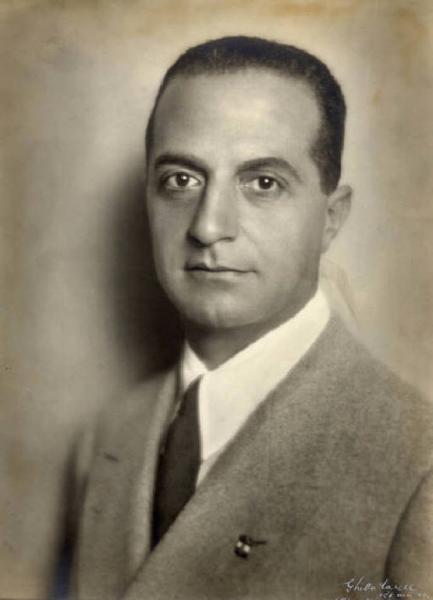
Giuseppe Bottai, born on September 3, 1895, in Rome, Italy, was a prominent political figure during the Fascist era in Italy. Known for his roles as Governor of Rome, Minister of Corporations, and Minister of National Education, Bottai’s life was marked by significant contributions to Italian politics and culture. This article delves into the life, fame, and significant highlights of Giuseppe Bottai’s journey, providing detailed insights and exploring the nuances and historical context of his influence.
Early Life and Education
Giuseppe Bottai was born into a family of Tuscan origin in Rome. After completing his secondary education, he enrolled in the Faculty of Law at the University of Rome. His studies were interrupted by the outbreak of World War I, in which he volunteered to fight. Bottai’s early involvement in the war played a crucial role in shaping his political views and future career.
Post-War Involvement and Early Political Career
After World War I, Bottai became active in the Futurist movement, which emphasized modernity and rejected traditional values. In 1919, he met Benito Mussolini and collaborated in founding the Fasci Italiani di Combattimento, the precursor to the National Fascist Party. He completed his law degree and began his political career in earnest by directing the Roman edition of “Il Popolo d’Italia,” Mussolini’s newspaper, in 1921. That same year, Bottai was elected to the Italian Chamber of Deputies.
The March on Rome
Bottai participated in the infamous March on Rome in 1922, which resulted in Mussolini’s rise to power. The event was marked by significant violence and chaos, leading to the deaths of several individuals. This pivotal moment solidified Bottai’s position within the Fascist regime.
Rise to Prominence: Ministerial Roles
In 1923, Bottai founded the journal “Critica Fascista,” which provided a platform for intellectual debate within the framework of Fascism. His career continued to ascend as he held various key positions:
Minister of Corporations
From 1926 to 1929, Bottai served as Undersecretary of Corporations before becoming the Minister of Corporations in 1929, a position he held until 1932. During his tenure, he issued the “Carta del Lavoro” (Labor Charter), which outlined the principles of the Fascist corporate state. This document aimed to regulate labor relations and integrate the workforce into the Fascist system. Bottai also secured a professorship in Corporate Law at the University of Rome, La Sapienza.
President of the National Institute for Social Security
In 1932, Bottai became the President of the National Institute for Social Security (INPS), a role he held until 1935. His work focused on improving social welfare programs and expanding the influence of Fascist policies in social services.
Governor of Rome and Addis Ababa
Bottai was appointed Governor of Rome in 1935, where he implemented several urban development projects. In May 1936, he briefly served as the Governor of Addis Ababa following Italy’s conquest of Ethiopia, but his tenure lasted less than a month.
Minister of National Education
In 1936, Bottai returned to Italy to serve as the Minister of National Education, a position he held until February 1943. During his time in this role, he enacted significant legislation to protect cultural heritage and improve the Italian education system. Two notable laws passed during his tenure remained in effect until 1999, and their principles continue to influence current legislation.
World War II and Later Life
As World War II progressed, Bottai’s political stance began to shift. On July 25, 1943, he was among the 19 members of the Grand Council of Fascism who voted in favor of Dino Grandi’s motion to remove Mussolini from power. This act of defiance led to his condemnation to death in absentia by a tribunal of the Italian Social Republic, the puppet state established by Nazi Germany.
Service in the French Foreign Legion
Fleeing the repercussions of his actions, Bottai enlisted in the French Foreign Legion under the alias Andrea Battaglia. He served until 1948 and fought against the Germans, showcasing his complex and often contradictory political and personal convictions.
Post-War Activities and Return to Italy
After receiving amnesty in 1947 for his involvement in the Fascist regime, Bottai returned to Italy. In 1953, he founded the political journal “ABC,” which he directed until his death. He also played a behind-the-scenes role in directing “Il Popolo di Roma,” a newspaper financially supported by industrialist Vittorio Cini to promote centrist political views.
Intellectual Contributions and Legacy
Throughout his career, Bottai was known for his intellectual openness and willingness to engage with opposing views. He provided a platform for young intellectuals and critics of the Fascist regime through his journal “Primato.” This openness earned him a reputation as a “critical fascist,” a term later used by historian Giordano Bruno Guerri to describe Bottai’s unique position within the Fascist hierarchy.
Bottai’s contributions to Italian cultural and educational policies were significant. His laws for the protection of cultural heritage and his reforms in the education sector have left a lasting impact on Italy. Despite his controversial political career, Bottai’s legacy includes important advancements in the protection and promotion of Italian culture and education.
Death and Commemoration
Giuseppe Bottai died on January 9, 1959, in Rome. His funeral was attended by a large crowd, including prominent figures such as Aldo Moro, who was then the Minister of Public Education. Bottai’s complex legacy as a Fascist official, intellectual, and reformer continues to be a subject of historical interest and debate.
Conclusion
Giuseppe Bottai’s life was marked by his deep involvement in Fascist Italy, his intellectual contributions, and his complex legacy. From his early days as a volunteer in World War I to his rise through the Fascist ranks and his later defiance of Mussolini, Bottai’s journey reflects the turbulent and multifaceted nature of 20th-century Italian history.
His roles as Minister of Corporations, Minister of National Education, and Governor of Rome showcased his ability to navigate the intricacies of Fascist politics while making significant contributions to social and cultural policies. Bottai’s willingness to engage with critical perspectives within the regime and his efforts to protect cultural heritage highlight the nuanced and often contradictory aspects of his career.
As a historical figure, Giuseppe Bottai embodies the complexities of Fascist Italy, offering insights into the ideological, political, and cultural currents that shaped the era. His legacy, while controversial, provides a rich field for understanding the interplay between politics, culture, and intellectual life in 20th-century Italy.


