
Introduction
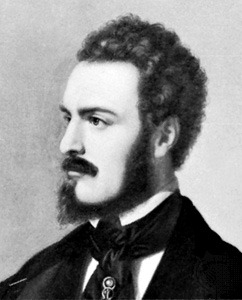
Giuseppe Giusti, a prominent figure in 19th-century Italian literature, is celebrated for his sharp wit, incisive satire, and contributions to the cultural landscape of his time. Born in 1809 in Monsummano, near Pistoia, Giusti’s life was marked by a unique blend of personal struggles, intellectual pursuits, and a deep-seated passion for social commentary. This article delves into the life of Giuseppe Giusti, exploring his journey to fame, the challenges he faced, and the legacy he left behind.
Early Life and Background
Giuseppe Giusti was born on May 13, 1809, in the small town of Monsummano, located in the province of Pistoia, Tuscany. His father, Domenico Giusti, was a landowner, and the relationship between father and son was strained from the outset. Domenico disapproved of Giuseppe’s lifestyle, which he considered excessively flamboyant. This tension only grew during Giuseppe’s university years when he studied law in Pisa.
Giuseppe’s university experience was marred by a significant event in 1833 when he became involved in a political protest at a theater. This incident led to his suspension from his law exams for a year, a setback that exacerbated the already tenuous relationship with his father. Despite these challenges, Giuseppe was deeply influenced by the cultural and intellectual life of Pisa, which contrasted sharply with the more provincial environment of his family’s new home in Pescia.
Intellectual Pursuits and Social Circles
Despite the restrictions of small-town life in Pescia, Giusti found solace in various pursuits, including hunting, horse riding, card games, billiards, and dancing. He became a regular at a bourgeois social club known as “delle Stazze” and cultivated a deep appreciation for the Tuscan language. This interest led to his compilation of the “Raccolta dei proverbi toscani” (Collection of Tuscan Proverbs), showcasing his linguistic prowess.
Giusti’s social interactions extended beyond the bourgeoisie, as he also engaged with the local working-class community. He formed close friendships with individuals like Lorenzo Marino, a baker, and Benvenuto Chicchi, a cobbler. During his time in Pescia, he also embarked on a significant romantic relationship with Cecilia Piacentini, which lasted until 1836.
Move to Florence and Literary Beginnings
After completing his law degree, Giusti moved to Florence in 1834, where he spent the next decade ostensibly practicing law. However, his real passion lay in observing the city’s cultural life and the behavior of its inhabitants. He was welcomed into many private homes, where his “buscherate poetiche” (poetic whimsies) were met with great enthusiasm.
Giusti’s first patron was Gino Capponi, who played a crucial role in helping him establish himself socially and literarily. Although his verses had already gained considerable popularity through oral transmission, Giusti hesitated to publish them. It was only after some of his poems appeared in a collection of satirical poetry in Lugano that he decided to publish his own work.
In 1845, Giusti anonymously published a collection of thirty-two poems under the title “Versi.” His reluctance to publish under his own name stemmed from a sense of cultural inferiority, which drove him to pursue more academic paths, even though satire was where he truly excelled.
Satire and Fame
Giusti’s satire was characterized by its irony, paradox, and playful mockery, rather than bitterness or polemicism. His works such as “Rassegnazione e proponimento di cambiar vita” (1833), “Lo stivale” (1836), “Il re travicello” (1841), and “La terra dei morti” (1842) exemplified this style. These works were not only humorous but also served as a critique of contemporary society and politics.
In 1843, Giusti faced personal difficulties, including the death of his beloved paternal uncle, Giovacchino, and the onset of health issues, which he attributed to an incident in Florence where he was bitten by a supposedly rabid cat. This period also saw a growing restlessness in Giusti, who yearned to explore life beyond the confines of Tuscany.
Giusti’s connections with influential figures like Alessandro Manzoni, with whom he had corresponded for some time, led him to join Manzoni’s literary circle. His involvement in discussions about the unification of the Italian language further solidified his political alignment with the moderates of the time. The publication of his satirical poems only increased his popularity, and in 1846, he published an edition of the works of Giuseppe Parini in Florence.
Political Engagement and Later Life
After 1847, Giusti began writing poetry with more explicitly political themes. His works critiqued foreign domination, the clergy, and corrupt figures like Leopold II. The popularity of his verses made them a target for censorship and unauthorized reproduction by booksellers.
Despite his literary success, Giusti became increasingly involved in political activities. He joined the Civic Guard, was elected to the Val di Nievole district in 1848, and became a member of the prestigious Accademia della Crusca. However, these responsibilities, as he later lamented, distracted him from writing poetry.
The turbulent political climate of the time, particularly the shifting fortunes of the newly established democratic government in Florence, provided ample material for Giusti’s “Cronaca dei fatti di Toscana” (Chronicle of the Events in Tuscany). His observations, however, were tinged with disenchantment and cynicism.
Final Years and Legacy
As Giusti’s health deteriorated, he increasingly sought refuge in Montecatini and Pescia. His declining health, exacerbated by tuberculosis, made him the subject of harsh and undeserved criticism from democratic newspapers. In 1849, Giusti moved to Viareggio in search of relief from the sea air, but his condition worsened.
Giuseppe Giusti passed away in Florence on March 31, 1850, at the age of 41. Despite his relatively short life, Giusti left a lasting impact on Italian literature. His satirical poems, with their keen observations of society and human nature, continue to be appreciated for their wit, humor, and insight.
Conclusion
Giuseppe Giusti’s life was a testament to the power of satire and the importance of intellectual freedom. His ability to blend humor with social critique made him a unique voice in 19th-century Italian literature. Through his poetry, Giusti not only entertained but also provoked thought and reflection, making him a significant figure in the cultural history of Italy. His legacy endures as a reminder of the enduring relevance of satire in challenging the status quo and illuminating the human condition.


