
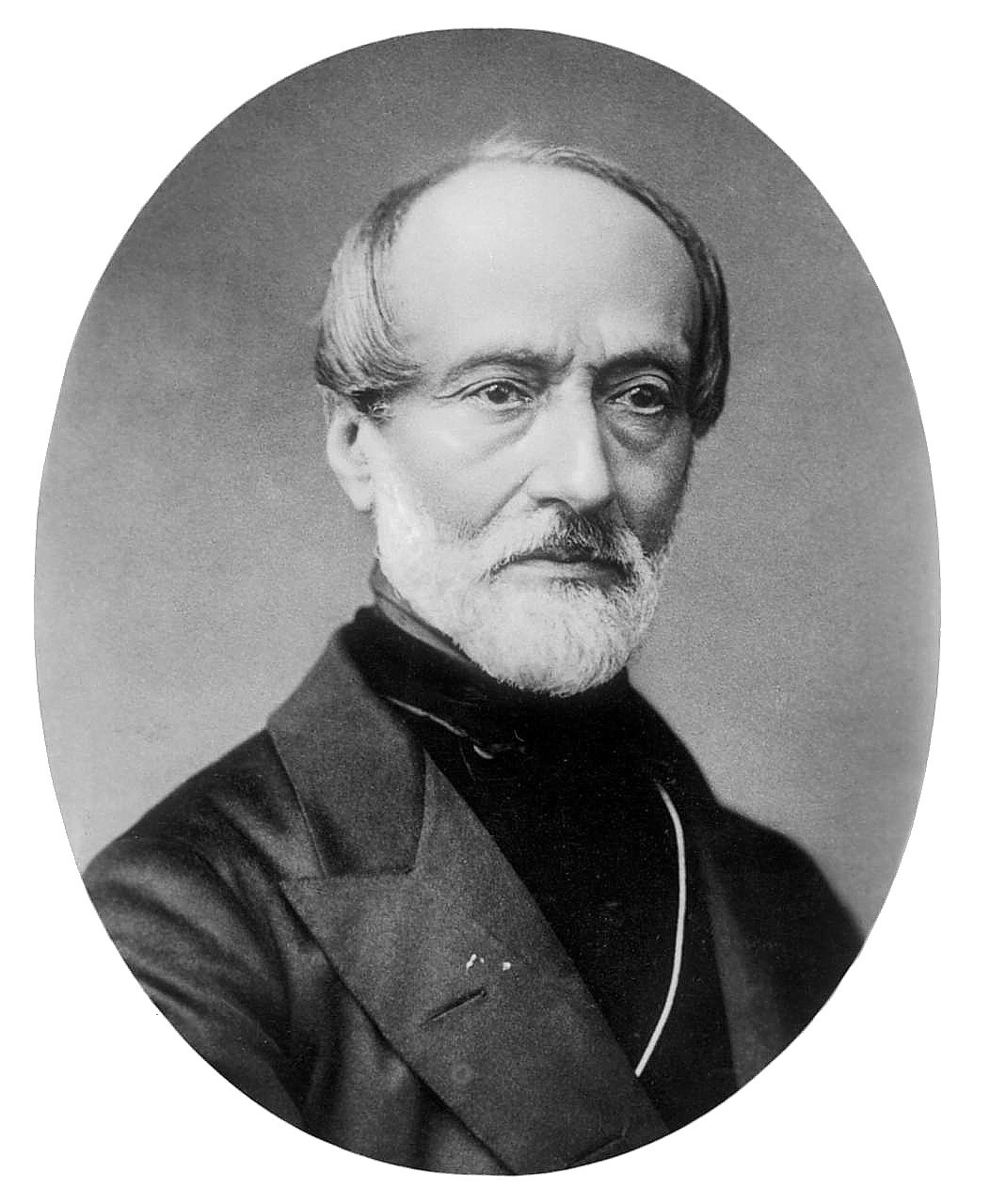
Giuseppe Mazzini, born on June 22, 1805, in Genoa, Italy, is one of the most influential figures in the history of Italian unification, known as the Risorgimento. Mazzini was not only a political leader but also a thinker and revolutionary whose ideas and actions played a pivotal role in shaping modern Italy. This article explores Mazzini’s life, his rise to fame, and the key highlights of his life, providing a detailed insight into his contributions to the Italian national cause and his enduring legacy.
Early Life and Intellectual Formation
Giuseppe Mazzini was the third child of Giacomo Mazzini, a university professor, and Maria Drago. Raised in a family that valued education and intellectual pursuits, Mazzini was a bright and inquisitive child. From an early age, he developed a strong interest in political matters, especially those related to Italy’s future. His upbringing in Genoa, a city with a rich history of republicanism and resistance to foreign domination, undoubtedly influenced his early political inclinations.
At the age of 15, Mazzini was admitted to the University of Genoa, where he initially studied medicine before switching to law. His academic pursuits, however, were soon overshadowed by his growing involvement in political activism. In 1826, Mazzini wrote his first significant literary work, a patriotic essay on Dante Alighieri titled “Dell’amor patrio di Dante,” which was published the following year. This work marked the beginning of Mazzini’s lifelong commitment to the cause of Italian nationalism.
Involvement in the Carbonari and Early Revolutionary Activities
After completing his studies, Mazzini joined the Carbonari, a secret revolutionary society dedicated to the unification and liberation of Italy from foreign rule. The Carbonari were a key force in the early stages of the Italian Risorgimento, and Mazzini’s involvement with them exposed him to the harsh realities of political repression.
In 1830, Mazzini was arrested by the Piedmontese authorities for his involvement with the Carbonari and imprisoned in the fortress of Savona. Although he was eventually released due to a lack of evidence, Mazzini was given a choice: to live under police surveillance in a remote village or to go into exile. He chose the latter and left for France in 1831, marking the beginning of his long and arduous life as a political exile.
The Founding of Young Italy and Revolutionary Ideology
In France, Mazzini founded La Giovine Italia (Young Italy) in 1831, an organization dedicated to the creation of a united, independent, and republican Italy. Mazzini believed that Italy could only be unified through a popular uprising led by the youth of the nation. He envisioned a future Italy as a republic, free from the tyranny of monarchs and foreign rulers, and governed by principles of liberty, equality, and fraternity.
Mazzini’s vision for Italy was deeply influenced by his religious beliefs. He saw the unification of Italy not only as a political necessity but also as a moral and spiritual mission. He believed that the Italian people were destined to play a leading role in the regeneration of Europe and that their liberation would herald a new era of justice and democracy. This messianic vision set Mazzini apart from other Italian nationalists of his time and made him a key figure in the broader European revolutionary movement.
To spread his ideas, Mazzini began publishing a journal titled La Giovine Italia, which quickly gained a wide readership among Italian patriots. The journal served as a platform for Mazzini to articulate his revolutionary ideas and to inspire a new generation of Italians to join the struggle for national unification.
Revolutionary Efforts and Exile
Despite his tireless efforts to promote the cause of Italian unification, Mazzini’s early revolutionary activities met with limited success. In 1834, he organized an ill-fated attempt to invade Savoy, which ended in failure and forced Mazzini to flee to Switzerland. Undeterred, he continued his revolutionary activities from exile, establishing connections with other European revolutionary movements and founding the Young Europe organization, which aimed to unite the oppressed peoples of Europe in a common struggle for freedom.
Mazzini’s revolutionary activities made him a marked man, and he was constantly pursued by the authorities. He was expelled from Switzerland in 1836 and moved to London, where he would spend much of the next three decades. In London, Mazzini lived in relative poverty, supporting himself through journalism and receiving financial assistance from supporters of the Italian cause.
Despite the hardships of exile, Mazzini remained committed to his mission. He continued to write and publish extensively, and he established a network of supporters and collaborators across Europe. His tireless efforts to promote the cause of Italian unification eventually began to bear fruit, as his ideas gained increasing support among the Italian people.
The Roman Republic and Later Revolutionary Activities
The revolutionary wave of 1848, which swept across Europe, provided Mazzini with his first real opportunity to put his ideas into practice. In 1849, following the overthrow of the Papal government in Rome, Mazzini was invited to lead the newly established Roman Republic. As one of the triumvirs of the republic, Mazzini implemented a series of progressive reforms, including the abolition of the death penalty and the establishment of universal male suffrage.
However, the Roman Republic was short-lived. In June 1849, French forces intervened to restore the Pope to power, and Mazzini was once again forced into exile. Despite this setback, Mazzini continued to advocate for the cause of Italian unification. He traveled extensively across Europe, establishing contacts with other revolutionary movements and working tirelessly to keep the spirit of Italian nationalism alive.
Mazzini’s unwavering commitment to the cause of Italian unification earned him the admiration of many, but it also made him a target for criticism. His refusal to compromise on his republican principles often put him at odds with other Italian nationalists, particularly those who favored the establishment of a monarchy under the House of Savoy. Nevertheless, Mazzini remained steadfast in his belief that only a republican form of government could guarantee the true freedom and unity of the Italian people.
The Legacy of Giuseppe Mazzini
Giuseppe Mazzini’s contributions to the cause of Italian unification are immeasurable. Although he did not live to see the complete unification of Italy, his ideas and actions laid the groundwork for the eventual creation of the Italian nation-state. Mazzini’s vision of a united, republican Italy inspired generations of Italian patriots and played a crucial role in shaping the political landscape of 19th-century Europe.
Mazzini’s influence extended beyond Italy. His ideas on nationalism, democracy, and republicanism resonated with revolutionary movements across Europe and beyond. Mazzini was a pioneer of the modern concept of the nation-state, and his writings on the rights of nations and the responsibilities of citizens have had a lasting impact on political thought.
One of the most significant aspects of Mazzini’s legacy is his unwavering commitment to the principles of liberty, equality, and fraternity. Unlike many of his contemporaries, Mazzini rejected the idea of class struggle and advocated for a form of nationalism that was inclusive and based on the idea of a common humanity. He believed that the liberation of Italy was not an end in itself but a step towards the liberation of all oppressed peoples.
Mazzini’s ideas also had a profound influence on the development of the European labor movement. Although he was not a socialist in the Marxist sense, Mazzini believed in the importance of social justice and the need for economic reform. He advocated for the establishment of cooperatives and the protection of workers’ rights, and he saw the struggle for national liberation as inherently linked to the struggle for social justice.
Final Years and Death
In the final years of his life, Mazzini continued to work tirelessly for the cause of Italian unification, despite his failing health. He was involved in several unsuccessful revolutionary attempts, including an ill-fated expedition to Sicily in 1860. Mazzini’s last major political act was the promotion of the “Pact of Brotherhood” among the Italian working-class societies, an effort to counter the growing influence of Marxism within the labor movement.
Giuseppe Mazzini died on March 10, 1872, in Pisa, Italy, at the age of 66. His death was mourned by thousands of Italians, and his funeral in Genoa was attended by an estimated 100,000 people. Mazzini’s legacy as the “prophet of Italian unity” and a champion of democratic principles continues to be celebrated in Italy and around the world.
Conclusion: The Enduring Legacy of Giuseppe Mazzini
Giuseppe Mazzini remains one of the most important figures in the history of Italian unification and a key architect of the modern concept of nationalism. His unwavering commitment to the ideals of liberty, equality, and fraternity, combined with his visionary leadership, made him a central figure in the struggle for Italian independence.
Mazzini’s ideas on democracy, republicanism, and social justice continue to resonate today, and his legacy as a champion of human rights and national self-determination endures. As Italy and the world continue to grapple with the challenges of nationalism, democracy, and social justice, Mazzini’s life and work offer valuable lessons and inspiration for future generations.


