
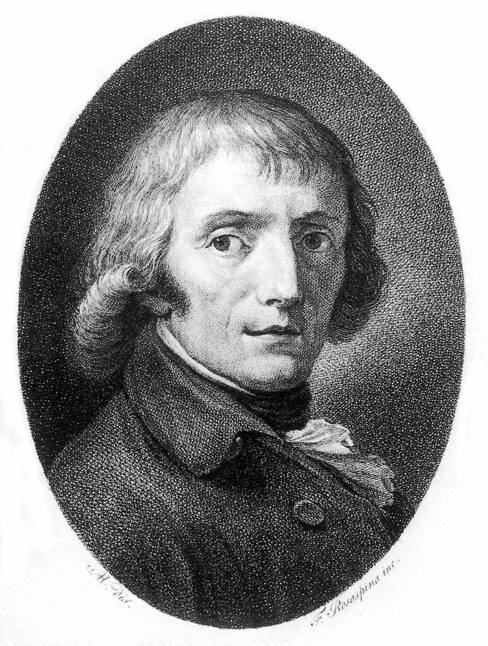
Giuseppe Parini stands as one of the most influential figures in Italian literature during the 18th century. Born on May 23, 1729, in Bosisio, a small town in the province of Como, Italy, Parini’s life and works encapsulate the Enlightenment spirit that permeated Europe during his time. This article delves into the age, fame, and life highlights of Giuseppe Parini, exploring the nuances of his literary contributions, historical context, and the impact he left on the cultural landscape of his era.
Early Life and Education
Giuseppe Parini was born to Angela Maria Carpani and Francesco Maria Parino, a modest silk merchant. His humble origins did not hinder his intellectual pursuits. Parini was educated at a school in Milan run by the Barnabite fathers, a religious order known for their emphasis on education and intellectual development. This early education played a crucial role in shaping his intellectual abilities and literary interests.
To secure a modest inheritance left by a great-aunt, Parini pursued a religious path, becoming a priest in 1754. This decision was more practical than spiritual, as it provided him with the financial stability needed to focus on his literary ambitions. Between 1754 and 1762, Parini served as a tutor in the homes of noble families, including the Serbelloni and Imbonati, which exposed him to the lives of the aristocracy—an experience that would profoundly influence his later works.
The Birth of a Poet: Initial Literary Pursuits
Giuseppe Parini’s first notable literary work came in 1752 with the publication of a collection of poems titled Alcune poesie di Ripano Eupilino. The pseudonym Ripano Eupilino was a clever anagram of his name, combined with a reference to Lake Pusiano near his birthplace. This early work showcased his poetic talent and established him as a rising figure in Milan’s literary circles.
In 1753, Parini was admitted to the prestigious Accademia dei Trasformati, a society of intellectuals that fostered the exchange of ideas and promoted literary and artistic innovation. This membership allowed Parini to engage with the intellectual elite of Enlightenment-era Milan, further enriching his intellectual and creative development.
The Enlightenment and Parini’s Major Works
The Enlightenment was a period marked by an emphasis on reason, scientific inquiry, and a challenge to traditional authority. Parini was deeply influenced by the Enlightenment ideals, particularly those emanating from France. He absorbed the ideas of prominent thinkers like Voltaire, Montesquieu, Rousseau, and Condillac, and these ideas became a cornerstone of his writings.
One of Parini’s most significant works is the satirical poem Il giorno (The Day), which he began in the early 1760s. The poem is divided into four parts: Il mattino (The Morning), Il mezzogiorno (The Noon), Il vespro (The Evening), and La notte (The Night). The first two parts were published during his lifetime, while the latter two remained incomplete at his death. Il giorno is a biting satire of the Italian nobility, critiquing their idleness, vanity, and moral decay. It is written in endecasillabi sciolti, a form of unrhymed verse that gives the poem a dignified, yet conversational tone.
Parini’s other notable works include a series of odes, which reflect his evolving literary style and philosophical outlook. In his early odes, such as La salubrità dell’aria (The Healthiness of the Air) and La impostura (The Imposture), Parini adopts a more didactic tone, addressing social and moral issues. These odes are characterized by their clarity of expression and moral earnestness, qualities that align with the Enlightenment’s emphasis on rationality and ethical conduct.
As Parini matured, his poetic style shifted towards a more introspective and neoclassical approach. This shift is evident in later odes like Il pericolo (The Danger) and Il dono (The Gift), where he explores themes of beauty, morality, and the human condition with a more reflective tone.
Parini’s Role in Milan’s Intellectual Life
Parini’s growing reputation as a poet and intellectual brought him to the attention of the governor of Milan, Count Karl Joseph von Firmian. In 1768, Parini was appointed director of the Gazzetta di Milano, the city’s official newspaper, and the following year, he was given a professorship in Eloquence at the Scuole Palatine, which later became part of the prestigious Brera Academy.
These roles positioned Parini at the heart of Milan’s intellectual life, allowing him to influence public discourse and mentor a new generation of writers and thinkers. His lectures at the Scuole Palatine were highly regarded, and his influence extended beyond the classroom into the broader cultural and political life of the city.
The French Revolution and Parini’s Later Years
The French Revolution, which began in 1789, had a profound impact on Europe, including Italy. The revolutionary ideals of liberty, equality, and fraternity resonated with many Enlightenment thinkers, including Parini. However, Parini’s response to the Revolution was complex. While he supported the principles of the Revolution, he was critical of the excesses and violence that accompanied it.
In 1796, when French forces led by Napoleon Bonaparte entered Milan, Parini was briefly involved in the city’s democratic municipality. However, his moderate views and disillusionment with the revolutionary leadership led to his eventual withdrawal from public life. He was stripped of his official positions and spent his final years in relative obscurity.
Despite his retreat from public life, Parini continued to write. His last ode, Alla Musa (To the Muse), composed in 1795, is a poignant reflection on the role of poetry and the poet in society. In this ode, Parini celebrates poetry as a noble pursuit, dedicated to the elevation of human thought and the promotion of virtuous ideals.
Death and Legacy
Giuseppe Parini died on August 15, 1799, in his home in the Brera district of Milan. In his will, he requested a simple funeral, reflecting his lifelong commitment to humility and modesty. He was buried in the Porta Comasina cemetery in Milan, with no grand monument to mark his resting place.
Parini’s legacy, however, is far from modest. His works, particularly Il giorno, are considered masterpieces of Italian literature. They provide a window into the social and intellectual currents of 18th-century Italy, capturing the tension between tradition and progress, and offering a sharp critique of the aristocracy that dominated Italian society.
Parini’s influence extended beyond his own time, inspiring later Italian poets and writers who admired his wit, moral integrity, and commitment to social justice. His works continue to be studied and celebrated for their literary excellence and their contribution to the Enlightenment’s intellectual heritage.
Conclusion: Giuseppe Parini in Context
Giuseppe Parini’s life and works are emblematic of the Enlightenment in Italy—a period of profound social, cultural, and intellectual transformation. Through his poetry, Parini challenged the status quo, advocating for a society based on reason, justice, and moral integrity. His satirical approach in Il giorno remains a powerful critique of the excesses of the aristocracy, while his odes reflect his broader concerns with human dignity and ethical conduct.
In understanding Parini’s legacy, it is essential to place him within the broader context of the Enlightenment, a movement that sought to reform society through reason and knowledge. Parini’s works not only reflect the ideals of this movement but also contribute to its enduring influence on European thought and culture.
As we reflect on Giuseppe Parini’s contributions to literature and intellectual history, it is clear that his impact extends beyond the boundaries of 18th-century Italy. His works continue to resonate with readers today, offering timeless insights into the human condition and the ongoing struggle for a just and equitable society.


