
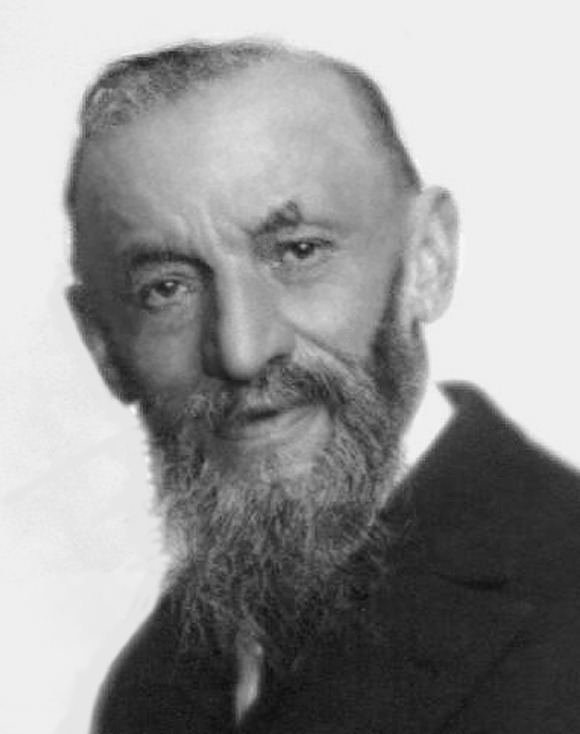
Giuseppe Peano, born on August 27, 1858, in Tetti Galant, a district of Spinetta, in the province of Cuneo, Italy, was a pioneering Italian mathematician whose work laid foundational stones for modern logic and mathematical theory. Known for his contributions to the formalization of mathematics and his innovative approach to mathematical symbols, Peano’s influence extends well beyond his lifetime. This article delves into his life, achievements, and the enduring legacy he left in the field of mathematics.
Early Life and Education
Giuseppe Peano was born into a farming family as the fifth child. Despite the challenges of rural life, he demonstrated exceptional academic abilities from a young age. His early education took place in his hometown before he moved to Cuneo for further studies. Remarkably, Peano commuted about 10 kilometers each day on foot to attend school, showcasing his dedication to learning.
At the age of 22, Peano moved to Turin to study mathematics at the University of Turin, where he was taken in by his uncle. He completed his studies with distinction and soon began his academic career at the same university. His early commitment to mathematics was evident in his choice of career, as he stayed at the university for the entirety of his professional life.
Academic Career and Major Contributions
Peano’s academic career began in earnest in 1880 when he became an assistant at the University of Turin. By 1887, he was appointed as a professor at the Reale Accademia di Artiglieria e Genio, and in 1890, he became a professor of mathematics at the university. His career progression reflects his growing prominence in the mathematical community.
One of Peano’s most significant contributions to mathematics is his work on the axiomatization of natural numbers. In 1889, he published “Arithmetices Principia Nova Methodo Exposita,” a groundbreaking work that introduced what are now known as Peano’s axioms. These axioms form the basis for the modern understanding of natural numbers and are as follows:
- One is a natural number.
- Every natural number has a unique successor .
- One is not the successor of any natural number.
- If , then .
- If is a property such that:
- One has the property ,
- and for every in , if has the property , then also has the property ,
- then holds for all natural numbers. (Principle of Mathematical Induction)
These axioms provided a rigorous foundation for the study of arithmetic and influenced subsequent mathematical research.
In 1890, Peano also made significant strides in geometry with his publication “Sur une courbe qui remplit toute une aire plane,” introducing the concept of a space-filling curve. This curve, now known as the Peano curve, is a continuous curve that covers every point in a square, a concept that has profound implications in mathematical analysis and topology.
Peano’s Symbolism and Linguistic Innovations
Peano’s influence extends into the realms of logic and symbolism. He was one of the early proponents of modern symbolic logic, advocating for the use of formal symbols to represent mathematical concepts. His work aimed to create a universal language for mathematics, which he believed would transcend linguistic and cultural barriers.
In 1891, Peano founded “Rivista di matematica,” a journal dedicated to extending the symbolic methods used in the axiomatization of natural numbers to all mathematical propositions. This journal aimed to promote a universal mathematical language and foster clearer communication within the mathematical community.
One of Peano’s most ambitious projects was the “Formulaire de mathématique,” published in 1908. This comprehensive volume contained over 4,200 formulas and theorems written in symbolic form. Despite its complexity, this work was a monumental attempt to systematize mathematical knowledge.
Peano also experimented with a simplified version of Latin known as “Latino sine flexione.” Published in 1906, this language aimed to be an international scientific language, though it did not achieve widespread adoption. Nonetheless, the idea of a universal language found its realization in the form of English as the global language of science and communication.
Contributions to Education and Social Issues
Peano’s commitment to education was evident in his efforts to make mathematics more accessible and engaging. In 1925, he published “Giochi di aritmetica e problemi interessanti,” a book designed to make arithmetic more enjoyable for children. His goal was to combat the fear and boredom often associated with learning mathematics.
Additionally, Peano was actively involved in educational reform and was known for his affable and supportive nature towards his students. He was dedicated to improving primary and secondary education, reflecting his belief in the importance of making mathematics appealing and understandable from an early age.
Legacy and Influence
Giuseppe Peano’s legacy is characterized by his innovative contributions to mathematics, logic, and education. His work laid the groundwork for modern symbolic logic and the formalization of mathematical theories. Peano’s axioms for natural numbers remain a cornerstone of mathematical logic, and his ideas about space-filling curves have had lasting impacts on various fields of mathematics.
Peano’s efforts to create a universal mathematical language and his educational initiatives illustrate his forward-thinking approach to both mathematics and pedagogy. Although his simplified Latin did not achieve the widespread success he envisioned, the concept of a universal language continues to be relevant in the context of global scientific communication.
Peano passed away on April 20, 1932, in Turin due to a heart attack. Throughout his life, he received numerous accolades and recognition from the Italian government, reflecting his significant contributions to mathematics and education.
His influence extends beyond his own time, as his ideas and methods continue to shape contemporary mathematical research and education. Giuseppe Peano remains a pivotal figure in the history of mathematics, remembered for his rigorous approach, innovative thinking, and dedication to improving mathematical understanding and communication.


