
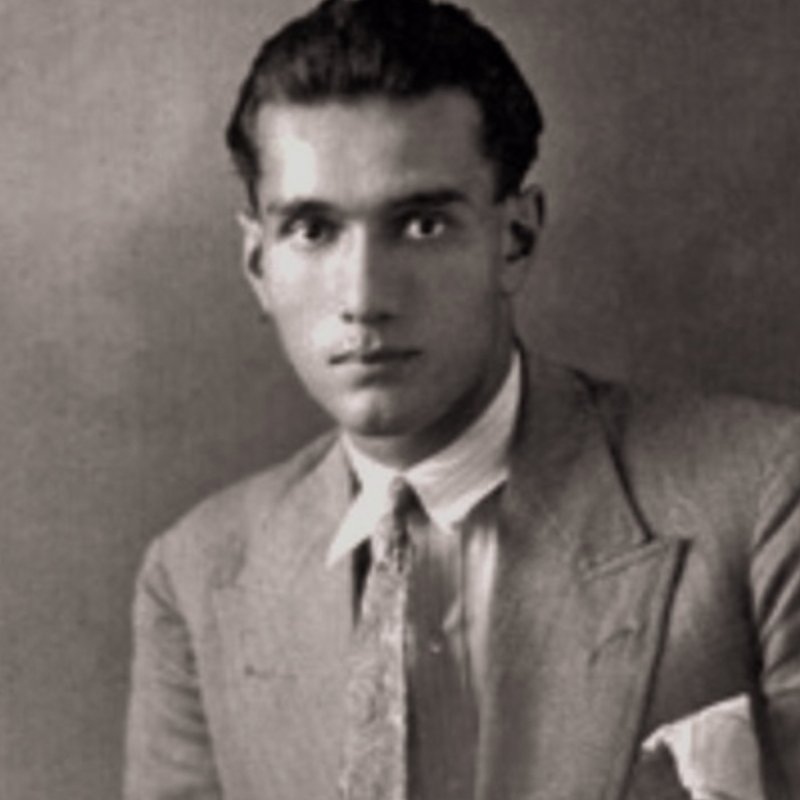
Giuseppe Terragni, born on April 18, 1904, in Meda, a town near Milan, Italy, is a figure whose legacy continues to be a point of discussion in the realms of architecture and modern Italian history. Recognized as a key proponent of Rationalism, an architectural style that emerged in the early 20th century, Terragni’s life and work are deeply intertwined with the socio-political context of his time, including his alignment with the Fascist regime of Benito Mussolini. This article aims to explore the life, fame, and contributions of Giuseppe Terragni, shedding light on the complex legacy he left behind.
Early Life and Education
Terragni’s journey into architecture began early in his life. After completing his diploma in 1921, he enrolled in the Scuola Superiore di Architettura at the Politecnico di Milano, where he graduated in 1926. Even before earning his degree, Terragni had already begun to make his mark. In 1925, he collaborated with Pietro Lingeri on a competition for the design of a monument dedicated to the fallen soldiers of World War I in Como, a project that would later become one of his first significant works.
The Rise of Rationalism
Giuseppe Terragni’s contribution to architecture is closely linked to the Rationalist movement, which sought to bring a new, modern approach to architectural design in Italy. In 1927, Terragni, along with a group of like-minded architects, including Luigi Figini, Adalberto Libera, and Gino Pollini, published a series of articles in the magazine “Rassegna italiana.” These articles, collectively known as the manifesto of Italian Rationalism, laid the foundation for what would become a defining architectural style of the era.
Rationalism emphasized functionality, simplicity, and a rejection of ornamentation, focusing instead on the purity of geometric forms and the use of modern materials like steel and glass. This movement was not just an aesthetic choice but was deeply connected to the political ideology of the time, particularly the Fascist regime, which sought to project a modern, forward-looking image of Italy.
Terragni’s Architectural Masterpieces
Terragni’s architectural career was marked by a series of groundbreaking projects that would cement his reputation as a pioneer of modern architecture in Italy. One of his earliest and most controversial works was the Novocomum, a five-story apartment building in Como completed in 1929. Initially presented as a conventional design, the building was revealed, upon the removal of scaffolding, to be a strikingly modern structure, characterized by clean lines and a lack of traditional ornamentation. Dubbed the “transatlantic” due to its resemblance to an ocean liner, the Novocomum was a radical departure from the architectural norms of the time and sparked considerable debate.
However, it was the Casa del Fascio in Como, completed between 1932 and 1936, that truly established Terragni as a leading figure in the Rationalist movement. The Casa del Fascio, now known as Palazzo Terragni, was the headquarters of the local Fascist party and is widely regarded as a masterpiece of modern architecture. The building’s design, with its perfectly balanced proportions, transparent glass facade, and strict geometric forms, exemplified the principles of Rationalism and demonstrated how architecture could be used as a political tool.
Other notable projects by Terragni include the Casa Rustici in Milan (1933-1935), the Asilo Infantile Sant’Elia in Como (1937), and the Casa Giuliani Frigerio in Como (1939-1940). Each of these works reflects Terragni’s commitment to the ideals of Rationalism, as well as his ability to adapt those ideals to different contexts and building types.
The Intersection of Architecture and Politics
Terragni’s work cannot be fully understood without considering the political context in which it was created. As a staunch supporter of Fascism, Terragni believed that architecture could play a crucial role in expressing the ideals of the regime. This belief is evident in his design for the Sala O at the Mostra della Rivoluzione Fascista in Rome (1932), an exhibition space that was part of a larger showcase of Fascist achievements.
Despite his strong political beliefs, Terragni’s later years were marked by disillusionment. The grand ambitions of the Fascist regime, particularly in the realm of architecture, often ended in frustration and disappointment for him. Several of his major projects, such as the Palazzo del Littorio (1934-1937) and the Palazzo dei Ricevimenti e Congressi for the E42 exhibition in Rome (1937-1938), were either never completed or did not meet his expectations.
The Tragic End and Posthumous Recognition
Giuseppe Terragni’s life was tragically cut short at the age of 39. After being conscripted into the military during World War II, he served in Yugoslavia and Russia. The harsh conditions of the war took a severe toll on his physical and mental health. He returned to Italy in 1943, deeply traumatized and disillusioned. On July 19, 1943, he died of a cerebral thrombosis while visiting the home of his fiancée in Como.
In the years following his death, Terragni’s work has been the subject of extensive analysis and debate. Scholars have questioned whether his architecture should be viewed as an expression of Fascist ideology or as something that transcends the political context in which it was created. His buildings, particularly the Casa del Fascio, continue to be studied for their innovative design and their place within the broader history of modern architecture.
Legacy and Influence
Giuseppe Terragni’s influence on architecture extends far beyond the confines of Rationalism and Fascism. His work represents a critical moment in the development of modern architecture, where the boundaries between art, politics, and ideology were blurred. The clarity and precision of his designs, along with his commitment to the ideals of Rationalism, have made him a pivotal figure in the history of architecture.
Today, many of Terragni’s buildings are considered landmarks of modern architecture, and his legacy is preserved in numerous exhibitions and publications. The debate over the ideological implications of his work continues, but there is no denying the technical and artistic brilliance that Giuseppe Terragni brought to his craft.
Conclusion
Giuseppe Terragni was more than just an architect; he was a visionary whose work captured the complexities of his time. From his early involvement in the Rationalist movement to his later disillusionment with the Fascist regime, Terragni’s life and work offer a fascinating glimpse into the intersections of architecture, politics, and ideology in early 20th-century Italy. His contributions to modern architecture remain influential, and his legacy continues to be a subject of study and admiration.


